 A Space for Thoughtful

The Rising Role of Subject Matter Experts in Digital Transformation
Summarize with:
The key to unlocking maximum organizational efficiency is contingent mainly upon automation. Its advantages in an enterprise extend far beyond that. Statistics reveal how the introduction of automation can also have a positive effect on other aspects of a business. For instance, it can help employees save 10% to 50% of their time previously spent on manual tasks.
Today, when Artificial Intelligence (AI) has emerged as a formidable ally, there are many ways for a business to harness these benefits for growth. But without human expertise? That’s not possible. The demand for the role of subject matter experts in subjects such as Math, Physics, and Chemistry remains high, as these subjects are core components of many academic and research fields. Biology and Statistics are also in demand, as they are essential for many fields such as healthcare, finance, and data analysis.
So, in this blog, let’s learn what a subject matter expert (SME) is, their importance, their role in digital transformation, and how a business can leverage the merged proficiencies of SMEs and AI to churn out the full potential!
Table of Contents:
- What is a Subject Matter Expert (SME)?
- Six Types of Subject Matter Experts
- Importance of Subject Matter Experts (SMEs)
- Role of Subject Matter Experts (SMEs) in the eLearning and EdTech Industry
- Real-World Examples of SMEs in eLearning
- Contribution of Subject Matter Experts in Remote Work
- Real-World Examples of SMEs in Remote Work
- How Can Subject Matter Experts (SMEs) Use AI to Maximise Automation Efficiency?
- What Is a Subject Matter Expert’s Role in Increasing ROI?
- Takeaway
What is a Subject Matter Expert (SME)?
A subject matter expert (SME) is a seasoned professional with proven expertise in a particular field or subject. Their profound knowledge and understanding of the specific topic surpass that of an average individual, thus establishing them as experts in the said domain.
In business, an SME can belong to a wide range of areas. For instance, they can belong to fields of essential business functions like marketing, finance, human resources, operations, information technology (IT), and more. Specifically in terms of AI and automation, these SMEs can significantly impact domains like data analytics, machine learning, automation engineering, and AI development, among others.
While it’s difficult to provide an exact number, it’s clear that there is a significant number of SMEs available across India in subjects such as Math, Physics, Chemistry, Biology, and Statistics. The Confederation of Indian Industry (CII) estimates that there are over 51 million SMEs in India across all sectors, which includes the education and training sector.
However, there can be a shortage of SMEs in certain specialized areas. For example, in Math and Physics, there may be a shortage of SMEs with knowledge in areas such as quantum mechanics or astrophysics. In Chemistry, there may be a scarcity of experts in analytical chemistry or materials science. Similarly, in Biology, finding SMEs with expertise in emerging fields like synthetic biology or bioinformatics can be challenging. In Statistics, a shortage of SMEs may exist for advanced data analysis techniques like machine learning or data mining.
Six Types of Subject Matter Experts
SMEs can provide a range of services based on their specialization and industry-specific expertise. Subject matter expert examples include:
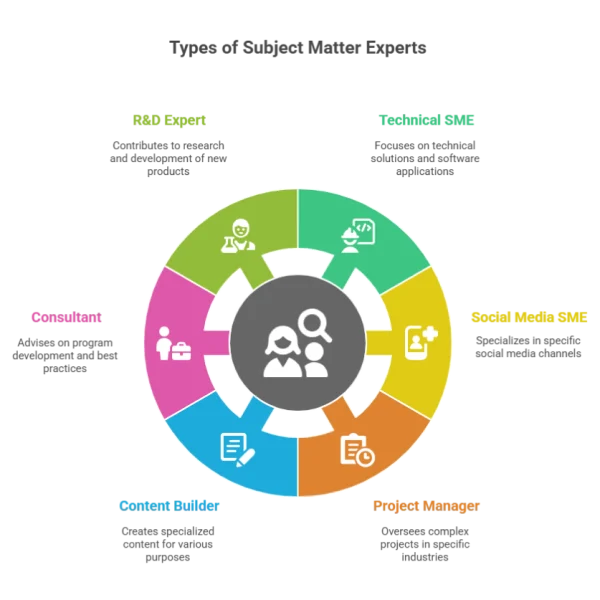
1. Technical Subject Matter Expert
The responsibilities of a technical subject matter expert involve assessing organizational needs and suggesting appropriate technical solutions. They also need to supervise the creation, evaluation, and application of various software solutions.
2. Social Media Subject Matter Expert
A social media SME is knowledgeable about more specific topics than merely how to develop a social strategy or influence followers. Instead, this SME concentrates on a specific social media channel, like an Instagram strategy for accounts belonging to online eCommerce businesses.
3. Project Managers
SMEs can also operate in project management, assisting organizations in overseeing complicated tasks that call for expertise in a certain field. For instance, an SME in the construction industry might work on significant construction initiatives, contributing knowledge in planning, organizing, and budgeting.
4. Content Building Subject Matter Experts
SMEs can produce subject matter content for various use cases, including technical manuals, advertising collateral, and educational resources. The role of subject matter experts as writers or editors includes curating content, which calls for specialized knowledge in a certain topic domain.
5. Consultants
Consultants can be hired to create a new program in the same way that project managers do. For instance, if the human resources department wants to start a recruitment and retention program, they might hire an SME to advise them on best practices and ensure they’re on the right path.
6. R&D Subject Matter Expert
SMEs can participate in research and development, assisting businesses in creating the latest products and services. For instance, an SME in the drug sector might work on developing novel medications or medical equipment.
Importance of Subject Matter Experts (SMEs)
Due to their distinguished expertise and experience, SMEs can often augment business operations to bring out their best. Thus, the inclusion of one in the team can significantly impact how well the business performs. Apart from that, here are some other reasons why having an SME in an enterprise is important:
1. Provide Quality Assurance
A subject matter expert’s definition is derived from their quality of possessing enhanced expertise on a topic. However, this same attribute also lends them an improved hold on gauging the accuracy of every work done within their domain’s premises. This makes them incredibly efficient quality control professionals who assure the highest degree of integrity in output, mitigating any risk of error or omission.
2. Maximize Efficiency
SMEs can eradicate duplication and redundancies from a job due to their specialized knowledge and proficiency in a field. So, a subject matter expert’s skills enable a business to optimize its processes and workflows better to achieve maximum efficiency and productivity. This also leads to an acute reduction in resource wastage and streamlining operations improvement.
3. Encourage Informed Decision-Making
Along with possessing a deeper knowledge of an industry, SMEs also generally bear remote data, statistics, and insights that may be crucial to a business belonging to that industry. With its help, these professionals can enable the organization to make data-driven decisions and fill in every gap obstructing it from reaching its full potential.
Role of Subject Matter Experts (SMEs) in the eLearning and EdTech Industry
The global eLearning market has been on a consistent upward trajectory, showing no signs of slowing down. A combination of factors has contributed to this growth, including technological advancements, changing learner preferences, and the flexibility eLearning offers. According to Statista, the worldwide eLearning market is expected to reach $400 billion by 2026.
As the eLearning and EdTech landscape continues to evolve, the role of Subject Matter Experts in education has become increasingly prominent. Here are the services and value SMEs bring to EdTech companies that provide education technology solutions like online courses and learning management systems.
1. Superior Content Quality and Relevance through Curriculum Development
SMEs are experts in their respective fields, possessing a deep understanding of the subject matter. They can develop curriculum content for EdTech companies, which can be used in online courses or learning management systems. Their expertise ensures that the content created is accurate, up-to-date, and relevant. They create educational materials such as lectures, quizzes, and assignments, ensuring the content meets learning objectives. Whether developing courses or writing instructional materials, SMEs play a pivotal role in maintaining high standards for content creation.
2. Better Learner Engagement through Instructional Design
Learner engagement is a significant challenge in eLearning. A subject matter specialist brings real-world context and practical insights to the content, making it more relatable for learners. SMEs help EdTech companies design effective instructional strategies and pedagogical approaches. They assist in creating assessments, lesson plans, and learning activities tailored to the needs of the learners. This enhances engagement and motivates learners by demonstrating the real-world applications of the knowledge they are acquiring.
3. Easy Adaptation to Rapid Changes
Many fields are constantly evolving, particularly in technology and healthcare. The role of SMEs is vital in keeping eLearning content current and ensuring that learners are equipped with the latest information and skills. This adaptability is crucial for the long-term relevance and success of eLearning programs.
4. Creation of Customized eLearning Content
Every industry has its unique challenges and requirements. SMEs help tailor eLearning content to specific industries or job roles. This customization ensures that learners receive content directly applicable to their needs, making the learning experience more effective and impactful.
5. Quality Assurance and Evaluation
SMEs can provide quality assurance services to EdTech companies, ensuring that educational content and technology solutions are functioning correctly. They perform testing and troubleshooting and provide recommendations for improvements. Additionally, SMEs can develop assessments and evaluation tools to measure the effectiveness of educational content and technology solutions, providing recommendations for improvements based on the results.
Real-World Examples of SMEs in eLearning
Let’s explore a couple of subject matter expert examples that highlight the role and importance of Subject Matter Experts in eLearning:
Example 1: Healthcare eLearning
In the healthcare sector, SMEs such as doctors, nurses, and medical researchers are integral to eLearning initiatives. They ensure that healthcare professionals receive up-to-date and accurate information. For example, during the COVID-19 pandemic, SMEs in infectious diseases played a critical role in creating eLearning content for healthcare workers to understand the virus, its transmission, and patient care protocols.
Example 2: Tech Industry Training
In the technology sector, SMEs, often software engineers, data scientists, and cybersecurity experts, are at the forefront of eLearning. They create courses and training materials to keep IT professionals and developers informed about the latest trends, programming languages, and cybersecurity practices. Lastly, SMEs are important as they ensure learners are well-prepared to meet the tech industry’s ever-evolving demands.
Contribution of Subject Matter Experts in Remote Work
Just like eLearning, understanding what a subject matter expert does in remote work is crucial since the adoption of remote work has gained momentum due to technological advancements. In the coming years, the outlook for remote work appears even brighter.. Consequently, the role of SMEs in remote work has become multifaceted and increasingly pivotal. Below’s how they contribute:
1. Help Set Up Remote Infrastructure
SMEs, especially those in IT and cybersecurity, play a critical role in setting up and maintaining the technical infrastructure necessary for remote work. They ensure remote employees can access the tools, software, and security measures required to work effectively and securely from their remote locations.
2. Provide Guidance on Best Industry Practices
SMEs provide remote teams with guidance on best practices and industry-specific knowledge. Whether in marketing, finance, or software development, their expertise ensures that employees follow the most effective and up-to-date approaches.
3. Assist with Mentoring and Training Employees
SMEs serve as mentors and trainers for remote team members. They share their expertise and offer professional development, helping employees enhance their skills and knowledge. For example, a financial analyst SME can provide remote training sessions on advanced financial modeling, allowing team members to improve their financial analysis skills.
Real-World Examples of SMEs in Remote Work
Here are a few real-world examples that highlight the SMEs’ role in remote work:
Example 1: Telehealth
The healthcare industry has witnessed the increased use of telehealth services. Medical specialists, acting as SMEs, have played a vital role in remote consultations and treatment planning. Their expertise ensures patients receive accurate medical advice and care through telehealth platforms.
Example 2: Legal Consultation and Compliance
Legal professionals, such as attorneys and compliance experts, are instrumental SMEs in remote work scenarios, particularly in organizations that operate across multiple jurisdictions. SMEs in the legal field provide critical guidance to ensure that remote work arrangements comply with local, state, and federal laws. They also advise on employment contracts, data privacy regulations, and intellectual property rights in the remote work environment.
How Can Subject Matter Experts (SMEs) Use AI to Maximise Automation Efficiency?
Working with subject matter experts can prove to yield incredible results for a business. But when empowered with the excellence of AI, they can also help the business seamlessly reap the benefits of automation. There are many ways an SME can do that. For instance, they can:
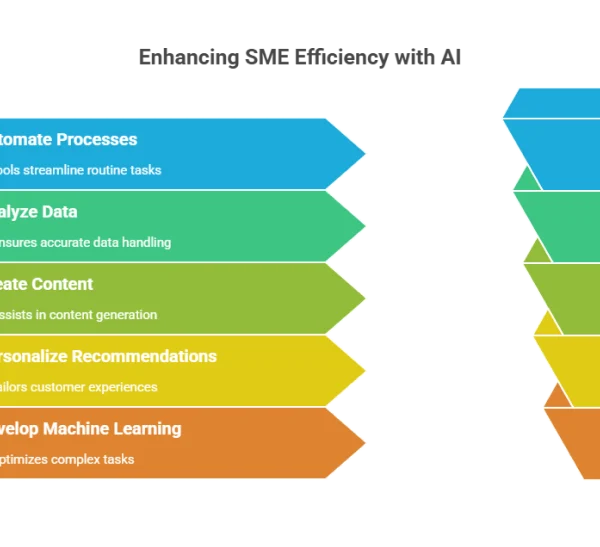
1. Establish Process Automation Systems
Certain business processes do not actively seek human intervention. These include inventory management, data migration, customer support, etc. However, performing them manually takes up time, which can be redirected into more productive activities. This is where an expert SME can employ process automation AI tools, such as AI chatbots, RPAs, AGVs, etc., to save time.
2. Use AI-Powered Data Analysis Tools
As is commonly accepted, the average error rate in manual data entry is around 1%. However, this seemingly small percentage can cause major losses to a business, especially if it deals with high volumes of data. So, an SME can use AI to automate data collection and analysis for an organization. This will help the employees sift through large volumes of data without any hassle.
3. Employ Natural Language Processing (NLP)
AI for SMEs is not just for automating redundant jobs. If used ingeniously, it can also help automate tasks like content creation. For instance, an SME can collaborate with an AI expert to utilize Natural Language Processing (NLP) tools like ChatGPT to automate content creation. Moreover, they can also use tools like Dictera by Hurix Digital to automate assessment and content creation.
4. Generate Personalized Recommendations
In e-commerce, the need to give out personalized recommendations to customers is a must. This way, sales are pushed, and customer satisfaction is maximized. But in the absence of automation, this can become a tedious process. Moreover, this also spares a huge room for blunder. So, an SME can use AI to gather customer data and fine-tune algorithms to serve custom-tailored product recommendations to customers.
5. Develop Machine Learning Tools
For an SME, machine learning models are a highly efficient way of streamlining processes through automation. In tasks that require constant sorting and categorizing, employing a machine learning tool is a one-stop solution to preventing manual labor. These programs not only help save time but also ensure maximum efficiency and the fewest errors.
What Is a Subject Matter Expert’s Role in Increasing ROI?
With their deep domain knowledge and expertise, subject matter experts can truly act as ROI experts for firms to increase ROI. Here are a few ways through which SMEs help in the process:
1. Improves Employee Engagement Rate
According to research, motivated workers are 17% more productive than their contemporaries. Engaged employees are more likely to work hard and make extra effort for their time at work, boosting output and creativity. This has a direct impact on a better ROI. SMEs advise and mentor the rest of the team on planning, content production, and knowledge exchange. They are often placed at the center of sharing core skills needed for upscaling the project, which helps to ensure an engaging experience for the rest of the employees.
2. Ensures Increased Productivity
Productivity is key to increasing potential ROI in any business, and SMEs know the tools and techniques for upscaling productivity. Subject matter specialists redefine how knowledge is utilized with customized solutions suited to business requirements. This can be done by analyzing client preferences, performing brand surveys, or conducting benchmarking analyses. They create the framework for effective information transmission to transform insights into actions.
3. Identify Upcoming Risks to Mitigate Losses
Possible challenges may not be visible to you, but an SME can recognize them beforehand and have procedures prepared to prevent them. Security issues, a lack of technical know-how or resources, poor data authentication and integration, or problems managing existing systems are all potential dangers. An SME’s early identification of your possible problems can go a long way towards guaranteeing a successful transformation and avoiding expensive blunders later on. This safeguards you from any potential economic losses and boosts your ROI.
4. Helps Define a Budget
A sound budget is crucial to ensuring increased ROI for every project. Creating a budget allows you to determine the financial resources required for your intended objectives and strategies. However, your estimated ROI should be your top priority when planning your spending and distribution of resources. A subject matter expert gets the budgeting right the first time rather than devising trial-and-error methods, which makes the process cost-effective.
Takeaway
Before this article, you may have asked yourself, “What is a subject matter expert beyond being a proficient manager?” In reality, they play a pivotal role in training, motivating, and providing direction to your workforce, all contributing to enhancing your business’s ROI. From digital transformation and remote work to the education and training sector, their value is derived from deep knowledge and expertise in a particular field.
SMEs are vital in helping EdTech companies create effective educational solutions that meet learner needs. By offering their expertise in curriculum development, instructional design, and quality assurance, SMEs help improve the quality of education delivered through technology. Their extensive understanding allows them to expedite learning for individuals, significantly shortening the learning curve as new hires make fewer errors during the onboarding process due to comprehensive hands-on guidance.
If you are looking to hire a subject matter expert who can drive better learning outcomes, contact Hurix Digital. We employ an outstanding group of Subject Matter Experts (SMEs) knowledgeable in physics, chemistry, biology, mathematics, and statistics. Our SMEs are adept at creating assessments, including Algo and video responses, and can develop problems using MathType, LaTeX inputs, ChemDraw, etc., without any errors.
Get in touch with us today
Summarize with:

Senior Vice President
A Business Development professional with >20 years of experience with strong capability to sell new solutions and develop new markets from scratch. New Market Entry Specialist with experience working in the largest emerging markets. Exceptional experience in conceptualizing, ideating and selling new learning technologies like VR AR, etc. across multiple industry verticals.