 A Space for Thoughtful
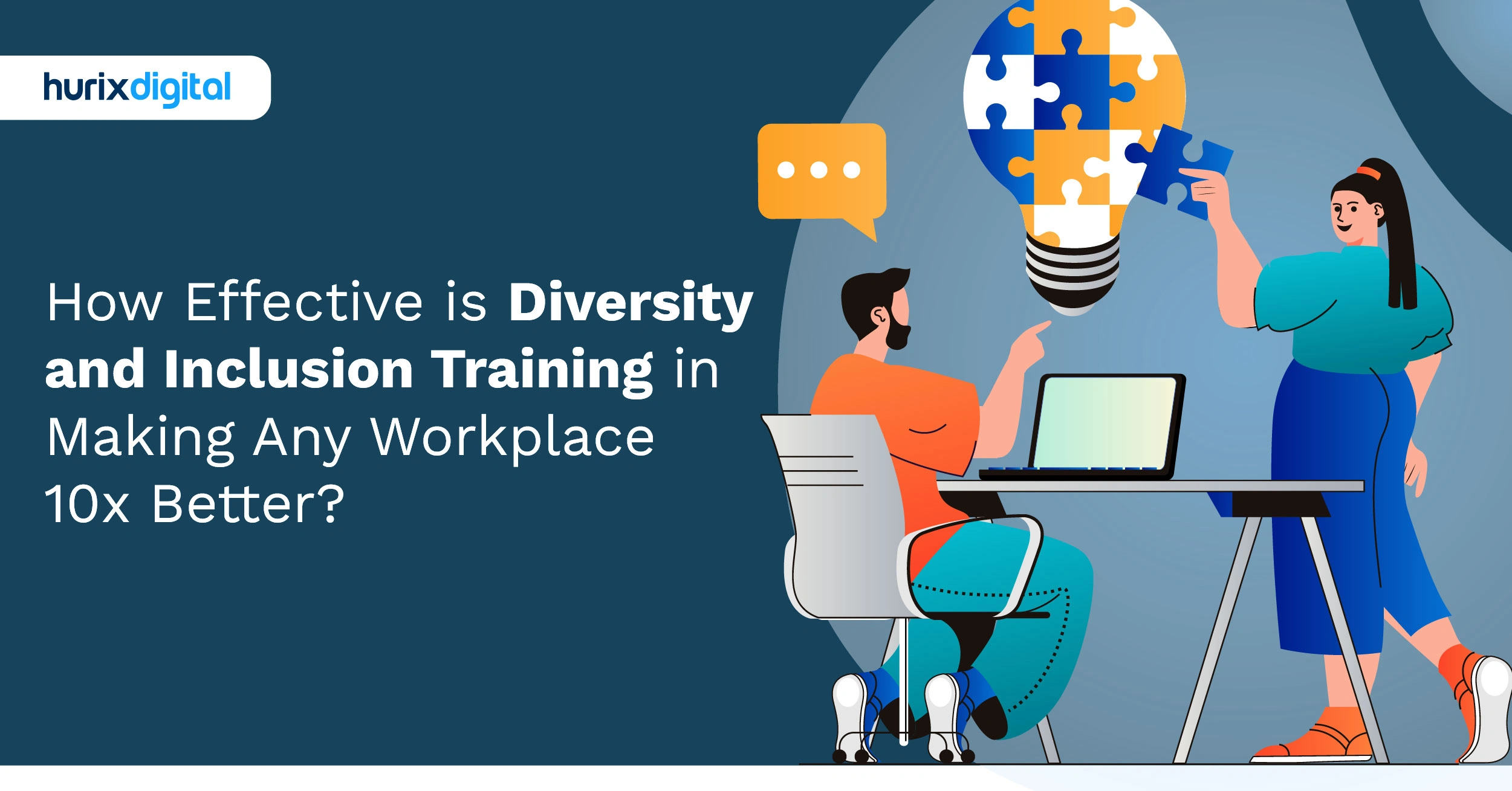
How Effective is Diversity and Inclusion Training in Making Any Workplace 10x Better?
Summarize with:
Creating and delivering diversity and inclusion training programs is a great way to address prejudices and biases within the workplace. What is a diversity and inclusion training program? As the name suggests, it is a professional training program designed to encourage positive interpersonal and intergroup interactions and reduce bias, prejudice, and discrimination.
Workforce development involves employee education through inclusive learning techniques. This helps align the skills of employees with the short- and long-term goals of the organization. 81% of employees and 91% of companies say reskilling or upskilling training has boosted productivity at work.
An inclusive workforce not only nurtures talent but also attracts the best talent in the business. A learning environment that offers reskilling and upskilling opportunities creates a motivated workforce, leading to higher employee retention. The future of an organization is largely dependent on its investment in workforce development.
Diversity and inclusion in the workplace are more than just being politically correct. It is how people embrace differences and consider all inputs and perspectives of all colleagues, regardless of their backgrounds, beliefs, and orientations. Let’s see how you can build such a workplace culture!
Table of Contents:
- Elements of Workforce Development
- What is Diversity and Inclusion Employee Training?
- How to Develop Diversity and Inclusion Training Programs?
- What are the Benefits of Inclusive Training?
- How to Deliver a Diversity & Inclusion (D&I) Training Program?
- How to Implement Inclusive Learning in the Workplace Effectively?
- Wrapping Up
Elements of Workforce Development
Three elements go into addressing the needs of your workforce. They are:
1. Inclusive Learning
The concept of inclusive learning is simple: all employees, regardless of their backgrounds, must have equal access to learning opportunities. Thus, all employees will have an equal opportunity to improve their performance and climb up the ladder within their organization.
2. Training and Development
Training employees to equip them with new knowledge and abilities is an important part of workforce development. Regular training and development activities ensure top-notch job performance from each employee who benefits from the program. Overall, it promotes productivity all across the organization.
3. Employee Education
Encouraging employees to pursue higher education, whether through on-the-job training, partnering with educational institutions, or even reimbursing them for any course they pursue, leads to a more competent workforce. This constantly creates a new flow of highly skilled workers who are already versed in the working style of the organization.
What is Diversity and Inclusion Employee Training?
Diversity and Inclusion training is a systematic effort to create a workplace culture of difference and equity. A diversity and inclusion training program helps employees understand the meaning of diversity and teaches them about inclusive practices.
In the process, organizations create an environment where all members respect each other, feel empowered, and can deliver their best.
The training addresses biases and stereotypes and encourages mutual understanding, collaboration, and agility within diverse groups.
How to Develop Diversity and Inclusion Training Programs?
A D&I training program must be tailor-made to fit the organization’s goals and suit the special needs of the employees. A well-crafted program builds awareness, cooperation, and long-term cultural change. Here is a step-by-step guide on how to design an effective D&I training program.
Step 1: Assess Organizational Needs
First, assess to determine the current gaps and opportunities that exist. This could include:
- Employee Surveys: Collect views on experiences in the workplace and how employees view inclusion.
- Interviews or Focus Groups: Engage with employees to discuss issues and expectations around diversity and inclusion.
- Data Analysis: Conduct metrics such as hiring trends, retention rates, and employee demographics to identify areas for improvement.
Step 2: Set Clear Objectives
Define the specific goals your diversity and inclusion training should achieve. Clear objectives help in designing focused programs. Examples of objectives include:
- Increasing awareness of unconscious bias and its impact.
- Improving cross-cultural communication.
- Encouraging inclusive leadership practices.
- Enhancing teamwork among diverse employees.
Step 3: Design Engaging Content
To maximize the impact of your D&I training, focus on creating engaging and relatable content. Consider including:
- Practical Exercises: Helps facilitate practical application in simulations.
- Role-Playing Exercises: Issues such as conflict resolution or inclusive decision-making.
- Storytelling: About diverse people’s experiences to cultivate empathy and understanding.
- Case Studies: Emphasize the advantages of diversity within thriving organizations.
- Interactive and Engaging Content: Leads to higher retention and application of the message.
Step 4: Identify the appropriate Delivery Style
Adjust the style of delivery to suit your team and organization’s structure. Possibilities are:
- Training Face-to-Face: Useful for encouraging open discussions and instant feedback.
- eLearning Modules: Facilitate a flexible and scalable learning environment with employees working at an individual pace.
- Hybrid Approach: Blend face-to-face sessions with online materials for comprehensive coverage
Tip: The chosen approach has to be accessible to every employee in an organization, including those with disabilities.
Step 5: Engage Leadership
Empower leaders to be ambassadors of diversity and inclusion by training them on issues such as:
- Building diverse teams
- Clearing biases in decision-making.
- Showing inclusive behavior.
Step 6: Create Safe Spaces for Two-Way Communication
Encourage open conversations during the training sessions. Safe spaces allow employees to share their perspectives and learn from one another.
- Use professional facilitators to moderate discussions.
- Set ground rules to ensure respect and confidentiality.
Step 7: Measure Effectiveness
Evaluating the success of your D&I training program ensures continuous improvement. Use the following methods:
- Gather feedback from participants regarding the content and delivery.
- Track changes in employee interactions, team dynamics, or leadership inclusiveness.
- Track changes in hiring diversity, retention of the workforce, and overall workplace satisfaction.
- Update your training content intermittently based on the evaluation results and the changes in the needs of an organization.
What are the Benefits of Inclusive Training?
Inclusive learning is the most important. Employee education can be seen as an important part of inclusive learning as a whole, alongside training and development:
1. Spike in Performances
Inclusive workforce development training creates a diverse and competent workforce. There are quantifiable improvements in the workforce’s performance, which lead to innovation and increased creativity.
When an organization invests in its workforce, it is eventually rewarded with a more positive work culture. It helps with better decision-making and promotes fairness and equality.
2. More Skilled Workforce
Such training and development programs reduce the skill gap and attract and retain top talent. They promote continuous learning and improvement and lead to better job satisfaction among employees.
3. Personalized Learning
Inclusive learning aims to provide a personalized learning experience. Personalized learning is the process by which you develop a training module tailored to the unique needs and goals of each employee. It includes frequent assessments and adjusting difficulty levels according to the progress being made by an individual.
Through adaptive techniques that use learning methods such as online courses, adaptive assessment modules, and one-on-one coaching if needed, the learning methods encourage the learner to take ownership of the process, thus allowing them to feel motivated to complete the process, no matter how long it takes.
In the workplace, personalized learning is the building block of an inclusive training and development program. Tailoring training modules to suit individual needs ensures better engagement and improved understanding. It helps identify individual knowledge and skill gaps and leads to rapid upskilling. Trainers can identify which learning methods improve employee experience the most and implement them.
How to Deliver a Diversity & Inclusion (D&I) Training Program?
Let’s discuss how to deliver an effective diversity and inclusion training program and create a welcoming workplace that respects and values differences:
1. Define Your Diversity And Inclusion Training
To create a diversity and inclusion program for your organization, the first step is to develop a clear definition of what it would entail. Develop a draft that targets all employees and addresses a range of issues, both general and specific to your workplace.
Effective training goes beyond just encouraging employees to shed or tolerate their differences. Rather, the goal should be to promote harmony and mutual respect and teach them to embrace differences and diverse perspectives. While some biases will be specific to your area of operations, your training program should address discrimination and prejudice based on factors such as gender, religion, ethnicity, race, physical and mental ability, sexual orientation, age, and socioeconomic status.
2. Deliver Inclusion And Diversity Training Program Over An Extended Period
Several studies testify that for a diversity and inclusion program to be successful, it has to be delivered over an extended period. It may be that you see the impact of the training after a few sessions; however, employees would likely regress to their original behavior before the training. What the training aims to change is behavior that is generally deeply ingrained in the psyche.
Managers have to be able to observe and respond to any signs of behaviors and attitudes among employees that contradict an inclusive environment. So, for the training to be effective, the message has to be reinforced regularly to make it long-term and sustainable.
Diversity and inclusion should therefore be an integral part of a company’s culture. Such training does not have to be limited to workshops held at regular intervals. Rather, an inclusive culture can also be promoted through mentoring opportunities, events, celebrations, and other experiences to reinforce and build on an inclusive environment.
3. Customize Your Diversity And Inclusion Training
There is no one-size-fits-all approach to an inclusion and diversity training program. Each organization has to look inward, introspect, conduct some fact-finding initiatives, and identify any unresolved conflicts and issues that their employees face.
Customize your diversity and inclusion training program based on your unique objectives and challenges. For a detached assessment, you may also consider external help to guide you with data collection and analysis. Outside experts can give you a fresh perspective in helping you identify prejudices and biases specific to your work environment. Once you have this data in hand, you can set the goals and objectives of your diversity and inclusion training. With tailored data in hand, you can leverage real-life examples that your employees can relate to. So if the training is personalized, chances of long-term impact become stronger.
4. Follow An Integrated Approach
Like any other form of learning, diversity and inclusion training evokes a greater response when it includes several methods of instruction such as discussions, reality-based scenarios, role-playing exercises, mentoring, networking, and lectures. Besides, such programs should also be integrated with sessions on company culture, employee satisfaction and retention, and career development.
The training should also be included in employee onboarding. Another effective method to deliver diversity and inclusion training is through eLearning or microlearning courses since they are shorter and can serve as reinforcement to longer versions of the training. Regardless of your method of instruction or any other program you wish to integrate with, the training should be engaging, be infused into the company culture, and reflect in how employees interact with each other daily.
5. Include Employees of All Levels
Diversity and inclusion should not just be limited to lower-level employees but encompass all staff regardless of their status in the company. When senior-level employees participate in such training, it reflects the commitment of the company to the issue and also acknowledges that everyone can better themselves with training. It is important to keep in mind that all humans are vulnerable to prejudices and bias, whether intentional or unintentional.
The goal of training is not only to agree with another’s perspective but also to accept that we are different and these differences should not stand in the way of any person’s ability to be part of the team and command the same respect as any other person working within or out of the organization.
How to Implement Inclusive Learning in the Workplace Effectively?
Such an inclusive learning method motivates employees to align with organizational goals and boosts productivity. But how do we achieve this goal? It’s really simple. Create a personalized and flexible skill-upgrading program, and here is how:
1. Competency-Based Learning
Start by assessing the specific skills relevant to an employee’s role within the organization. Build a training module around that skill, ensuring it aligns with their current knowledge and skill level.
2. Adaptive Learning
Using the power of predictive analytics, change the content, pace, and difficulty of the learning modules based on the learner’s needs and progress. Continuous assessment and analysis will help with this step.
3. Microlearning Modules
Divide the larger course into bite-sized modules. This will boost information retention and develop a better understanding of the material. Microlearning also promotes learner engagement. You can also incorporate game-style modules for better engagement and to stimulate employee interest.
4. Relevant Compilations
Provide the learner with only relevant information. Compile everything relevant to the current micromodule.
5. Use of Latest Technology
Leverage the potential of digital platforms to impart training. This way, the employee can access the course at any time, anywhere. Online platforms can also leverage the latest technology to make the entire process much more pleasant for the learner. Furthermore, for anyone with learning or mobility disabilities, online learning or assisted learning can be a lifesaver.
6. Flexibility
Allow for maximum flexibility. Employees should be able to start training whenever they can and jump in and out of it depending on their current bandwidth. This will allow them to learn at their own pace.
Wrapping Up
Now that you understand the importance of creating an inclusive learning-based training and development program in your organization, your next question must be: how do we achieve it? Hurix Digital has the answer for you.
Hurix Digital offers all the services you will need to ensure your employees have access to the best inclusive learning program. It offers e-learning solutions tailored to individual needs. The mantra here is “Anytime, Anywhere!” promoting flexibility and adaptability.
Hurix Digital personalizes entire learning modules using adaptive algorithms and user analytics. It has the expertise needed to bridge skill gaps within an organization using its analytics-driven approach.
Most importantly, Hurix Digital excels at including elements of diversity, equity, and inclusion in every learning program it creates. So if you are on the hunt for the best workforce development guide on the market, reach out to Hurix Digital today!
Summarize with:

Senior Vice President
A Business Development professional with >20 years of experience with strong capability to sell new solutions and develop new markets from scratch. New Market Entry Specialist with experience working in the largest emerging markets. Exceptional experience in conceptualizing, ideating and selling new learning technologies like VR AR, etc. across multiple industry verticals.