 A Space for Thoughtful
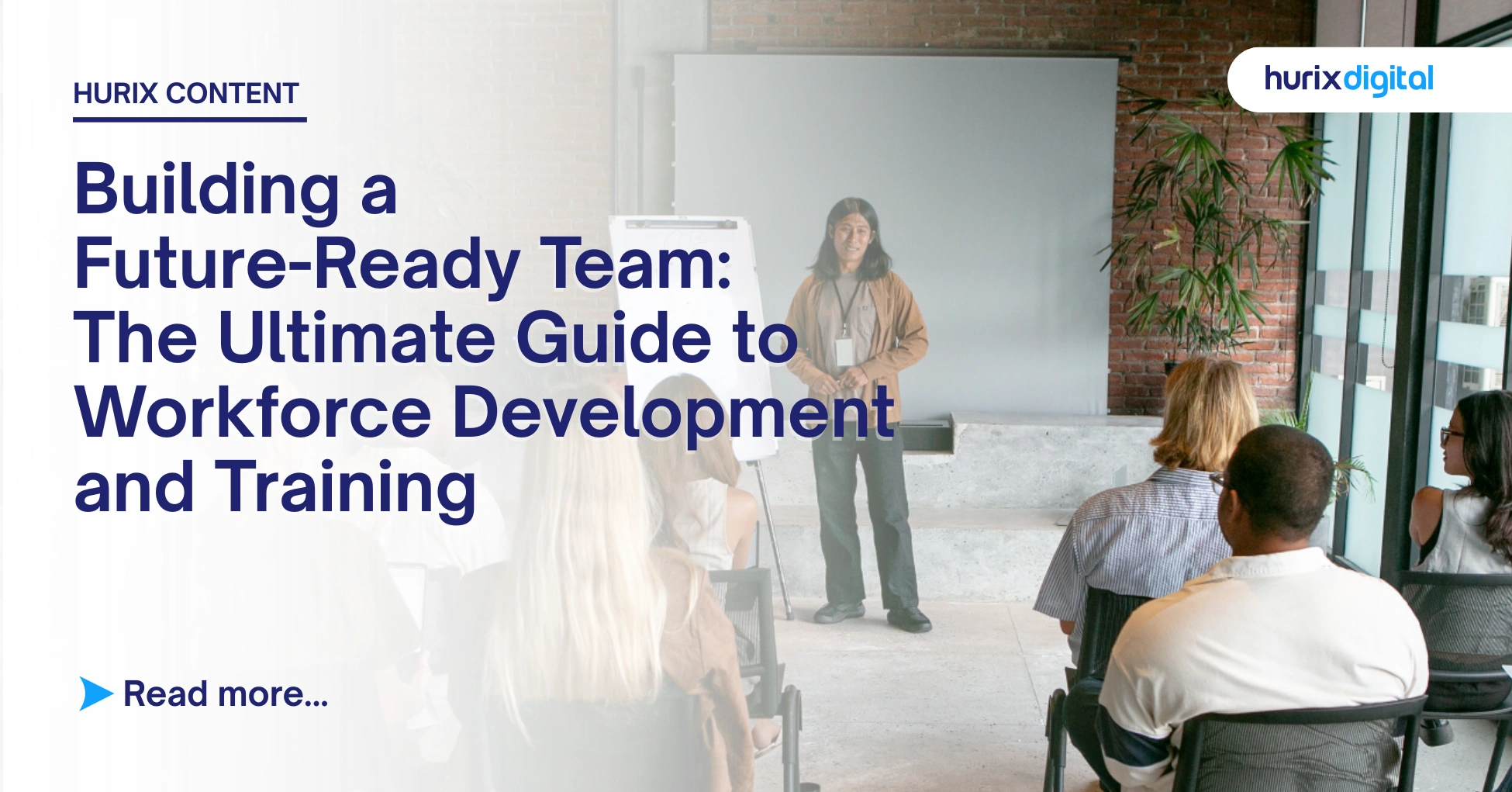
Building a Future-Ready Team: The Ultimate Guide to Workforce Development and Training
Summarize with:
Let’s be honest, trying to keep up at work lately feels like sprinting on a treadmill with a mind of its own. Right when everyone finally figures out a new workflow, someone changes the settings on you. A new tool emerges, a major industry shift happens, or consumer habits change overnight. If you constantly feel like your business is playing catch-up, you are not alone.
Companies everywhere are realizing that hiring people for fixed, unchanging roles is a losing game. To thrive over the long haul, you have to build your talent from within. This realization is driving a massive shift toward employee upskilling and corporate learning ecosystems that actually deliver results.
Table of Contents:
- What is the Difference Between Workforce Development and Workforce Training?
- Why Is Workforce Development and Training Crucial for Modern Business Success?
- 4 Types of Workforce Development Programs to Implement
- How to Build an Effective Workforce Training Strategy
- When Should an Organization Invest in Digital Learning Platforms?
- Conclusion
- Frequently Asked Questions
What is the Difference Between Workforce Development and Workforce Training?
People mix these two terms up all the time, but they serve completely different masters.
Workforce training is tactical and short-term. It is all about teaching an employee a specific skill to solve an immediate problem today. For example, showing a marketer how to pull reports from a new analytics dashboard or walking a sales rep through your new CRM pipeline is workforce training. It fixes an immediate operational need, so the business keeps moving.
Workforce development, however, is strategic and long-term. It takes a big-picture approach, helping both your people and your business grow together. Instead of just drilling someone on a single tool, development mapping focuses on real career paths, leadership potential, emotional intelligence, and keeping your best talent from walking out the door.
Think of training as handing an employee a map for their current route. Workforce development teaches them how to navigate the terrain no matter where the business decides to travel next.
Why Is Workforce Development and Training Crucial for Modern Business Success?
Investing in your people is no longer a luxury reserved for massive conglomerate corporations. It is a baseline requirement to keep your business relevant. Here is why building a true learning culture matters so much right now.
1. It Crushes Employee Turnover
Employees leave when they feel stuck in a dead-end routine. When you give people clear opportunities for professional development, you show them a future within your company walls. People stay where they see a path to grow.
2. It Closes Critical Skill Gaps
Technology moves significantly faster than traditional educational systems. The technical skills your team needs today might not have even been a blurb on a tech blog 5 years ago. Keeping up with continuous learning means your business never gets caught flat-footed or stuck with an outdated playbook.
3. It Boosts Productivity and Innovation
When people truly understand the nuts and bolts of their day-to-day work, they stop just racing against the clock. They start making better choices on the fly because they actually grasp what needs to happen. When your team sees the bigger picture behind their daily tasks, they stop mindlessly checking boxes and start finding clever ways to clear out old operational bottlenecks.
4 Types of Workforce Development Programs to Implement
Building a truly resilient workforce means moving past the dusty idea of an annual corporate seminar or a generic training video. You need a mix of learning styles that actually keeps people awake. Here are four essential frameworks to help upgrade your team’s capabilities.
1. Technical Upskilling and Reskilling
Think of upskilling as upgrading your team’s current toolkit so they can tackle tougher projects. Reskilling is different—it prepares them to switch tracks into a completely new role under your roof. Shifting gears like this is a massive lifesaver when new technology or a sudden change in business direction wipes out old ways of doing things overnight.
2. Leadership and Management Development
Excellent individual contributors do not automatically become excellent managers just because they were promoted. They need structural support. Leadership programs focus heavily on the human side of business—like communication, strategic planning, conflict resolution, and empathy.
3. Compliance and Safety Training
Let’s be real—nobody jumps for joy when compliance training lands on their calendar. But keeping your business safe and out of legal hot water is non-negotiable. Using modern compliance training solutions ensures the rules actually click with your team, rather than turning into a boring slideshow they tap through just to make the screen go away.
4. Soft Skills and Adaptability Training
Hard skills might get an employee through the door, but soft skills are what keep your everyday projects moving smoothly. Focus on collaboration, time management, and problem-solving to build a workplace environment that can handle sudden market changes without breaking down.
How to Build an Effective Workforce Training Strategy
Throwing money at generic online course libraries and hoping your team uses them is a recipe for a zero return on your investment. A successful program requires a deliberate, step-by-step approach.
Step 1: Figure out Where Things Are Stalling
Before you spend a single dime, you need to map out exactly where your business is hitting a wall. Get on a call with your team leads, dig into the everyday bottlenecks messing up your workflow, and ask your employees directly which specific tools or routines make them want to pull their hair out.
Step 2: Use Tech to Do the Heavy Lifting
Old-school classroom training is incredibly tough to scale, especially if you are managing remote or hybrid teams across different time zones. Instead, look into setting up a white-label learning management system (LMS) to host custom content your team can easily access whenever it actually fits into their busy workday.
Step 3: Design Engaging, Bite-Sized Content
Long, dry lecture videos cause immediate mental fatigue. Instead, focus on microlearning—which just means breaking complex topics down into highly focused, five-minute modules. If you lack the internal resources to build these yourself, partnering with an expert custom content creation company can save you months of frustrating trial and error.
Step 4: Track, Measure, and Refine
Don’t just stare at a dashboard of completed course percentages, check a box, and call it a day. You need to look for real behavioral changes happening on the floor. Are your customer service scores climbing? Is your dev team shipping cleaner code with fewer frantic hotfixes? Use those messy, real-world business results to judge whether your training is actually making a dent.
When Should an Organization Invest in Digital Learning Platforms?
If your business is growing or managing a distributed team, the right time is usually right now. Relying on casual, peer-to-peer shadowing becomes impossible to manage the moment your headcount grows, or people start working from different zip codes.
When you are onboarding remote talent, launching new service lines, or standardizing quality across departments, digital platforms are essential. They provide a single source of truth for everyone, ensuring your standard of excellence remains consistent across the entire board.
Conclusion
Investing in your people isn’t about ticking a corporate compliance box or hitting an HR quota just to look good on paper. It is about future-proofing your business against market shifts that nobody can yet see coming. The gap between where your company stands today and where it needs to be tomorrow almost always comes down to the right learning strategy.
When you give your team the room to grow, they don’t just work faster. They work smarter, stick around longer, and actively seek creative ways to move the needle. Building a genuine learning culture turns your workforce from a fixed administrative expense into an adaptable engine that can pivot at the drop of a hat when the market demands it.
Ultimately, the effort you put into shaping your team sets the ceiling for your entire organization. Standing still and hoping your current skill set stays relevant is a massive gamble. It takes deliberate planning and the right digital infrastructure to get it right, but the payoff of a highly skilled, motivated team is worth every bit of the heavy lifting.
Building a future-ready workforce requires the right strategy, engaging content, and the right technology platform. Hurix Digital helps organizations design, build, and deploy custom learning experiences that drive real behavioral change and business growth. From interactive custom content to scalable technology solutions, we provide everything you need to upgrade your workforce capabilities.
Don’t leave your team’s growth to chance. Let’s talk about how we can build a tailored learning ecosystem for your organization. Book a discovery call to know more!
Get in Touch With HurixDigital Today
Frequently Asked Questions(FAQs)
Q1: How do we encourage employees to participate in training when they are already busy?
The best approach is to integrate learning into their daily workflow rather than treating it as an extra task. Offer short, bite-sized lessons that take ten minutes or less, and explicitly allocate dedicated time during the regular work week for professional growth.
Q2:What metrics best prove the ROI of a workforce development program?
Look beyond simple test scores. Measure shifts in operational metrics such as reduced error rates, faster project turnaround times, higher internal promotion rates, and higher employee retention rates. These numbers directly impact your bottom line.
Q3:How can small businesses afford comprehensive employee development?
Small businesses can start by leveraging targeted digital platforms and focused eLearning modules rather than expensive in-person retreats. Prioritize the most critical skill gaps first, and utilize scalable technology to keep delivery costs low.
Q4:What is the role of mentorship in a digital training environment?
Mentorship bridges the gap between theory and practice. Even with the best digital tools, pairing a junior employee with a seasoned mentor ensures that institutional knowledge is shared and that new skills are applied correctly in real-world scenarios.
Q5: How often should training content be updated to remain relevant?
Technical and compliance content should be reviewed at least once a year, or immediately whenever major industry regulations or software updates occur. Soft skills training typically runs longer without major revisions.
Summarize with:

Senior Vice President – Sales at Hurix Digital
With an extensive track record in the education technology and digital content sectors. He specializes in driving strategic sales growth and managing high-value partnerships across the higher education and corporate landscapes. With a focus on innovative software solutions and digital transformation, John is instrumental in expanding Hurix’s global footprint by delivering scalable, technology-driven learning platforms to clients.