 A Space for Thoughtful
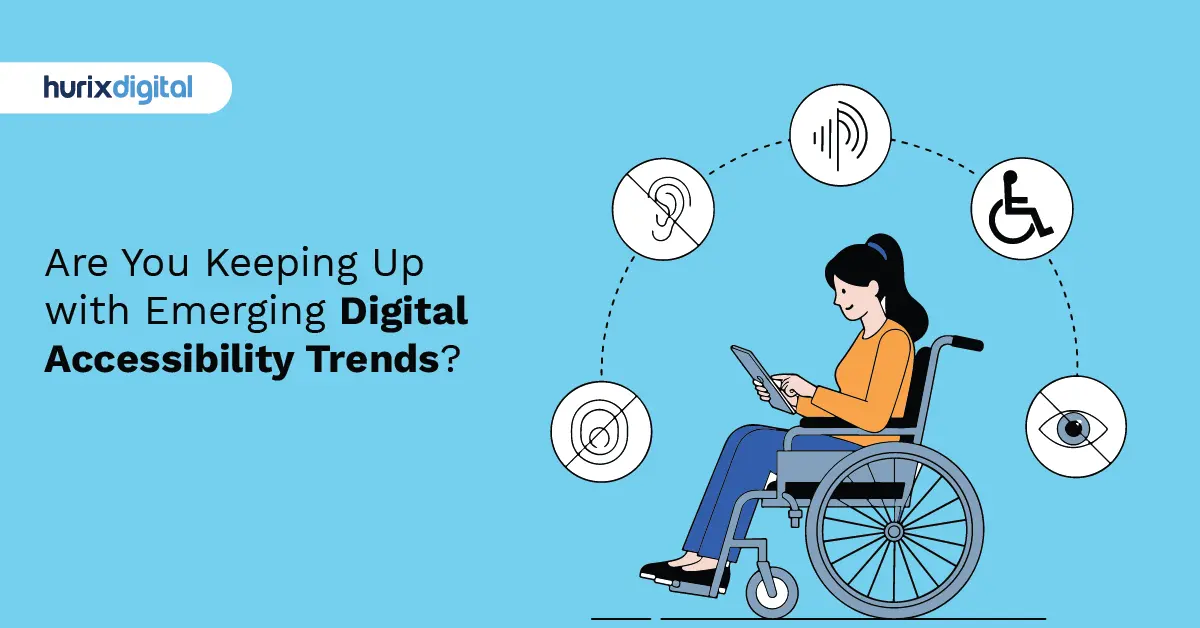
Are You Keeping Up with Emerging Digital Accessibility Trends?
Summarize with:
Imagine a digital world where every single person can participate, regardless of their abilities. That’s the core promise of digital accessibility. The landscape of technology accessibility is undergoing a significant transformation, driven by everything from the rise of AI to major updates in global standards. A surprising 96.3% of homepages still had detectable WCAG 2 failures in a recent survey, highlighting a massive opportunity for improvement.
So, what does the future hold? Let’s explore the key digital accessibility trends that are shaping a more inclusive and user-centric online experience for all.
Table of Contents:
- What Exactly is Digital Accessibility?
- Why Web Browsing Accessibility is More Important Than Ever
- Key Digital Accessibility Trends Shaping Our Future
- Essential Tech Solutions for Web Browsing Accessibility
- Diving Deeper: What WCAG 3.0 Means for Digital Platforms
- 7 Best Practices for Creating Accessible Content
- Summing It Up: Your Partner in Accessibility
What Exactly is Digital Accessibility?
Before we jump into future trends, let’s get on the same page. Digital accessibility is the practice of designing and developing websites, apps, and other digital tools so that people with disabilities can use them effectively. This encompasses all disabilities that affect access to the web, including auditory, cognitive, neurological, physical, speech, and visual impairments.
Think about your favorite news website. If you were visually impaired, you would rely on a screen reader to consume the content. For this to work, the website must be built with text-to-speech compatibility. That’s a classic example of digital accessibility in action. The goal is to ensure that everyone has equal access to information and functionality.
The primary framework guiding these efforts is the Web Content Accessibility Guidelines (WCAG), which provides a shared standard for web content accessibility that meets the needs of individuals, organizations, and governments internationally.
Ultimately, opening up the digital universe for everyone is about more than just business or legal requirements. It’s about fundamental inclusivity and humanity.
Why Web Browsing Accessibility is More Important Than Ever
Making the internet accessible isn’t just a kind gesture; it’s a critical business and ethical imperative. As our lives become increasingly digital, ensuring equal access has wide-reaching benefits for your organization, your customers, and society as a whole.
1. It Promotes Equal Digital Access
Did you know that Americans with disabilities are three times more likely to say they never go online compared to those without a disability? This digital divide is a significant barrier to participation in modern society. Web browsing accessibility is a direct way to help close this gap by making online spaces more user-friendly and accommodating.
The best accessibility solutions transform the internet into a more welcoming place. This effort makes your website and content more inclusive for all people, expanding your potential audience and customer base. By welcoming prospects and clients with disabilities, your organization can tap into a larger market, which includes over one billion individuals worldwide living with some form of disability. Moreover, a commitment to accessibility enhances your brand image, signaling an inclusive and forward-thinking culture.
2. It Helps You Avoid Legal Headaches
Digital accessibility lawsuits are on the rise. In 2020 alone, there were over 3,500 cases filed in the U.S. Implementing web browsing accessibility solutions and conducting regular accessibility testing helps your organization meet legal requirements like the Americans with Disabilities Act (ADA) and avoid the risk of costly legal claims, settlements, and penalties. Abiding by these rules is vital, as web accessibility is mandated in many regions.
3. It Creates Better, More User-Friendly Digital Spaces
When you design for accessibility, you often create a better experience for everyone. Features that benefit users with disabilities—such as clear navigation, readable fonts, and transcripts for videos—also improve the overall user experience for all visitors. This can lead to higher customer engagement, better retention, and an extended market reach. In the competitive world of digital marketing, a user-friendly and accessible website can be a powerful differentiator.
Key Digital Accessibility Trends Shaping Our Future
Have you ever stopped to think about what “technology access” truly means? It’s not about having the latest gadget; it’s about ensuring the digital world is open to everyone, including individuals with physical, cognitive, or age-related challenges. Companies and developers are now placing a much greater emphasis on this, embracing trends that are revolutionizing technology accessibility. Let’s explore what’s on the horizon.
1. Disability Inclusion is Becoming Central to Business Strategy
More and more businesses are moving beyond simple compliance and are truly taking disability inclusion to heart. They are adopting an inclusive mindset and building it into their core strategies. For example, many social media platforms are simplifying their interfaces and adding functionalities like voice commands, making digital communication seamless for people with mobility issues.
This shift isn’t just about ethics; it’s good business. Embracing accessibility helps companies avoid expensive lawsuits under regulations like the ADA and WCAG. More importantly, it promotes a positive corporate image and unlocks access to products and services for a global market that may have been previously excluded.
2. Accessibility Standards and Laws Are Getting Stronger
As we look toward the future, we see accessibility standards continuously evolving and becoming more stringent worldwide. This is pushing businesses to adopt accessibility as a core principle for their online products. The introduction of WCAG 3.0 considerations is set to drive global accessibility forward with a more nuanced and user-centric approach.
To keep up, businesses can use services like Hurix Digital’s free accessibility audit to pinpoint critical areas for improvement and align their digital presence with the latest benchmarks. Industry giants are setting high standards, motivating other businesses to follow suit. Consequently, accessibility is becoming a foundational element of user-centered design, where the unique needs of all individuals are considered from the very beginning.
3. Artificial Intelligence is Revolutionizing Accessibility
The fusion of AI and accessibility is a true game-changer. AI is already making a significant impact by powering assistive technologies like screen readers, speech recognition software, and braille displays, making them more sophisticated and user-friendly.
Here are a few ways AI is driving innovation:
- Personalized Experiences: AI can analyze user behavior and preferences to offer digital experiences tailored to different needs. This allows for specific accommodations that can dramatically improve usability for individuals with disabilities.
- Predictive Assistance: AI-powered tools like voice assistants and predictive keyboards are already making a notable difference, and their capabilities are only expected to expand.
- Automated Testing: AI-powered tools can efficiently automate accessibility testing, quickly flagging and even fixing issues. This helps businesses maintain high standards while significantly reducing the time and cost associated with manual audits.
Essential Tech Solutions for Web Browsing Accessibility
While developers and content creators work to build more accessible websites, several existing technologies already empower users to navigate the web more effectively. These tools work in tandem with accessible design to create a more inclusive experience.
1. Screen Magnification Software
For people with vision impairments, reading content online can be a strain. While browsers have a zoom function, it often disrupts the page layout, making it difficult to read. Screen magnification software solves this by enlarging only a portion of the screen, keeping the overall layout intact. This makes text more legible and reduces eye strain. As a content creator, you can support this by ensuring your site’s content can be magnified without losing functionality.
2. Voice Recognition Software
Voice recognition software is a lifeline for people with physical or cognitive disabilities that make typing difficult. This technology allows users to dictate text, command their browser, and operate websites using only their voice. For instance, a user could say, “Go to the next page,” to navigate a site. While some operating systems have built-in speech recognition, various third-party applications are also available. Web developers can make their sites more voice-friendly by using clear labels for interactive elements, such as a “submit” button on a form.
3. Hands-Free Mouse Tracking
For those who cannot use a traditional mouse, hands-free mouse tracking technologies offer an alternative. These systems use a variety of methods to control the cursor:
- Head Tracking: A webcam tracks the user’s head movements to direct the cursor and perform clicks.
- Eye Tracking: Advanced software monitors the user’s eye movements to determine where they are looking and provides on-screen keyboard commands.
- Laser Pointers: Some solutions involve a device worn on the head that uses a laser pointer to control the cursor.
4. Screen Reading Software
Screen readers are essential tools for people with visual impairments or learning disabilities like dyslexia. This software converts on-screen text into synthesized speech, allowing users to listen to the content of a webpage. To make your content compatible with screen readers, you should:
- Provide descriptive alt text for all images.
- Offer transcripts for video and audio content.
- Use a clear and logical heading structure (H1, H2, H3, etc.) to help the screen reader scan the page.
Diving Deeper: What WCAG 3.0 Means for Digital Platforms
The Web Content Accessibility Guidelines (WCAG) are evolving, and the upcoming version 3.0 (codenamed “Silver”) promises to raise the bar for digital accessibility. While still in development, the considerations for WCAG 3.0 signal a shift toward a more holistic, user-centric, and flexible framework.
Here’s a look at what we can expect:
1. Amplified Clarity and Simplicity
One of the primary goals of WCAG 3.0 is to make the guidelines easier to understand for everyone, not just developers. It aims to eliminate dense technical jargon and describe concepts in simple, plain language.
2. Comprehensive and Holistic Evaluations
WCAG 3.0 is expected to move away from the strict pass/fail model of its predecessors. Instead, it will likely introduce an aggregation scoring system that provides a more nuanced view of a site’s accessibility. This system would consider multiple factors, including the severity of accessibility issues and their real-world impact on the user experience, offering a more accurate assessment.
3. A More Fluid Conformance Model
The new framework introduces a more dynamic approach called the Conformance Model. It recognizes that perfect accessibility isn’t always achievable across an entire website. This model allows for different levels of conformance, so if certain parts of a site are inaccessible, the entire site isn’t deemed a failure. This pragmatic approach focuses on continuous improvement and prioritizes the needs of users with disabilities.
7 Best Practices for Creating Accessible Content
Ensuring your content is accessible is not just a recommendation; it’s an expectation. As a web writer or content creator, you play a crucial role. Here are seven best practices to follow.
- Use Clear and Simple Language: Write in a way that is easy to understand for all users, including those with cognitive disabilities. Avoid jargon and overly complex sentences. The goal is to convey your message efficiently.
- Structure Content with Headings: A logical heading structure (H1, H2, H3) organizes your content and makes it much easier for screen reader users to navigate. Ensure your headings are clear, descriptive, and follow a hierarchical order.
- Provide Descriptive Alt Text for Images: Alternative text (alt text) is a textual substitute for images. It allows screen readers to describe the image to visually impaired users. Good alt text is concise but descriptive and is also beneficial for SEO.
- Ensure Full Keyboard Navigation: Many users with motor disabilities rely on a keyboard instead of a mouse. Ensure that all interactive elements on your website, including links, buttons, and form fields, are fully accessible and operable using only a keyboard. This greatly improves accessibility on mobile devices as well.
- Provide Transcripts for Multimedia: For any audio or video content, provide a text transcript. This ensures that users with hearing impairments can access the information. Transcripts also benefit users who simply prefer to read content rather than watch or listen to it.
- Use Descriptive and Meaningful Links: Avoid generic link text like “click here” or “read more.” Instead, use descriptive language that tells the user where the link will take them. For example, instead of “Click here for our services,” use “Explore our digital accessibility services.” This provides context for screen reader users.
- Test for Accessibility Regularly: Use automated tools like WAVE, Axe, or Lighthouse to find and fix accessibility issues on your site. However, automated tests can’t catch everything. It’s also vital to conduct manual testing, preferably with people who have disabilities, to ensure your site works well in real-world scenarios.
Summing It Up: Your Partner in Accessibility
There’s no question that the future of digital accessibility is bright. Advancements in AI, stronger global standards, and a growing emphasis on inclusive design are paving the way for a more equitable digital world. As we move forward, these digital accessibility trends promise even more exciting innovations.
However, navigating this intricate landscape can be daunting without the right partner. Achieving effortless accessibility demands expertise and a deep understanding of WCAG considerations, emerging technologies, and user needs. As a leader in digital content and creative services, Hurix Digital empowers organizations with AI-driven solutions and tailored accessibility strategies.
We can help you meet your accessibility goals and create a truly inclusive digital experience for all users. Learn more about how our expertise can support your journey toward universal accessibility.
Summarize with:

Vice President – Content Transformation at HurixDigital, based in Chennai. With nearly 20 years in digital content, he leads large-scale transformation and accessibility initiatives. A frequent presenter (e.g., London Book Fair 2025), Gokulnath drives AI-powered publishing solutions and inclusive content strategies for global clients