 A Space for Thoughtful
Creating Personalized Learning Experiences with K12 Content Solutions
Summarize with:
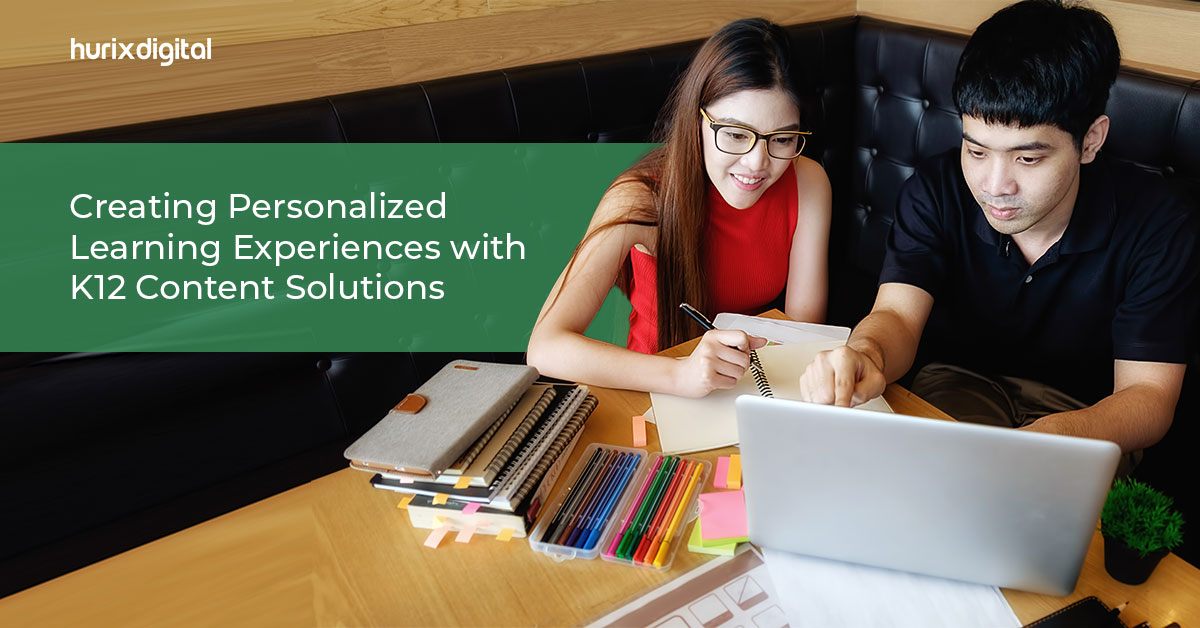
Personalized learning is changing the face of education. Is your school aware of what it is? If not, keep reading to know what personalized learning is and what it constitutes. This modernized educational approach makes learning learner-centric and impactful by focusing on a learner’s interests, needs, and abilities. It thwarts the notion of one-size-fits-all and involves the use of custom content development to create custom learning experiences.
This approach involves giving different instructions to different students and embracing a non-linear learning process where students learn at their own pace. Unlike traditional learning, it enables teachers to interact with each student individually, fostering a more supportive and effective educational environment.
Personalized learning has numerous benefits. A study conducted by RAND and Pane researchers highlights two of them. Personalized learning helped 11,000 students from 62 schools make greater gains in reading and math. It also increased students’ achievement growth the longer they were exposed to it. Other benefits include giving students ownership of their learning process, which engages and motivates them to learn at their own will.
Now that you have become aware of personalized learning, let’s focus on understanding what K12 content solutions mean and how they facilitate these tailored educational journeys.
Table of Contents:
- What are K12 Content Solutions?
- Why K12 Organizations Need Content Solutions to Create Custom Learning Experiences?
- How Do K12 Content Solutions Help in Creating Personalized Learning Experiences?
- How AI is Revolutionizing the Way Teachers Create Custom Learning Experiences
- Selecting the Right Content Solution for Personalized Learning in K12 Education
- Best K12 Content Solutions Trends for Personalized Learning
- Advantages of Ready-to-Use Custom Learning Content
- Conclusion
What are K12 Content Solutions?
K12 learning solutions refer to the educational material used to teach students from kindergarten to grade 12. In other words, K12 content solutions consist of learning materials for primary, middle, and high school students. They are typically online in nature and aim to replace or supplement traditional teaching methods.
Why K12 Organizations Need Content Solutions to Create Custom Learning Experiences?
K12 organizations use advanced content solutions, and here are some reasons why such solutions are indispensable for creating personalized educational journeys.
1. Multifaceted Fulfillment of Learning Needs
Every student is unique, and each student learns differently; some are visual learners, others are hands-on, while other students learn primarily through an auditory channel. Solutions in content offer flexible tools to develop materials and distribute them to help cater to such diverse types of learning. This flexibility allows teachers to modify lessons for a student according to his or her preferences, ensuring no one is ever left behind.
2. Increased Engagement
Because students are working on interesting content that reflects their strengths, they are likely to become more interested in what they learn. K12 content solutions allow teachers to create interactive, immersive, and gamified lessons that spark curiosity and keep students deeply invested in learning. Furthermore, AI-based personalized learning solutions enhance student engagement and learning outcomes, as reported by 18% and 15% of users, respectively, in a survey.
3. Data-Driven Insights
The newest content solutions support analytics, which facilitates real-time student performance and behavior tracking. Educators are empowered to know every child’s strengths, weaknesses, and learning gaps. This data enables them to make informed decisions and tailor their instructional strategies accordingly, providing targeted support where it’s needed most.
4. Scalability
Content solutions help automate most aspects of lesson customization, assessment, and feedback. Whether 20 students or 2,000 are in the picture, these tools help deliver quality, individualized instruction with fewer resources. This efficiency saves teachers valuable time, allowing them to focus on more direct instructional activities.
5. Future Ready Skills
In this fast-changing world, students should be well-equipped to enhance their critical reasoning and problem-solving skills. Real-world solutions provide opportunities for students to engage with material in a way that develops these future-ready skills, enhancing their adaptability and preparing them for future challenges.
How Do K12 Content Solutions Help in Creating Personalized Learning Experiences?
To create truly personalized pathways, your school needs access to the right K12 content solutions. If it doesn’t have them, you can outsource the content from a digital content and learning platform. A platform specializing in custom content development for K12 students can help your school create custom learning experiences in the following ways:
1. Provides an Analysis of Students’ Cognitive Abilities
An e-learning platform analyzes the performance of your students. Based on the evaluation, it creates an advanced analytics report that provides teachers with knowledge of their cognitive abilities. In a way, it lets teachers know the strong and weak areas of a topic for each student. Accordingly, they can discuss the weak topic area through one-on-one interactions with every student, leading to targeted teaching. An e-learning platform also lets teachers provide additional support material to every student, ensuring that every student’s needs are addressed.
2. Interactive eBooks Accommodate Different Learning Styles
An e-learning platform enables your teachers to dabble in custom content development by letting them create interactive ebooks. These ebooks can include multimedia-rich content in the form of videos, audio, animation, and images. Since some students learn better by reading text, some by listening, and some by doing an activity, interactive ebooks cater to the different learning styles of every student. In addition to custom K12 content, interactive ebooks provide various customization features like markup, search, and bookmarking. By using these tools, students get to personalize their learning.
3. Provides Immersive Learning through Games and Activities
According to a study, personalized games encourage tolerance and risk-taking behavior within the confines of a safe environment. By doing this, they promote experimentation rather than passive learning. An e-learning platform makes it easily possible for your teachers to come up with games and collaborative activities. These can include showing simulations and 3D models to students in class, which helps give them a concrete structure to abstract concepts. Your teachers can also leverage virtual reality by transporting students to different places in real time. For example, VR can transport students to different countries and continents in a geography lesson. Thus, gamification and virtual reality provide an immersive learning experience, motivate students to participate actively, and solve complex problems.
4. Provides a Flexible Learning Experience
An e-learning platform enables your students to access custom K12 content on any smart device, be it phones, laptops, or tablets. Not only this, but your students can decide which topic they want to start with first. Thus, custom content development gives your students more autonomy over their learning. It also makes education more accessible, flexible, and adaptive. Consequently, students can study anywhere and anytime they want, developing their time-management skills in the process.
5. Provides Customized Assessment Tools and Feedback
An e-learning platform enables teachers to create customized and interactive assessment tools for every chapter. The assessment tools can consist of quizzes or activities that require the practical application of theoretical concepts. They also provide students with the option of choice – whether they want to do a quiz or an activity for the online assessment. Teachers can also add grading scales and feedback at the end of the assessment. This clues students into their performance and conceptual understanding, letting them know the concepts they are strong in and the ones they need to revisit.
How AI is Revolutionizing the Way Teachers Create Custom Learning Experiences
Using artificial intelligence (AI) in education has a profound impact on pedagogical practices. From bespoke K12 curriculum development to automating grading, AI benefits teachers and accentuates their teaching style. In fact, 55% of teachers believe that AI improves educational outcomes. Let’s explore how AI is revolutionizing lesson planning and content creation.
1. Generates Lesson Hooks and Objectives
Learning objectives are an important component of lesson planning, as they indicate the knowledge and skills a student should acquire. AI-powered tools can help teachers generate specific, valuable, and measurable objectives. Additionally, they can make lessons more interesting by generating eye-catching hooks, like an interesting anecdote or a joke related to the subject matter.
2. Fosters Personalized and Adaptive Learning
An integral element of lesson planning involves providing personalized learning pathways. AI tools enable teachers to tailor lessons to each student’s academic strengths and weaknesses and allow them to study in their preferred style. As a result, students learn at a comfortable pace. Besides customization, AI tools facilitate an adaptive learning experience by analyzing student data and modifying lessons in real time to meet individual needs.
3. Curates Dynamic and Engaging Content
AI tools assist in curating a wide range of course material. They help teachers create bite-sized lessons that function well across multiple devices and can generate media-rich study material like videos, audio, and infographics. This type of content makes learning highly engaging, improves comprehension, and boosts information retention.
4. Curates Gamified and Immersive Experiences
AI tools introduce elements of gamification by adding goals and rewards like badges and points, which drive student motivation. Furthermore, technologies like AI, VR, and AR enable teachers to curate immersive content. For instance, students can virtually view the human brain’s structure or visit historical sites, helping them understand the real-life application of theoretical concepts.
5. Fosters Data-Driven Lesson Planning
AI tools foster data-driven lesson planning by analyzing student engagement, behavior, demographics, and assessment scores. Based on this data, AI-powered tools enable teachers to inform individual lesson plans and instructions to cater to and provide a wholesome learning experience for every student.
Selecting the Right Content Solution for Personalized Learning in K12 Education
Here are critical factors to consider when making your choice:
1. Personalization Features
Personalized lesson plans, activities, and assessments are key to creating custom learning experiences. A comprehensive solution, therefore, should allow teachers to create or adapt content to meet the needs, goals, and interests of an individual child.
2. Integration with Other Tools, Platforms, and Technologies
A content solution should integrate seamlessly with the tools, platforms, and technologies already used by the school. This includes the Learning Management System (LMS), student information systems, and various devices, ensuring a cohesive and user-friendly ecosystem.
3. Data Security and Privacy
Just as the application of technology in learning becomes a norm, safeguarding student data is of utmost importance. The solution implemented should embrace high standards of privacy and secure data with encryption and authentication. This builds trust among parents, educators, and students, ensuring sensitive information is protected.
4. Usability
An effective content solution must be intuitive and accessible for both teachers and students. A user-friendly interface allows teachers to easily create and manage lessons, while students can focus on learning rather than grappling with technical issues.
5. Cost and Scalability
Schools must determine whether the solution provides good value for the money. An effective solution should be economical and scalable to support the growth of the school or district. It must accommodate increasing enrollments, new features, or added content without a drastic increase in cost.
Best K12 Content Solutions Trends for Personalized Learning
Below are some of the trending content solutions and tips for K12 personalized learning:
1. Modular Content Design and Microlearning
Break learning materials into independent modules that students can work through at their own pace. This flexibility allows students to concentrate on areas where they are weak and skip what they already understand. It has been reported that microlearning enhances student retention by 22% compared to traditional learning methods.
2. Interactive Multimedia
Videos, animations, and gamified content engage students through dynamic approaches. Interactive multimedia is also very helpful for visual and auditory learners, making complex topics easier to understand.
3. Adaptive Learning Platforms
AI tools should be able to provide customized lessons and assessments. These platforms should analyze performance in real-time and adjust the difficulty and content according to individual capabilities.
4. Collaborative Learning Tools
Group work and collective assignments increase peer learning and develop social and teamwork competencies. Therefore, it is important to choose modern K12 solutions that support collaborative and personalized education.
5. Project-Based Learning in STEM
Curriculum design based on real-world problems and hands-on projects is a major trend. Project-Based Learning (PBL) allows students to apply abstract knowledge to practical situations, helping them understand the real-world relevance of STEM subjects. According to a study, 3rd-grade students in PBL classrooms outperformed their peers by 8 percentage points in a science-based exercise.
6. Data-Driven Personalization
Use analytics tools to track student learning. Using this data, instruction can be adapted to identify where students are struggling and meet their needs, ensuring all students have an opportunity to succeed.
7. Language and Accessibility Features
Make content accessible to all by including features such as translation, closed captions, and text-to-speech tools. These features enable students with varying abilities or language needs to fully participate in learning.
8. Custom Assessments
Move beyond standardized testing. Use a variety of assessments like quizzing, open-ended projects, and peer reviews. That way, assessments measure what a student knows and can do, rather than just their ability to take tests.
Advantages of Ready-to-Use Custom Learning Content
While creating custom content from scratch is powerful, ready-to-use or off-the-shelf learning resources also offer significant advantages for K12 institutes looking to deliver effective education efficiently.
- Ready To Deploy Immediately: Pre-built content eliminates the time-consuming process of development and revision, allowing students to start learning right away.
- Low Cost: Buying a ready-made digital course is typically more cost-effective than designing one from scratch, delivering informative and engaging learning at a lower price point.
- Covers Many Topics Efficiently: High-quality providers continuously improve and update their course content, often designing lessons that build upon each other for maximum value.
- Time-Saving: Off-the-shelf lessons save a great deal of time for institutes and students, offering a quick turnaround for delivering necessary content.
- Quality of Content: These resources are often created by subject matter experts, ensuring a high level of quality and expertise that can lead to better engagement and confidence.
- No Stress On Your Current Resources: Pre-built lessons don’t require additional work from teachers, preventing strain on already pressed schedules and budgets.
Conclusion
A study found that the higher the level of personalization, the better the academic achievement, student engagement, and school culture. If your school wants to deliver an improved form of education, it needs help from an e-learning platform that supports the creation of custom learning experiences.
Among the many custom content development platforms, Hurix Digital is top-notch. It is an all-in-one digital content suite that can personalize the learning experience for your K12 students. It provides your teachers access to a digital library and helps them create interactive course material. It helps your school promote an active learning experience mapped to the global curriculum and available in multiple languages. To learn more about Hurix Digital, connect with us.
Summarize with:

Performance, Results, Growth, and Life-Long Learning define my professional life. I am passionate about making workplace learning planful, purposeful, and impactful. I take pride in partnering with clients and bringing them the best in learning design and creating solutions that address business challenges.