 A Space for Thoughtful
How to Implement 3D Learning in K12 the Right Way?
Summarize with:
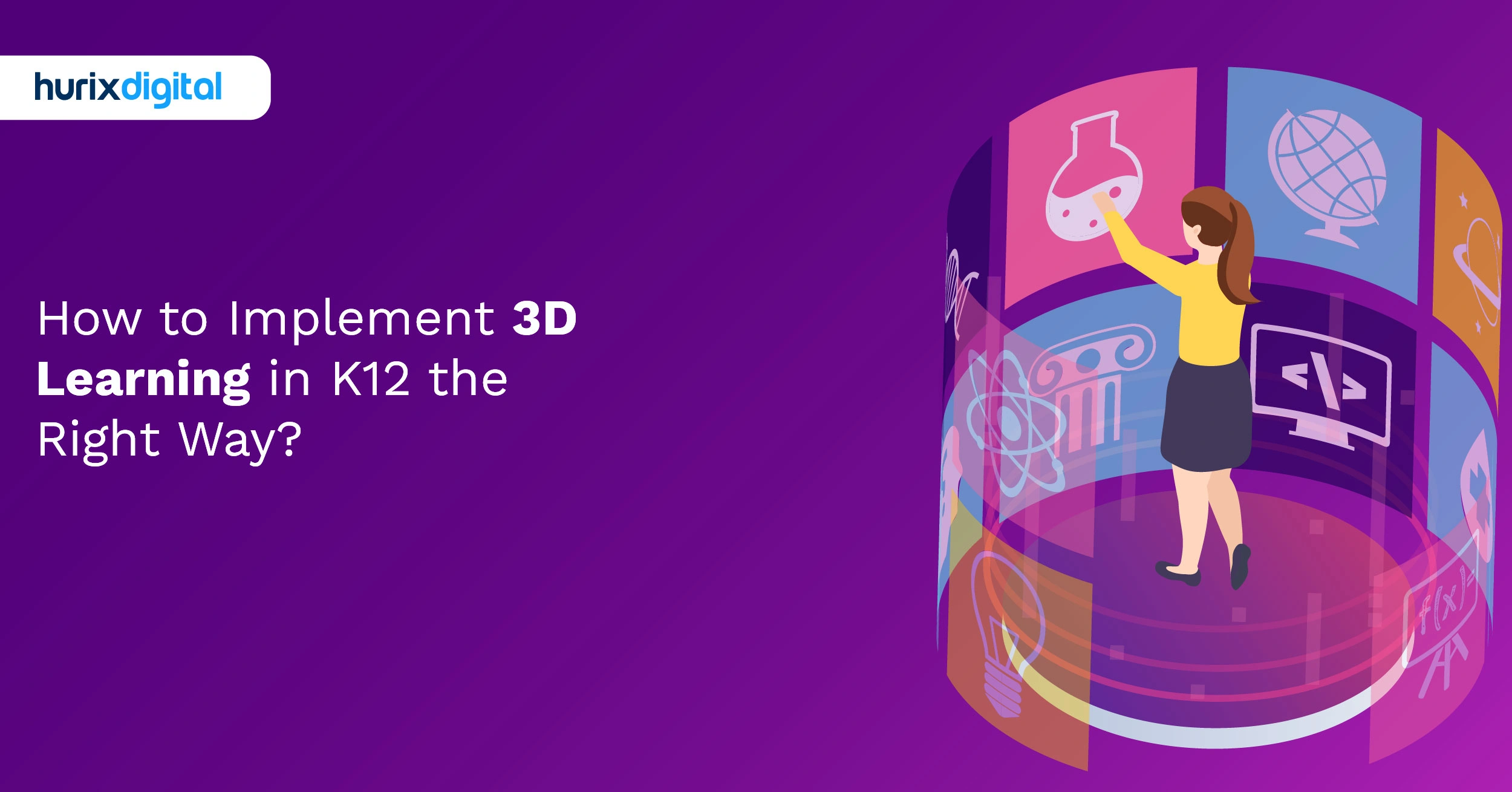
Technology is profoundly modifying the old learning system. One such innovation that has been gaining tremendous strength recently is 3D learning. It is an educational approach where three-dimensional models and simulations are used in a much more compelling manner to create immersive and interactive experiences for students. Through 3D models, simulations, and virtual reality, educators can take abstract concepts and bring them to life, making them more interesting and easier to understand.
According to research, students who were exposed to 3D learning showed a significant improvement in spatial reasoning and problem-solving abilities when compared to traditional methods. Furthermore, 3D learning involves immersing learners in virtual environments where the gap between theory and practical application is effectively bridged. This article covers all facets of 3D learning, its benefits, implementation strategies, and challenges, providing a comprehensive guide for educational institutions.
Table of Contents:
- What is 3D Learning?
- The Technologies Powering 3D and Immersive Learning
- Key Features of 3D Learning in Education
- Three Dimensions of 3D Learning
- Key Benefits of 3D Learning and Immersive Animations
- The Role of Realistic Simulations in 3D Learning
- How to Implement Three-Dimensional Learning in K-12
- Challenges in EdTech and 3D Learning Implementation
- Get Ready for the Education Revolution with Hurix Digital
What is 3D Learning?
Learning in three dimensions represents a new trend of using three-dimensional technology to create an immersive and interactive experience for students. This method moves beyond traditional textbooks and lectures by using dynamic digital tools. Through three-dimensional models, simulations, and virtual reality, educators take abstract concepts and bring them into real life, thus making them more interesting and easier to understand.
This approach is not just about adding a technological layer to education; it is about fundamentally creating personalized and adaptive learning experiences for students with diverse needs. Essentially, 3D learning is an experiential form of education that aligns perfectly with the principles of constructive, student-centered learning and teaching.
The Technologies Powering 3D and Immersive Learning
Before we get into the heart of immersive learning, it’s crucial to take a step back and recognize the key and cutting-edge technologies that function as its foundation. These technologies expand the horizons of virtual learning and have been shown to boost student retention rates by almost 25%.
1. Virtual Reality (VR)
K-12 Education through VR learning modules involves immersing learners in simulations or 3D spaces. These interactive learning VR modules incorporate audio and visual gear to deliver information, tutorials, practice spaces, and more, transporting students to different time periods, distant locations, or even microscopic scales.
2. Augmented Reality (AR)
Augmented reality in K-12 Education uses projection technology to bring digital information, objects, or systems into a real-world space. This technology is particularly useful for understanding concepts and phenomena that are difficult or unsafe for learners to witness directly due to geographical limitations or the difficulty of reproduction. AR overlays digital information onto the real world, allowing learners to interact with virtual objects in their physical environment.
3. Mixed Reality (MR)
As a blend of VR and AR, Mixed Reality (MR) helps learners see and interact with digitally projected objects or systems while remaining aware of the real world. A prime example of MR in K-12 education would be touching and interacting with planets projected within a classroom. This blending of physical and digital worlds offers unique opportunities to engage students.
Key Features of 3D Learning in Education
3D learning is a cutting-edge process that uses the power of 3D science and technology to enable the future-prepared learner. It aims at making STEM courses more understandable, realistic, and practical, often being most effective with K12 learners.
The introduction of these elements into the learning process ensures that students become significantly more engaged and motivated, while also developing their critical thinking skills. The core features include:
- 3D Models: These are digital representations of real or imagined objects, which allow for detailed inspection and understanding from various angles.
- 3D Simulations: Simulations create an interactive environment that permits learners to experiment and discover results through hands-on study.
- Virtual Reality (VR): By using VR, learners can immerse themselves in virtual worlds, experiencing different historical eras, distant places, or microscopic enlargements firsthand.
Three Dimensions of 3D Learning
The framework for 3D learning, particularly in science education, is structured around three distinct but interconnected dimensions. This multi-faceted approach ensures a deeper and more comprehensive understanding of the subject matter.
1. Science and Engineering Practices (SEP)
When teaching science, a text-based, lecture-style method often fails to help students actively engage with the concepts they’re learning about. In contrast, Science and Engineering Practices focus on introducing students to the authentic techniques and tools that scientists, researchers, doctors, and engineers use in their real-life jobs. These techniques could include modeling, hypothesis testing, simulations, evaluations, and constructing scientific explanations. By adopting these practices, students are encouraged to develop the critical skills they will need as future science or engineering professionals.
2. Crosscutting Concepts (CCC)
The different disciplines in STEM do not work in isolation. Cross-disciplinary concepts, such as speed, weight, and motion, are important for math, biology, and engineering alike. Crosscutting Concepts (CCC) encourage students to view the world as an interconnected web, where relationships like energy-matter, cause-effect, scale-proportion-quantity, and structure-function play an integral role. Consequently, the concepts they learn in one STEM subject can be translated into others, helping them think through the lens of interconnectedness across disciplines.
3. Disciplinary Core Ideas (DCI)
Disciplinary Core Ideas (DCIs) refer to the foundational theoretical content knowledge. In three-dimensional learning, learners are introduced to the most important concepts in various subjects, such as earth sciences, life sciences, space sciences, physical sciences, and engineering & technology. DCIs not only support SEPs and CCCs but also allow students to be introduced to concepts that cannot be practically implemented in the classroom.
Key Benefits of 3D Learning and Immersive Animations
3D learning offers a series of benefits for educators and learners alike. By providing immersive and interactive experiences, 3D technology can significantly enhance student engagement, motivation, and academic performance. This leads to improved problem-solving skills, critical thinking abilities, and creativity.
1. Makes 3D Science Learning Accessible to All
Every student has a different learning style. The great feature of three-dimensional learning is that it supports all three primary learning styles – visual, auditory, and kinesthetic. Pictures and videos use sight, sound, and touch to enhance the overall educational experience. This multimodal approach can greatly improve learner understanding, classroom engagement, and knowledge retention rates. Additionally, testing and evaluation can be personalized to suit students’ strengths while working on their weaknesses.
2. Creates Employability Skills
Together, SEP, CCC, and DCI provide learners with a holistic education that moves beyond rote learning and focuses on developing crucial employability skills. By using the same techniques, methods, and tools as real engineers and researchers, learners gain authentic job experiences. This exposure allows them to hone necessary physical and intellectual skills, which prepare them for the future job market.
3. Fosters Communication, Collaboration, and Teamwork
The STEM industry thrives on teamwork. The mindset and personality needed to be a good team player can be developed in K-12 students through 3D learning. As part of three-dimensional classes, students often need to work in teams to complete puzzles, build models, or answer hypotheses. In doing so, they must be great communicators, willing to work through interpersonal issues and combine their strengths to find a solution.
4. Allows Engagement with Current Technology
Gone are the days of relying solely on outdated textbooks. With 3D learning, students become privy to current research and cutting-edge technology. They can now use e-learning platforms to access content they otherwise might not be able to, from interviews with experts to virtual prototypes and live technology demonstrations. This allows them to critically engage with concepts and disciplines that interest them, learning where they can make a real-world impact after their schooling.
5. Enables Visualization and Experiential Learning
Using 2D and 3D animations in K-12 learning allows students to visualize and better understand complex questions. As an audio-visual medium, animation keeps learners both physically and mentally engaged. For instance, demonstrating algebra and word problems in an animated form helps students visualize the problem, making it more meaningful and leading to better outcomes. Moreover, this approach helps present abstract concepts through virtual reality, offering flexibility for learning intricate topics.
6. Improves Knowledge Retention and Recall
A significant challenge in course design is ensuring the retention of imparted knowledge. Animated videos and immersive animations are crucial for enhancing memory in K-12 students. When exposed to vibrant multimedia experiences, students are more inclined to remember the information. For example, watching an animated video of an animal’s journey through its habitat is more vivid and memorable than reading about ecosystems from a textbook. This helps students recall specific details long after the lesson ends.
7. Makes Learning Fun and Interactive
At its core, three-dimensional learning is a very engaging method of sharing knowledge. Many brilliant minds may be discouraged from pursuing STEM simply because of how it is taught. Three-dimensional learning, along with immersive animations, offers teachers, trainers, and content creators enjoyable ways of creating an engaging learning environment. This interactivity grabs learners’ attention and ensures they don’t stray from the concept, leading to higher retention rates.
The Role of Realistic Simulations in 3D Learning
Simulations in K-12 education are specific instructional scenarios where a learner is placed in a teacher-defined atmosphere that represents a distinct reality. In this world of realistic simulation, the educator controls various parameters to achieve desired instructional results.
This form of experiential learning fits well with student-centred teaching. Instructional simulations promote conceptual understanding by allowing students to apply skills in a practice setting that mirrors the real world. For instance, various science experiments that are dangerous for students to perform in real life can be conducted safely in a virtual environment with complete accuracy. This gives learners an invaluable experience they could only get by performing these experiments for real.
How to Implement Three-Dimensional Learning in K-12
Implementing three-dimensional learning doesn’t need to be confusing or difficult. Here is how you can incorporate it into your school curriculum and pedagogy to revolutionize the educational experience.
1. Use the NGSS Performance Expectations as Your Guide
The Next Generation Science Standards (NGSS) have released a set of guidelines for SEPs, CCCs, and DCIs. Academicians only need to follow these guidelines when creating lesson plans and setting up learning spaces for their students. These standards provide a clear roadmap for building a curriculum that is both comprehensive and engaging.
2. Include a Mix of Specimens and Simulations
Objects or live specimens are one cornerstone of three-dimensional learning, while simulated STEM activities are another. Therefore, it is necessary to reduce dependency on conventional text and lecture-based learning. Museums and galleries often allow schools to procure specimens temporarily. Meanwhile, software like that offered by Hurix allows you to create lively and realistic simulations through its AR/VR capabilities. Together, these elements can create a wonderful blended learning experience that caters to different learning needs.
3. Allow Active Brainstorming and Questioning
The idea behind three-dimensional learning is to help students critically engage with STEM concepts. Rather than simply showing them the way, academicians should allow students to control the direction in which learning occurs. Through trial and error, they can learn concepts such as cause-and-effect or stability-and-change. They also learn how to use science and engineering technology to address the problems they encounter during class, fostering independence and problem-solving skills.
4. Be Flexible in Your Approach
While three-dimensional learning is most effective when its three dimensions are integrated, this approach may not always work for certain concepts. When necessary, consider splitting the SEPs, CCCs, and DCIs into multiple separate classes to help students digest the material more effectively. Ultimately, flexibility is a core element that makes three-dimensional learning successful, allowing educators to adapt their methods to the specific needs of their students and the subject matter.
Challenges in EdTech and 3D Learning Implementation
Despite the numerous benefits, implementing EdTech and 3D learning solutions in educational institutions often presents several challenges. However, with the appropriate strategies, these can be effectively managed.
- Resistance to Change: Many educators may resist adopting new technologies due to comfort with traditional methods. A solution is to provide comprehensive training and demonstrate the tangible benefits of 3D learning through case studies and success stories.
- Infrastructure Limitations: Successful deployment requires adequate internet bandwidth and modern hardware. Institutions can address this by seeking grants and funding to improve infrastructure and by selecting EdTech solutions that are adaptable to varying conditions.
- Data Privacy and Security: The use of modern classroom technology raises concerns about data privacy. Deploying robust cybersecurity measures and educating all users on data security best practices is crucial to protecting sensitive information.
- Cost and Accessibility: Acquiring 3D learning materials and relevant software can be a financial challenge. Additionally, ensuring all students have equal access, especially those from disadvantaged backgrounds, requires programs that provide devices and subsidized internet.
- Lack of Training: Educators may not have the necessary training to implement three-dimensional learning effectively. Providing ongoing professional development and technical support is essential for successful adoption.
Get Ready for the Education Revolution with Hurix Digital
Technology like AI, AR, and VR is getting more powerful than ever. Coupled with mobile phone accessibility, students today have access to a greater gamut of technology at their fingertips. From live-streamed videos to gamified lessons, students can now bring their STEM subjects to life. This can create a future-ready population that is smart, creative, and technology-empowered.
At Hurix Digital, our state-of-the-art content authoring and distribution platform has supported the three-dimensional learning needs of K-12 institutions globally. With Hurix, you can:
- Get access to intuitive and affordable three-dimensional learning tools for K-12 learning.
- Create powerful, memorable, multi-format STEM content that engages learners visually, auditorily, and kinaesthetically.
- Organize lessons based on grades, disciplines, and concepts.
- Provide realistic and immersive STEM experiences through robust AR/VR simulations.
- Enable remote learning through desktop, tablet, and mobile optimization of content.
- Administer a variety of assessments to suit diverse learning styles.
- Analyze learner performance through detailed analytics and adjust learning methodologies accordingly.
- Provide certifications to students upon module completion.
We implement the highest data security standards in content encryption, identity-verification-based access, and download disabling.
To learn more about our powerful DRM and IPR features and how they can protect your proprietary three-dimensional learning content, talk to our experts today!
Summarize with:

Senior Vice President
A Business Development professional with >20 years of experience with strong capability to sell new solutions and develop new markets from scratch. New Market Entry Specialist with experience working in the largest emerging markets. Exceptional experience in conceptualizing, ideating and selling new learning technologies like VR AR, etc. across multiple industry verticals.