 A Space for Thoughtful
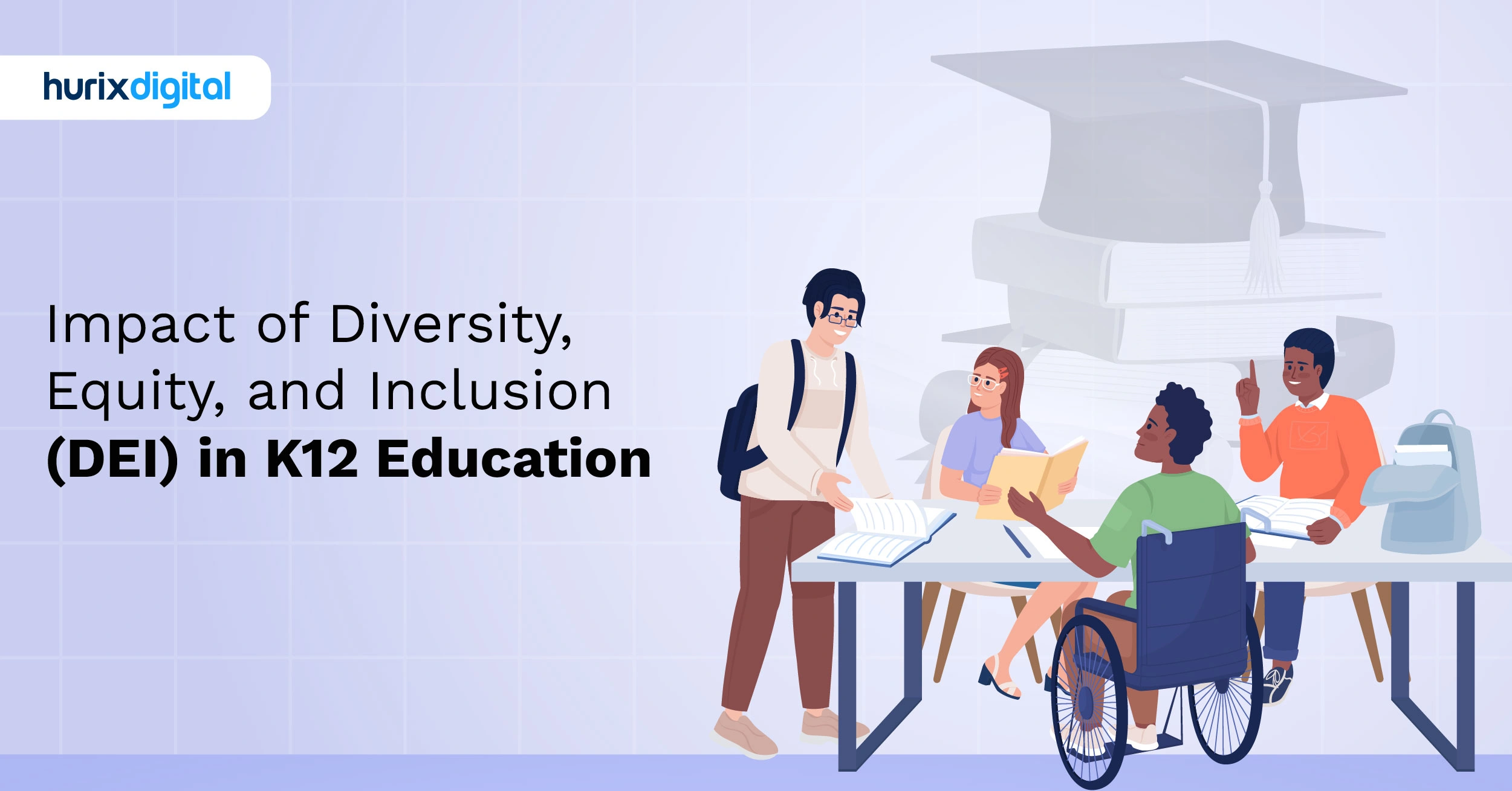
Impact of Diversity, Equity, and Inclusion (DEI) in K12 Education
Summarize with:
Diversity, Equity, and Inclusion (DEI) in K12 education has become increasingly pivotal in shaping not only the academic experiences of students but also their overall personal and social development.
It has been researched that approximately a third of U.S. school districts encourage the relevance of diversity, equity, and inclusion in their mission statements. It has become critical for K12 schools to understand and implement DEI in education.
By recognizing diversity, schools may foster a more inclusive learning environment in which all children feel valued and appreciated. This is the need of the hour.
Let us learn more about why DEI is important in education and the benefits of diversity, equity, and inclusion in K12 education in this guide!
Table of Contents:
- What is DEI in Education?
- Why is DEI Important in Schools?
- Benefits of DEI in Schools
- How to Bypass the Challenges in K12 Education?
- How to Promote Diversity and Equity in Education?
- Future Trends of Diversity, Equity, and Inclusion in K12 Education
- Final Words
What is DEI in Education?
DEI, or Diversity, Equity, and Inclusion, is likely becoming common in today’s society. The triangulation of DEI in education systems focuses on the establishment and accreditation of school systems that respect and protect differences and avoid hate and discrimination, and promote inclusivity of students, employees, and even the entire institution.
The implications of DEI in schools are far-reaching as they apply to all facets of the educational system, including but not limited to the design of the curriculum and the enforcement of school regulations.
Why is DEI Important in Schools?
At the heart of DEI in schools lies the recognition of the diverse backgrounds, identities, and experiences that students bring into the classroom. By acknowledging and celebrating this diversity, schools can create a more inclusive learning environment where all students feel valued and respected.
Moreover, DEI in schools guarantees that barriers that prevent certain categories of students from accessing education or performing well in school are structural. Such barriers can be addressed through effective measures and policies designed for that purpose. Therefore, aiming at equalizing the odds for every student to succeed can be possible.
Benefits of DEI in Schools
Diversity, Equity, and Inclusion in K12 schools are transformative elements, providing every student with the opportunity to thrive in an equitable and inclusive learning environment.
Here are the detailed benefits of incorporating DEI in education:
1. Enhanced Academic Achievement
DEI in K12 schools creates an inclusive classroom environment where diverse perspectives enrich learning experiences. When the diverse student population feels included, they become active and engaged in learning.
DEI practices support collaborative learning that involves exposure to multiple perspectives, which challenge students’ thoughts and subjects’ knowledge.
Schools with equity have adequate resources utilized for students’ different needs, and it enables everybody to maximize their potential.
2. Improved Social and Emotional Skills
Diverse, equitable, and inclusive K12 education promotes empathy, understanding, and social awareness among the students.
Growing up in class with classmates of different cultures, social groups, and economic conditions teaches them social skills. DEI teaches students to respect and respond to differences peacefully.
This helps in developing quality relationships to live better within diverse communities, even outside of school life.
3. Better Representation and Cultural Understanding
Diversity in the education sector celebrates the richness of multiple cultures and identities, thereby creating an environment where every student feels recognized and respected.
The practice of a curriculum that presents diversity in histories, cultures, and perspectives assists students in seeing themselves within their educational processes.
This is a source of belonging, as well as encouraging cultural exchange and an appreciation of diversity, bringing about a global perspective.
4. Elimination of Bias and Discrimination
DEI aims to break down systemic education inequalities and seeks an environment that continues to challenge bias and discrimination.
Equity and inclusion-conscious schools engage the students with the best practice of stereotyping and deconstructing ideologies through a culture of acceptance.
As long as schools work on policy and practice-level biases, schools ensure equal treatment for every student and decrease cases of discrimination while improving the safety of the learning environment.
5. Increased Engagement and Involvement
When children feel included, they participate more actively in activities in school and class discussions. DEI in schools for K12 helps children to find their voice without judgment.
This helps children build their confidence and ownership of education. Increasingly, students in inclusion experiences like to participate in extracurricular activities; hence, the development of students is holistic.
6. Preparation for the Diverse Workforce
Diversity and equality in education enable children to master survival skills in a multicultural workplace. Schools create an environment of inclusiveness that enables students to form groups and work together with people from diverse backgrounds.
Educating students on diversity in education naturally resembles the real world, so they are equipped to practice their social skills and abilities in joint teamwork at the international workplace.
7. School and Community Relations Strengthened
DEI in education may strengthen relationships between schools and their communities. A more representative school environment mirrors the image of diversity that reflects the community served, and educators, students, and families work together.
Practice in DEI builds trust and mutual respect, providing a supportive network for both schools and their broader communities.
How to Bypass the Challenges in K12 Education?
Although the sheer magnitude of challenges in achieving DEI in schools might seem daunting, thanks to the technological advances of the 21st century, it is much easier to implement today.
Here are some potential solutions to addressing equity and inclusion in K12 education:
1. Perception Alignment
The first step towards achieving DEI in schools is ensuring all authorities are on the same page. Regular training and discussions are a wonderful way of ensuring just that. Conducting virtual workshops and seminars, providing access to resources and research on DEI, and facilitating open discussions on DEI issues and strategies are the first steps.
2. Inclusive Learning Environments
Virtual classrooms can effectively erase the difference between private and state-sponsored education. Using online resources, students across all financial and social backgrounds can have access to the same curriculum and opportunities that follow.
3. Language Support
Most multilingual countries follow a common language route in education. This can often cause those who are not native speakers of the language to fall behind. Edtech brings in the unique opportunity for the same material to be supported by different languages to ensure equal opportunities.
4. Identifying Inequities and Addressing Opportunity Gaps
Data-driven tools can be used to identify and address inequities in the education system. Data analytics can analyze student performance and outcomes. With the right information, you can identify patterns of inequity and develop targeted programs to address these inequities.
EdTech tools are an excellent way to address opportunity gaps due to social and financial backgrounds. Students from all backgrounds can have access to the same programs, along with specialized resources to help them with their unique problems.
5. Special Needs Education
Specialized EdTech tools and aids are now being used for children with special needs. These tools leverage the power of AI and ML to provide personalized learning experiences. They can help develop essential skills and provide the extra care special needs children must have.
6. Interdisciplinary Frameworks
Digital platforms can be used to implement interdisciplinary frameworks in schools to encourage holistic learning. Online platforms can be greatly personalized in their offerings to provide an array of courses, all designed to address a student’s particular interests.
7. Professional Development
Online platforms are great tools for educators to understand the standards needed to implement diversity and inclusion in higher education. Teachers can now access training courses and resources on DEI and improve their teaching skills to suit student needs.
Additionally, online communities and forums provide a space for educators to share best practices, exchange ideas, and collaborate on initiatives to promote equity and inclusion in education.
How to Promote Diversity and Equity in Education?
Curriculum creation is one of the main ways that DEI shows itself in K12 schools. Schools can give children a more thorough and inclusive education by incorporating a variety of viewpoints, histories, and voices into the curriculum.
Students’ educational experiences are enhanced, and they also gain cultural competency and critical thinking abilities.
Additionally, DEI in K12 schools affects the school environment, interpersonal connections, and school culture outside of the classroom. Schools may foster a culture where everyone feels encouraged to express themselves genuinely by encouraging empathy, respect, and understanding.
Diversity and equity in education ensure that every learner learns in inclusive environments without regard to background. Here are integral ways that promote DEI in education:
1. Implement Inclusive Curriculum
A great education starts with a curriculum that reflects the diverse identities and experiences of all students.
The inclusion of diverse histories, cultures, and perspectives in lessons goes a long way to encourage students to see themselves and others represented in their education. Such a move not only makes learning culturally responsive but also helps crack stereotypes and biases.
2. Culturally Enriching Educators
Teachers can create an inclusive learning environment, understanding and respecting their students’ backgrounds. Professional development in the area of cultural competence can allow instructors to teach in ways that dismantle biases and support all learners.
Any form of DEI education can enable teachers to develop appropriate practices within the classroom, customize teaching methods to serve diverse learning styles, and build connections with students and their families.
3. System Change through Policy and Practice
Equitable access to education demands that a critical assessment of school policies toward the identification and elimination of systemic barriers occur. Analyzing student performance, disciplinary actions, and resource allocation will help identify disparities that affect the marginalized.
4. Establish Strong Partnerships
The involvement of families and society enhances the effectiveness of school-based DEI programs. Schools have to develop relations with parents and community members by trying to understand their requirements and expectations.
By hosting multiculturalism events, inviting guest lecturers from diverse backgrounds, and forming partnerships with local organizations, a school can establish positive relationships between the school and its community.
Future Trends of Diversity, Equity, and Inclusion in K12 Education
The prevalence of Diversity, Equity, and Inclusion (DEI) in K12 education can be seen just like in every industry. In K12 education, it plays a crucial role and has become the need of the hour.
In the recent webinar organized by the digital platform, Hurix Digital explored wide-ranging ideas and concepts about DEI in education.
Hurix Digital, as a strong digital learning platform, deeply understands the various ways of providing effective learning to its students. It religiously believes in DEI, which stands for Diversity, Equity, and Inclusion. As a fact, education has no age. Learning can be done at any stage in our lives. Children can take advanced courses digitally, whereas office-goers can pick up unlearned skills while they earn money. This is the driving force behind Hurix Digital.
Some of the key topics for the enlightening discussion were:
- Importance and benefits of having DEI in educational content
- Designing DEI training and awareness programs for your school
- Future trends in DEI for the K12 education industry
The webinar was attended by people like K12 educators, EdTech Providers, K12 school administrators, and Learning curriculum designers. It was for them to comprehend the vision of the DEI mode of education and how they could add more value to it.
Diversity in education has been neglected for the longest. However, a diverse group of students is likely to bring variety to the process of learning. DEI breaks through the different barriers in learning, like race, ethnicity, gender, sexual orientation, religion, socio-economic status, differently abled bodies, and various learning styles.
It is essential to clearly understand what you want to teach your learners. One has to focus on the definite areas of lessons that will help them to improve their performance. The organization needs to plan the objectives that will help them in achieving their effective learning. A keen understanding of the impact of the objectives, acknowledging the loopholes in them, and bridging the gaps will set the process on the right path.
Also, one must consider the role of creating the right action plan. Collecting and designing the materials that will help them to define their agenda and enrich the knowledge base for the learners. The organization has to implement the program. In this stage, it must notice the response and attentiveness of the learners to the education program.
Although the scenario of DEI in education has finally kicked off in the education industry, it is not going to remain stagnant. Yes, this is not it, and it is likely to change in the future.
The organization must evaluate the process, especially how well students understand the lessons and whether they are implementing them in their performance. This will help the organization understand its program’s strengths and weaknesses.
Some of the future trends in DEI for the K12 education industry indicate:
- An Immersive Learning Experience
- There will be more personalized learning modules as the learning pace is different for everyone.
- Classrooms will not be bound to four walls. They can be created at any place at any time.
- Education will embody itself in gamification, which will attract learners to learn more.
- Video-based interactive learning will help students evaluate their lessons frequently.
DEI in education has a long way to go. It has just begun, doing wonders in the education industry.
Final Words
The impact of DEI in schools extends far beyond the individual level, shaping the future of communities and societies at large.
By equipping students with the knowledge, skills, and values needed to navigate an increasingly diverse world, DEI in K12 schools lays the groundwork for a more inclusive and equitable society.
As educators, policymakers, and stakeholders continue to recognize the importance of DEI in K12 schools, efforts to promote diversity, equity, and inclusion will remain central to advancing educational outcomes and fostering social justice.
At Hurix Digital, we are committed to advancing the principles of DEI in education. By creating inclusive, equitable, and diverse learning environments, we aim to empower students with the tools and understanding needed to thrive in a global society.
Want to know more? Our team would be happy to discuss how we can help your school or organization implement DEI initiatives effectively.
Summarize with:

Senior Vice President
A Business Development professional with >20 years of experience with strong capability to sell new solutions and develop new markets from scratch. New Market Entry Specialist with experience working in the largest emerging markets. Exceptional experience in conceptualizing, ideating and selling new learning technologies like VR AR, etc. across multiple industry verticals.