 A Space for Thoughtful
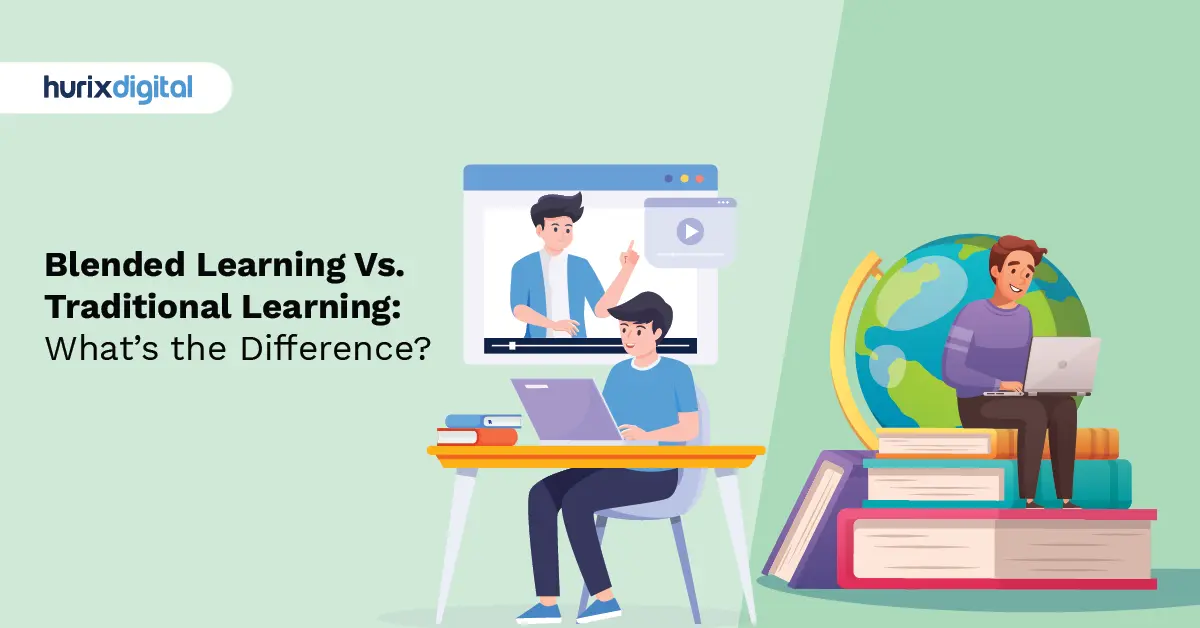
Blended Learning Vs. Traditional Learning: What’s the Difference?
Summarize with:
Summary
This blog explores the role of XML Document Type Definitions (DTD) in digital publishing. It defines how DTDs ensure data structural integrity, compares DTD with XML Schema, and provides a 2026 selection matrix for content architects to choose the right validation method for scalable AI-ready workflows.
In the post-pandemic era, a mixed approach to schooling has emerged as the new standard. The landscape of education is rapidly evolving.
Digital-first content strategies rely on structured data to ensure consistency across platforms. XML (Extensible Markup Language) serves as the primary standard, while a Document Type Definition (DTD) provides the essential structural ruleset required for machine-readiness and automated data parsing.
The way that knowledge was previously taught to students has been fundamentally revolutionized through blended learning. Blended learning accelerates, simplifies, and expedites learning in contrast to the conventional method of teaching using a chalkboard.
60% of educators say that blended learning enhances students’ academic performance. Despite such advancements in learning, the debate of blended vs. traditional learning continues.
This article is going to settle this debate by discussing both topics extensively.
Table of Contents:
What is Blended Learning?
As the name suggests, blended learning is a mixture of virtual and traditional methods of learning.
Virtual learning, or eLearning, allows students to complete their work at their own pace and in their own time. In contrast, traditional classroom learning takes place in a dedicated space with the student and teacher present.
Blended learning merges the two and creates a strategy that benefits both the learners and the educators.
With blended learning, the emphasis is more on how teachers instruct their students, including the resources they employ and how they incorporate them into their lesson plans, as opposed to the situation or scenario. It enables learners to gain knowledge independently and in their own time.
Furthermore, it provides instant feedback through evaluations and knowledge checks. Learners can easily assess the information they require at any time and location.
It also offers content standardization and enables adaptive learning.
The blended learning method, just like the other learning methods, is utilized to achieve learning goals. This makes the impossible possible by offering functionalities that enable learning in ways that are hard to pull off in traditional classrooms.
Blended learning enables learners to discover the style of learning that works best for them, making the learning experience enjoyable for all types of learners through its interactive elements.
Digital-first training is no longer an outlier; 94% of learning leaders now categorize digital learning as the backbone of organizational strategy. Furthermore, companies with structured career development programs are 42% more likely to be AI frontrunners in 2026.
Blended Learning Vs. Traditional Learning: Which One Is Better?
In the battle between traditional and blended modes of learning, the blended mode has acquired a lot of points so far for obvious reasons.
Blended learning is the perfect mix between traditional learning and eLearning and ensures that nothing comes in the way of a smooth learning experience for learners.
Here are more aspects that will settle the debate of Blended vs. Traditional Learning for you.
1. Effectiveness and Flexibility
Traditional learning follows the old ways of educating students, which are not always effective for the entire classroom because not all students learn at the same pace.
It’s hard for educators to keep track of the progress of every student in their classroom.
These issues don’t exist in blended learning; its curriculum is well-crafted and flexible for all kinds of students so that they can learn in their own space without any pressure.
As a result, learners make the most of their learning sessions and understand the concepts in depth.
2. Motivation
Unlike traditional learning, blended learning provides instant feedback to learners regarding their progress.
This gives the learners sufficient time to work on the problematic areas and motivates them to push beyond their limits.
3. Personalized Education
Not all learners have the same learning style and pace, and it’s hard for conventional learning methods to take good care of them all.
In blended learning, all kinds of learners get equal attention. The belief that there cannot be a training experience that syncs with the requirements of different students is strongly refuted by blended learning.
Moreover, while focusing on the study session, students can freely ask questions to the educators directly. When students are not pressured by their teachers to perform well in every task they undertake in class, they give it their all.
4. Cost Efficiency
Blended learning allows for significant financial savings for organizations. It eliminates the need for travel expenses while also allowing employees to continue with their regular work schedules, unlike traditional learning.
Students can learn everything their online tutor is teaching while sitting comfortably at their workstations.
The 7 Steps of Blended Learning Courses
Let’s see how to create a blended learning course in a few simple steps:
1. Define the Outcomes of the Course
As with any learning strategy, the first step for designing blended learning courses is to define the objectives and goals you wish to achieve from your blended learning strategy.
The following questions can help you define your goals:
- What skills do you wish to impart to your learners?
- What information should be included in the blended learning course?
- What instructional design models and instructional tools should be used to deliver new knowledge and information?
Your goals and objectives will serve as a roadmap to design your blended learning courses. At each step, you will be able to see where your course is headed and the points you need to modify or cover along the way.
2. Make Outlines for the Blended Learning Course
A course outline offers benefits to all participants. The learners can use the outline to stay on track, while the instructor/ course developer can use it to ensure that the blended learning course is progressing at the desired pace.
In your course outline, specify the course objectives, assignments, papers, and tests that have to be submitted, along with the deadlines that the learners have to meet. Also, mention what you expect from the learners in terms of attendance and participation. Finally, also specify the instructional tools and materials that will be used to deliver blended learning content.
3. Determine the Interaction Level
A major advantage of blended learning is it provides learners with greater control over their learning. Learning is not just based on information imparted by the instructor, using both online and offline resources. Rather, learners can progress through self-paced learning activities.
When preparing your blended learning course design, determine the interaction levels of your course. How much of the learning will be imparted in the classroom, and how much will take place through live online media? How much of it will be self-learning through interactive activity?
When you opt for blended learning, you gain an opportunity to choose from a wide range of online learning resources and delivery methods.
For example, your learners can assemble in a classroom, or some common place, and an instructor based in some other city or country can deliver a lecture using an online environment.
In fact, the choices are many, and you will have to spend some time choosing one that is ideally suited to your blended course requirements. The best approach is to assess your modules and then identify the activities that can effectively communicate the core ideas.
4. Integrate Group Collaboration Activities
Group collaboration is essential for holistic learning, which learners cannot achieve by studying alone. Team learners allow interaction with peers, sharing of knowledge, and benefiting from the shared skills of the team.
There are different online tools and applications that you can leverage to promote group activity. For example, your group can log into a chat room to discuss a particular problem. They can share their views, ideas, opinions, and thoughts on social media platforms.
When designing an effective blended learning course, it is also essential to develop a robust social learning strategy that extends learning beyond the classroom and opens up conversations to a broader audience. These group interactions will also promote problem-solving, analysis, and rational thinking skills.
5. Streamline Communication
With blended learning services, institutes use online learning, so it becomes crucial for there to be transparency between learners and teachers so they can take up their queries more freely for better understanding. The use of emails, messaging, and other communication channels is crucial here.
This is beneficial for the instructor and the learners: the instructor doesn’t have to be in the virtual classroom round the clock, and the learners also know that they have a solid support system they can turn to in case they face any problems.
Another factor to consider is how you will gather feedback from your learners—will you conduct periodic live chats or maybe take surveys at the end of each blended learning course or module? It is very crucial that you seek regular feedback on your blended learning course to ensure it is on the right track and at the right speed.
6. List Down Resources to Support Learning
With blended learning, you have the opportunity to choose from a wealth of resources to support your courses and provide these ready references to your learners. For instance, you may provide them with links to articles, presentations, and videos to delve deeper into their lesson.
Your instructors, too, are spared the time needed for creating their own learning resources. They can spend their valuable time in more constructive interactions with your learners. So while designing your blended learning course, it is a good idea to create a list of resources and references that you will share with your learners.
7. Create an Assessment Plan
Your blended learning courses are incomplete if they don’t include an assessment plan to check the progress of the learners. Incorporate a mix of formative assessments (quizzes, discussions) and summative assessments (projects, exams) to evaluate student understanding. Your assessment plan can include a quiz at the end of each module. Or they can be asked to summarize their learning from a self-learning activity.
They may also be asked to participate in group discussions on chat forums. These assessments will not only help you gauge the progress of your learners but also allow them to pinpoint their areas for improvement. You could also provide a module summary at the end of each module to make it easy for them to recap the information.
Make use of online tools to monitor development and offer feedback. Ensure assessments are modified to account for various learning preferences.
Advantages of Blended Learning Courses
Blended learning courses, which combine traditional face-to-face instruction with online learning, offer several benefits:
1. Personalized Learning
Personalized learning options are a top benefit of blended learning. With this method, students can study at a level that suits them and at their own speed.
As online learning resources can be tailored to each learner’s requirements, they enable students to concentrate on the topics in which they need assistance. The efficacy of the educational process is increased by this customized method.
2. Improved Accessibility
Increased accessibility is one of blended learning’s key benefits. With this method, students can engage in educational endeavors and access instructional content at any time, from any location.
For students who are unable to attend regular classes because of scheduling or location constraints, this is quite helpful. Blended learning allows students to access educational content and take part in debates and tasks whenever it’s most convenient for them.
3. Enhanced Engagement
Increased student participation is created through the incorporation of interactive activities and multimedia materials. As they can work together in real-world and virtual settings with classmates and teachers, blended learning promotes active engagement and makes learning more fun.
4. Promotes Knowledge Retention
Blended learning has the potential to improve information retention. When online materials and in-person interaction are combined, learning ideas are reinforced, which helps students retain and apply their information in practical settings.
5. Cost-Effective
Expenses related to traditional education, such as travel and supplies, can be decreased with blended learning. By using online platforms, educational institutions can maximize their resources and eventually increase the accessibility of education for a wider range of people.
With over 6 billion internet users and 1 billion monthly AI users globally, the ability to parse content without human intervention is a competitive necessity. DTD provides the rigid framework needed to scale content across 5.78 billion mobile devices.
Tips for Blended Learning Solutions in Compliance Training
Blended learning has come as fresh air to mundane corporate training. But just implementing any blended learning training is not going to help much unless you give a structured thought process behind it.
In this section, let us look at some tips and strategies that you must keep in mind while designing the compliance training module.
1. Know Your Employees
First things first, know your target audience. Before designing your e-learning compliance training, understand your audience.
You may take surveys to know their level of existing grasp on the subject (beginners, good, or advanced), their educational qualification, demographics, etc. Based on this information, the developer can now implement the most relatable and effective strategies to design the course.
For instance, if your employees already have a good understanding of the content, you should not waste time giving them beginner-level training. It will lead to not only a lengthy training but also will bore your employees.
2. Concise & Engaging Content Creation
To avoid unnecessarily lengthening your content, be specific about what you want to include in your training program. You may break them down into smaller topics and check if there is any content that is repetitive or can be eliminated.
For example, give special focus on including the most misunderstood pieces of information that can lead to the highest risks. Use proper graphics to describe the magnanimity of the impact it can cause due to non-compliance. Nobody likes to make serious mistakes knowingly. It should keep their attention pinned.
3. Design the Gameplan
Once you have decided what to include and what not in your content, now it is time to design the e-learning strategy. There are several ways one can design learning content, e.g., instruction-led learning, story-based learning, game-based learning, case studies, etc.
Fun and engaging elements can help draw the attention of the learners and make the training more interesting and interactive. You may segregate the content and assign each segment a particular learning style.
4. Implement the Right Technologies
Select the right technological tools and platforms for your blended learning compliance training. With the right learning management systems, interactive media, or instruction-led content, you can deliver a whole new experience for the learners.
Technology can make the training more interactive and engaging. But make sure the technologies are responsive. That is, they are compatible with all types of devices. Also, ensure that proper support and maintenance are available.
5. Create the Storyboard
Now that you have consolidated the content, learning style, as well as technologies, it is time to create the storyboard. It can be considered the blueprint of the training module.
Here, you choose how the text, images, videos, etc., are presented, page by page. The developers usually use this blueprint to develop the e-learning compliance training module.
6. Testing, Feedback, and Implementation
Once the module is created, make trial runs of it in a focus group. Continue to evaluate the effectiveness of the course through constant feedback from the learner group. Make the necessary adjustments in the content as per the feedback to keep your learners engaged and interested.
Roll out the training program to your employees. Provide them with the necessary IT support and facilitators. Promote it internally to encourage participation. You may want to implement metrics to measure the training’s success, like knowledge gained, learner satisfaction, etc. You can use these data to further improve your blended learning training program.
2026 Selection Matrix: Choose DTD for high-speed validation in legacy systems (crucial for the 11.3% CAGR growth in STM publishing). Choose XML Schema (XSD) for complex data-typing required in real-time AI personalization.
Takeaway
XML DTD remains a foundational tool for digital publishing by providing a rigid framework for document structure. While XML Schema (XSD) offers more data-type complexity, DTD’s simplicity and wide industry support make it the preferred choice for publishers requiring high-speed validation and legacy system compatibility in the 2026 landscape.
While blended learning is the latest trend in delivering learning and training, it is important to get it right. As with any other new initiative that you undertake, it is a good idea to do some ground research and be organized and creative to develop effective blended learning modules.
Design effective blended learning courses with Hurix Digital. From interactive learning modules curation to implementation, we provide end-to-end courseware development solutions.
So, if you are looking for a blended learning solution provider for your company’s compliance training or any other form of training, you are on the right page. Hurix Digital comes with vast experience in designing and delivering effective blended learning solutions for several corporates across the world.
If you are facing issues in implementing or designing effective blended learning courses for your educational institution, contact our team to get help.
Frequently Asked Questions (FAQs)
Q1: What is the main difference between blended and traditional learning?
The main difference is that traditional learning occurs entirely in a physical classroom with a live instructor, whereas blended learning integrates online digital media with traditional face-to-face instruction. Traditional models rely on synchronous, fixed-pace lectures, while blended models allow students to control the time, place, and pace of a portion of their learning.
Q2: Is blended learning more effective than traditional learning?
Studies show that blended learning typically results in higher retention rates and better student performance than purely traditional methods. This is because the blended approach combines the social accountability of a classroom with the personalized, repeatable nature of digital content, catering to diverse learning speeds that a one-size-fits-all traditional lecture cannot accommodate.
Q3:What are the four common models of blended learning?
The four primary models are Rotation, Flex, A La Carte, and Enriched Virtual. In the Rotation model, students cycle between online and in-person stations. The Flex model is mostly online with on-site teacher support. A La Carte allows students to take a full online course alongside traditional ones, and Enriched Virtual requires infrequent in-person sessions to supplement remote work.
Q4:Does blended learning reduce education costs compared to traditional models?
Yes, blended learning reduces long-term operational costs by minimizing the need for physical classroom space, travel, and printed textbooks. While the initial setup for digital infrastructure is high, the “cost per learner” drops significantly at scale, making it a more sustainable financial model for large-scale corporate training and higher education institutions.
Q5:Who benefits most from a traditional learning environment?
Learners who require high social interaction and immediate physical feedback benefit most from traditional environments. This includes younger students developing foundational social skills and professionals in hands-on fields—such as surgery or mechanical engineering—where tactile mastery and direct mentor supervision are more critical than theoretical digital modules.
Summarize with:

Senior Vice President
A Business Development professional with >20 years of experience with strong capability to sell new solutions and develop new markets from scratch. New Market Entry Specialist with experience working in the largest emerging markets. Exceptional experience in conceptualizing, ideating and selling new learning technologies like VR AR, etc. across multiple industry verticals.