 A Space for Thoughtful
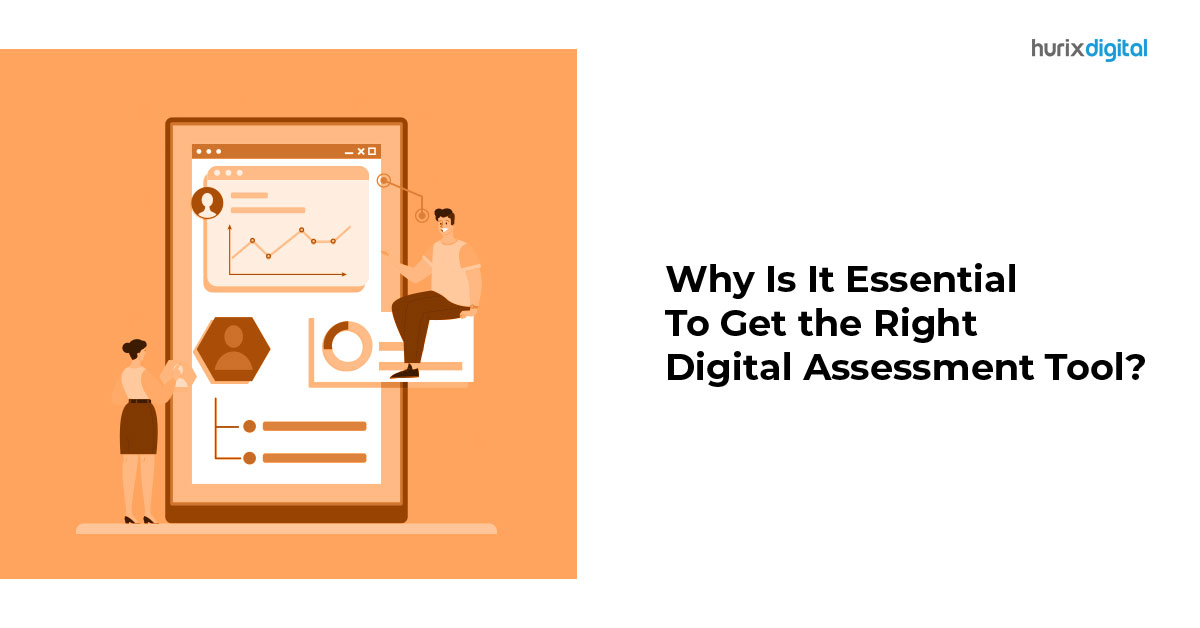
Why is it Essential to Get the Right Digital Assessment Tool?
Summarize with:
Over the last decade, online educational technologies have gained immense traction, with more and more educational institutions using online assessment tools for summative and formative assessment.
As an increasing number of students become comfortable using digital platforms, traditional paper testing is losing its significance when it comes to knowledge assessment. Investing in the right software will future-proof your online assessment strategy. Choosing tools that align with your strategy will not only help in solving current operational hurdles but also assist in navigating future educational challenges.
Let’s dig deeper into how the right digital assessment tools can help you take the learning environment to the next level.
Table of Contents:
- Understanding Digital Assessment Tools
- Why Are Performance Assessment Tools Necessary?
- How Teachers Leverage Digital Tools for Exceptional Learning
- Key Benefits and Importance of Education
- Offers Flexibility to Students
- Easy to Set the Exam Guidelines and Rules
- Various Assessment Formats With Proctoring Technology
- Interactive, Engaging, And Fun Multimedia Sessions
- Gamification Of Answers
- AI-Powered Analysis
- Accurate Assessment Reports
- Technology Integration
- Customized Learning Paths
- Encourages Collaborative Learning
- Types of Online Assessments in Higher Education
- Navigating Trends and Innovations
- How to Find the Right Online Assessment Tool for Your Needs
- 10 Best Strategies for Successful Implementation
- Wrapping Up!
Understanding Digital Assessment Tools
Digital assessment tools help evaluate students’ behaviors, abilities, and characteristics through online questionnaires, tests, and quizzes. They enable teachers to track students’ progress effectively and recognize opportunities to motivate and encourage them to excel in their assessments.
The major goal of digital assessment is to reduce faculty members’ workload, improve the system’s efficiency, and provide examination flexibility. You must choose technology that meets your requirements rather than trying to match your needs with the technology that’s already available.
These tools are often described as the trusty sidekicks of digital learning. Picture them as your cheerleaders, guides, and evaluators all rolled into one. They are specifically designed to measure progress, assess skills, and help learners reach their full potential.
Why Are Performance Assessment Tools Necessary?
The importance of digital assessment tools cannot be underestimated. Remember those days when teachers would hand out physical quizzes, tests, and assignments to test understanding? In the digital era, things have taken a fascinating turn.
Digital learning has revolutionized education, giving us access to a vast ocean of knowledge at our fingertips. According to a report by McKinsey & Company, the demand for online education continues to skyrocket. With this growth, simply consuming content isn’t enough; we need robust ways to ensure learning is effective.
Online assessment tools rescue us from ambiguity. They evaluate progress, measure achievements, and provide invaluable feedback that guides learners toward improvement. Experts at Education Development Center (EDC) note that when students are involved in the assessment process through performance evaluation, it boosts their engagement and ultimately improves their learning outcomes.
How Teachers Leverage Digital Tools for Exceptional Learning
Reviewing, evaluating, and grading assessments can be a highly hectic addition to the routine work of a teacher. However, with the advancement in technology, educators can now assess students’ performance easily and quickly, saving significant time for actual learning.
Thanks to feedback tools and learning management systems, students get fair and quick assessment results right after taking a test. The software provides an evaluation report, including students’ grades and feedback. This allows the educator to assess students’ learning progress in different subjects easily.
Furthermore, online assessment tools provide real-time feedback. Gone are the days when students had to wait for weeks to get their tests graded. Whether it is a quiz or an interactive exercise, these tools offer immediate insights into performance, enabling learners to identify areas of strength and weakness on the spot.
Key Benefits and Importance of Education
The main aim of educators is to help students grasp and learn various concepts and hone their skills. Here’s how online assessment tools can help in judging and tracking the knowledge level of students in a hassle-free way:
1. Offers Flexibility to Students
Flexibility is one of the most significant benefits of digital assessment tools. Your students enjoy the liberty to attend their examinations from anywhere at any time. The best part is that online assessment tools allow you to personalize the exam settings in case your student wishes to appear for the test at a specific interval of time. Students living far away or in another country can get the best perks based on location. Even students with physical disabilities can leverage digital assessment tools for better accessibility.
2. Easy to Set the Exam Guidelines and Rules
With digital assessment tools, setting exam guidelines and rules has become easier than ever before. You can now schedule digital skills evaluation tests for tens of thousands of students – year-wise, class-wise, and section-wise.
This can save you significant time and effort. From fixing the marks of each question to the total exam time to deciding some criteria, such as bonus points and negative marking, you get full liberty to conduct and organize the online assessment process.
3. Various Assessment Formats With Proctoring Technology
To focus on students’ skill development, it’s important to frame questions in different formats. That’s exactly what digital assessment tools can help you with.
Whether you want a descriptive test pattern or MCQs, they can help you conduct the online assessments in a format that meets your goals. What’s more, with the help of proctoring technology, you can monitor students while they attend the digital assessment to ensure nil malpractices. As the grades are auto-evaluated, you can refer to the question-wise student performance report for detailed analysis.
4. Interactive, Engaging, And Fun Multimedia Sessions
Gone are the days when exams were conducted on boring black-and-white paper! The thought of holding the question paper in hand during the test was nothing short of a nightmare for many.
The good news is that modern assessment tools allow you to frame questions with fun multimedia audio and videos that help students focus better, rather than being nervous. Students with physical disabilities can leverage voice-to-text converters to carry out their online examinations.
5. Gamification Of Answers
Some digital assessment tools allow teachers to develop the learning process in the form of a game by framing MCQs or utilizing the existing games. The teachers can upload images and media files to build a different game or use ready-made formats. This format ensures 100% class engagement as students try to give their best in a competitive atmosphere.
6. AI-Powered Analysis
The digital assessment tool leverages AI (Artificial Intelligence) technology for in-depth analysis of the evaluation report. With AI-based analysis, teachers can improvise their teaching methodology to achieve better learning results.
Additionally, the system also allows the stakeholders to make data-driven decisions. What’s even better, it facilitates the graphical representation of data in multiple forms, such as graphs, tables, and pie charts.
7. Accurate Assessment Reports
From drafting question papers and evaluating answer sheets to invigilating students, teachers were responsible for all these duties under the traditional examination method. But thanks to the digital assessment method, all the hectic and manual work has been reduced to a significant extent.
You can now get highly accurate and automated reports in various formats, such as Word, PDF, and docs, under the online assessment system. This not only helps the teachers to identify students’ problems but also brings down the institute’s expenses considerably.
8. Technology Integration
The digital assessment tool can be integrated with other technologies like student information systems, admission management software, and learning management software to ensure seamless workflow and functioning of all the institute’s operations.
This data can be stored, accessed, retrieved, and managed by various departments and faculty members of the institute at the same time.
9. Customized Learning Paths
This is one of the least explored features of performance assessment tools. By continuously evaluating the progress and analyzing the responses of learners, these tools can generate personalized learning paths. With this tailored approach, learners can maximize their learning potential and achieve better outcomes.
10. Encourages Collaborative Learning
Different types of digital assessment tools offer various collaborative tools to make eLearning less isolated. Learners can collaborate with their mentors and other learners to take part in group discussions and interactive projects. This helps them exchange ideas, share perspectives, and collectively deepen their understanding of the subject matter.
Types of Online Assessments in Higher Education
From diagnostic to norm-referenced, there are several types of assessments at higher levels of education. Among them, the two main types are formative and summative assessments.
1. Formative Assessment
An ongoing evaluation of students’ progress, formative assessments enable teachers to test students’ knowledge about a subject from time to time. This helps them gain insight into the learning gaps and provide timely, actionable feedback.
Some examples include:
- Short quizzes
- End-of-class polls
- Open-ended class discussions
- Concept maps
- Case studies
2. Summative Assessment
A summative assessment is a conclusive assessment that enables teachers to evaluate the complete degree of knowledge gained and the level of proficiency acquired in a particular subject by their students.
Some examples include:
- End–of–term exams
- Group projects
- Standardized admission tests
- Presentations
- Formal essays
- Portfolios
Other important types include diagnostic assessment (done before a course starts to establish prior knowledge), interim assessment (done at intervals to track general progress), and benchmark assessment (measures the academic progression of an entire group).
Navigating Trends and Innovations
More advanced and effective alternatives are progressively replacing outdated techniques of assessment. Technology has made it possible for online assessment tools to be widely used, completely changing how teachers analyze and gauge student achievement.
The Rise of Authoring Tools
Within the realm of online assessment, the assessment authoring tool stands out as a powerful ally for educators. This tool empowers teachers to create customized assessments that align with specific learning objectives and outcomes. It allows for the incorporation of multimedia elements, making assessments not just a test of knowledge but a holistic evaluation of understanding and application.
Levels of Assessment Automation
As technology advances, assessment processes are becoming increasingly automated. From question generation to grading, the levels of assessment automation continue to evolve. While automation brings efficiency, it is essential to strike the right balance. Excessive automation in education runs the risk of removing the human element. Educators should carefully consider which features can benefit from automation and those that require a personal touch.
How to Find the Right Online Assessment Tool for Your Needs
To effectively avail all the benefits of online assessment tools, it is very important to select the right online assessment test platform. You must follow a systematic approach and identify the needs of your target audience in depth.
1. Identify the Needs of Your Learners
This is the most important step. The tool must align with the learner’s proficiency, preferences, objectives, pace, and technology access. Consider factors such as:
- Number of participants
- Level of customization required
- Age of the participants
- Existing learning gaps
- Language and cultural nuances
- Feedback needs
2. Research and Shortlist
Research and shortlist all relevant assessment platforms and tools. Align the needs of the learners with the functionalities of the platform to select the best out of the lot. Research reviews and testimonials to gain insight into the user experience.
3. Check for Must-Have Features and Functionalities
Here are some features your online assessment tools should ideally have:
- User-Friendly Interface: An intuitive platform is a must-have to save valuable time and increase productivity.
- Multimedia Support: The ability to incorporate videos, audio, images, graphs, and charts helps provide an engaging assessment experience.
- Customizable Question Papers: It should enable teachers to customize questions or create new ones from a question bank.
- Accessibility and Multi-language Support: The platform should comply with standard accessibility guidelines and support multiple languages.
- Automated Scoring and Grading: To save time and provide instant results.
- Virtual Proctoring: To prevent cheating and ensure integrity.
- Offline Mode: For students with intermittent internet access.
4. Integration Possibilities
Integration with learning management systems (LMS) enables centralized data storage and management. With synchronization with administrative tools, the burden of repetitive and time-consuming managerial tasks can also be reduced.
5. Security and Privacy
Robust security and privacy protocols are crucial. The sensitive data of all users must be maintained with utmost integrity. Recovering from data breaches can be costly. Ensure the platform complies with legal laws and practices like GDPR to foster trust and prevent malpractice.
10 Best Strategies for Successful Implementation
The growing cloud computing market has boosted e-assessment systems, allowing universities to manage large-scale testing securely. However, implementation comes with challenges. Here are 10 best practices for integrating online assessment tools:
- Offer Role-Based Access: Grant different access levels to students, teachers, and administrators to ensure smooth operations and data safety.
- Ensure Effective LMS Integration: The platform should seamlessly integrate with your existing Learning Management System for course management and collaboration.
- Process Question and Answer Shuffling: To prevent malpractice, shuffle questions and answers so that several versions of the same test exist.
- Maintain Standardization and Fairness: Provide standardized test formats and scoring criteria to eliminate biases and ensure equity.
- Align with Learning Outcomes: Ensure a clear link between the assessment and course objectives so students understand the purpose of the evaluation.
- Apply Remote Proctoring Solutions: Use audio/image proctoring and AI-based analytics to detect potential issues and ensure exam integrity.
- Ensure Accessibility for All Students: Cater to students with different needs by offering text enlargement, screen readers, closed captions, and keyboard navigation.
- Prioritize Data Privacy: Only trust platforms that implement firewalls, conduct penetration testing, and comply with regulations like GDPR.
- Use Technology Wisely: Choose user-friendly platforms that support multiple assessment types (MCQ, descriptive, group projects) and provide data-driven insights.
- Utilize Rubrics for Transparent Grading: Use rubrics to clarify assessment criteria, banish ambiguity, and make grading clearer for both students and teachers.
Wrapping Up!
If you’re still struggling with the traditional method of assessment, now is the time to upgrade your education system. The right online assessment tools can prove to be highly beneficial for you and your learners, providing a holistic learning opportunity that helps educate and upskill effectively.
For efficient, robust, and advanced eLearning solutions, get in touch with Hurix Digital today! Our team of experienced professionals can guide you in choosing the right digital assessment tools and learning management system (LMS) to ensure better learning outcomes and the best ROI.
Some of our trusted customer base globally includes Ikea, Cambridge University Press, Cathay Pacific, and Deloitte. You can be our next partner in success. Reach out to our expert team now to revolutionize your assessment process.
Summarize with:

Vice President – Content Transformation at HurixDigital, based in Chennai. With nearly 20 years in digital content, he leads large-scale transformation and accessibility initiatives. A frequent presenter (e.g., London Book Fair 2025), Gokulnath drives AI-powered publishing solutions and inclusive content strategies for global clients