 A Space for Thoughtful
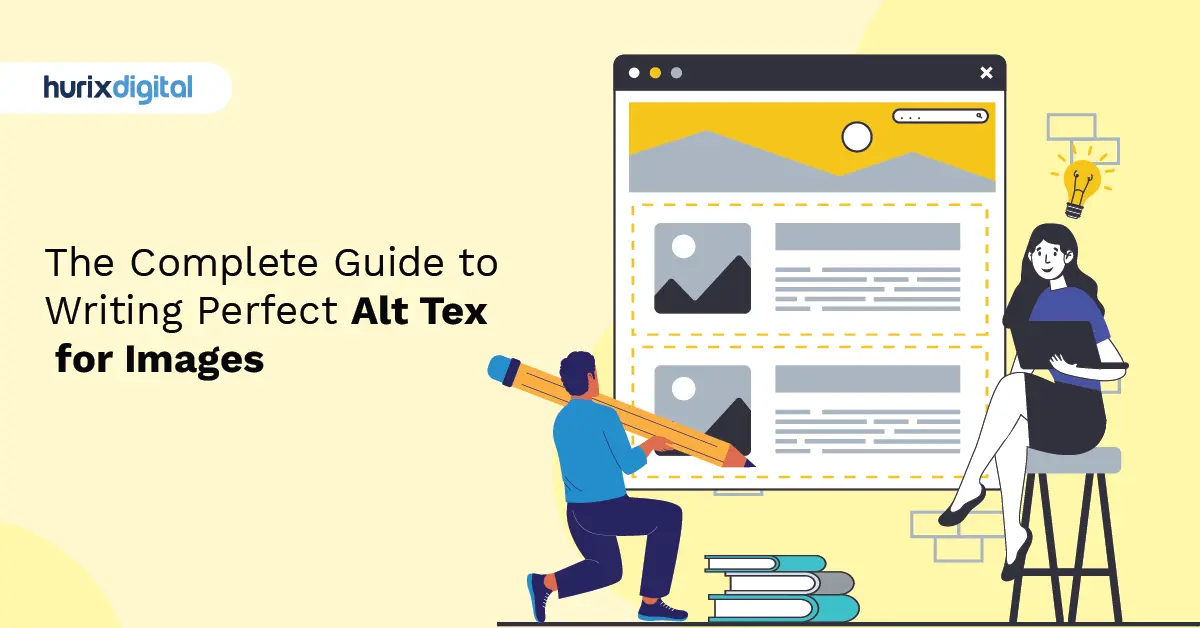
The Complete Guide to Writing Perfect Alt Text for Images
Summarize with:
Imagine walking into a library where all the book covers are blank. You pick one up, but you have no idea if it’s a cookbook, a thriller, or a biography. Frustrating, right?
That’s exactly what the internet feels like for millions of users when websites fail to use alt text for images.
In a digital landscape that is rapidly evolving, where AI and immersive tech are becoming the norm, leaving your visual content undefined is like building a house without a door. It’s not just about compliance anymore; it’s about connection. Whether you’re a seasoned developer or a content creator just finding your footing, understanding the nuance of alternative text is non-negotiable.
So, let’s strip away the jargon and get real about why those little strings of text matter more than ever.
Table of Contents:
- What is Digital Accessibility? (And Why Should You Care?)
- Why Web Browsing Accessibility is Non-Negotiable
- 7 Best Practices for Web Writers on Digital Accessibility
- 4 Technology Solutions for Better Browsing
- Current Trends: Revolutionizing Technology Accessibility
- Diving Deeper into WCAG 3.0 Considerations
- Summing Up
What is Digital Accessibility? (And Why Should You Care?)
Digital accessibility isn’t just a buzzword. It refers to the practice of making the digital world accessible and navigable for everyone, regardless of physical or cognitive impairments. Think of it as building digital ramps alongside the stairs.
For instance, picture your favorite news website. Now, imagine trying to navigate it if you’re visually impaired. To make this website usable for you, it needs to be compatible with screen readers—software that reads the content aloud. This is where alt text for images becomes the hero of the story.
The Web Content Accessibility Guidelines (WCAG) provide the roadmap for making web content more accessible. Yet, despite these clear guidelines, the internet is still cluttered with barriers.
According to older surveys from WebAIM, a staggering 96.3% of homepages had detectable WCAG 2 failures. While we’ve made progress since then, the gap remains significant. Opening up the digital universe isn’t just about ticking compliance boxes or avoiding lawsuits; it’s about humanity. It’s about ensuring that when you share a story, everyone gets to read it.
The Intersection of Disability Inclusion and Technology
As we look toward 2026 and beyond, the amalgamation of disability inclusion and technology accessibility continues to make giant strides. Compliance has grown beyond a requirement; it’s now about nurturing an all-encompassing space where digital platforms open their doors to every user.
Consider an e-commerce platform integrating voice-assist technology. It makes site navigation and shopping a breeze for visually impaired users. The essence of such advancements lies in elevating the user experience and paving the path toward true accessibility for all.
Why Web Browsing Accessibility is Non-Negotiable
Web browsing accessibility is more than just legal safety. There are several benefits of web accessibility for your business, your website, customers, and website viewers.
1. Promoting Equal Digital Access
Historically, people with disabilities have been less likely to use the internet compared to those without. Why? Because the web wasn’t built for them. Alt text for images is one of the simplest, most effective ways to close this digital divide.
The best accessibility solutions help make the internet a more accessible space. By welcoming prospects and clients with disabilities, your organization stands to benefit from a larger range of customers. It’s simple math: more accessible content equals a wider audience.
2. Dodging the Legal Bullet
Legal claims regarding digital accessibility have been rising steadily for years. A study highlighted that digital accessibility lawsuits rose to more than 3,500 cases way back in 2020. In 2026, the legal landscape is even stricter.
Utilizing proper alt text for images and conducting regular accessibility testing helps your website meet compliance standards consistently. This shields your organization from the risk of costly settlements and legal headaches.
3. Boosting User Experience (UX)
When you make your digital content, platform, and website more accessible, you provide a better experience for everyone.
Clear structure and descriptive text help users with slow internet connections, those using text-only browsers, or people just skimming for information. In the competitive world of digital marketing, a user-friendly website can make all the difference.
7 Best Practices for Web Writers on Digital Accessibility
Writing for the web isn’t just about catchy headlines. It’s about structure, clarity, and inclusivity. Here is your cheat sheet for creating content that welcomes everyone.
1. Alt Text Implementation for Images
This is the big one. This descriptive practice increases your website’s accessibility through image search results, which benefits SEO alongside accessibility.
Visually impaired users rely on screen readers to interpret visuals. Without alt text for images, a beautiful infographic is just a silent void. Ensure the alt text for each image on your website is relevant and informative.
- Bad Alt Text: “Image of a dog.”
- Good Alt Text: “Golden Retriever catching a frisbee in a park.”
See the difference? One tells you what it is; the other tells you the story.
2. Use Clear and Simple Language
Don’t use a ten-dollar word when a one-dollar word will do. All users, including those with cognitive challenges, find material easier to read when it is written in simple, direct language. Avoid florid words and jargon. Instead, use simple language that efficiently conveys your thoughts.
3. Structure Content with Headings
Wall-of-text syndrome is the enemy of readability. Using headings properly helps in logical content organization. This arrangement makes the text easy to scan for sighted users and easier for screen readers to navigate. Ensure that headings for each section are clear and informative.
4. Ensure Keyboard Navigation
Not everyone uses a mouse. Many people with physical challenges rely on keyboards to navigate. Ensure that keyboard navigation is available for all interactive components on your website, including buttons, links, and form fields. This can improve usability worldwide and accessibility on mobile devices.
5. Provide Transcripts for Multimedia
Podcasts and videos are great, but not if you can’t hear them. By offering transcripts for audio and video material, you guarantee that those with hearing impairments can access the information. Plus, users who prefer reading over watching videos (we all do it on public transport!) benefit from transcripts too.
6. Use Descriptive Links
“Click here” is the enemy of accessibility. For users who use screen readers, descriptive link language creates context.
- Avoid: “Click here to read more.”
- Use: “Read our guide on accessibility best practices.”
7. Test for Accessibility
Don’t just assume you got it right. Check your site for accessibility problems using tools like WAVE, Axe, and Lighthouse. But remember, automated tools only catch about 30-40% of errors. To make sure it works in the real world, test it with people with actual disabilities.
4 Technology Solutions for Better Browsing
While alt text for images is crucial for content, the tools users employ to browse that content are equally fascinating. Here are four technologies that are reshaping the browsing experience.
1. Screen Reading Software
We’ve mentioned them, but let’s dive deeper. With screen reading software, text is converted into speech so that users can listen rather than read. This is a lifeline for people with visual disabilities or conditions like dyslexia.
Most screen readers are separate applications (like JAWS or NVDA) and do not come built-in with every web browser. As a creator, you make their job possible by providing text descriptions for non-text media. This includes alt text for images and transcripts for video.
2. Screen Magnification Software
While web browsers allow you to zoom in, it often breaks the page layout, requiring endless horizontal scrolling. Screen magnification software magnifies a specific section of the screen while preserving the layout context.
This solution is vital for people with low vision. However, you must ensure your content is responsive. If your site breaks when zoomed in to 200%, it’s not accessible.
3. Voice Recognition Software
Forget typing. With voice recognition software, users can dictate text and issue commands like “Go to next page” or “Click submit.”
This is particularly helpful for people with physical disabilities or conditions like carpal tunnel syndrome. To support this, use clear labels for interactive elements. If a button says “Submit,” the user should be able to trigger it by saying “Submit.”
4. Hands-Free Mouse Tracking
This feels like sci-fi, but it’s real life. Mouse tracking technologies allow users to control the cursor without a physical mouse. Some use web cameras to track head movements, while others monitor eye movement.
Imagine controlling a cursor just by looking at where you want it to go. For users with severe motor impairments, this tech is freedom.
Current Trends: Revolutionizing Technology Accessibility
It’s exciting to see how companies worldwide are now placing greater emphasis on inclusion. Curious about where we are heading? Let’s look at the trends defining 2026.
Taking Disability Inclusion to Heart
In line with the global goal of achieving accessibility for all, businesses are finally adopting an inclusive mindset. Social media platforms are simplifying interfaces and adding functionalities like voice commands, making digital communication a breeze for everyone.
It’s not just charity; it’s branding. Companies that champion accessibility avoid expensive lawsuits and create a positive corporate image.
Accessibility Standards on the Rise
As per WCAG 3.0 considerations, companies must define accessibility standards, ensuring everyone can utilize websites effectively. Businesses can turn to services like Hurix Digital’s free accessibility audit to ensure they aren’t falling behind.
Industry giants are setting high benchmarks, motivating others to follow suit. Accessibility needs to become a foundational principle of user-centered design, not an afterthought.
AI: The Double-Edged Sword
The fusion of AI and accessibility is a game-changer. AI helps predict user behavior and provides tailored experiences. For instance, AI-powered tools can efficiently automate accessibility testing, flagging missing alt text for images in seconds.
However, AI isn’t a silver bullet. While it can generate alt text, it often lacks the nuance of a human writer. “Person holding object” is accurate, but “Grandmother holding her newborn grandchild” is the truth.
Diving Deeper into WCAG 3.0 Considerations
The introduction of WCAG 3.0 has shifted the goalposts, but in a good way. It sets accessibility guidelines to a different index, focusing on outcomes rather than just technicalities.
Amplified Clarity
WCAG 3.0 sets specific objectives with a focus on describing ideas simply. This implies that you no longer have to wrestle with technical terminologies that only developers understand. It eliminates complexity, making guidelines easy for a wider spectrum of stakeholders to implement.
Comprehensive and Holistic Evaluations
In the new framework, a website’s accessibility is calculated using an aggregation scoring system. This system considers all aspects, including severity and frequency of errors. It’s less “pass/fail” and more “how usable is this really?”
Fluid Conformance Model
WCAG 3.0 shatters barriers by introducing a dynamic approach—the Conformance Model. It transcends the former binary evaluation. So, if parts of your website are inaccessible, not all hope is lost. This encourages a more pragmatic approach, focusing on continuous improvement rather than perfection.
Take, for instance, Hurix Digital, which has been diligently adhering to WCAG standards. The future of accessibility seems promising, with WCAG 3.0 considerations as a beacon of hope.
Summing Up
There’s no denying that advancements in technology are paving the way for more inclusive design. Whether it’s through alt text for images, voice recognition, or AI-driven testing, the tools are there.
But tools don’t create inclusion. People do.
Navigating the intricate landscape of global accessibility demands expertise. As a frontrunner in digital content and creative services, Hurix Digital empowers clients with AI-driven solutions and tailors effective accessibility approaches for different platforms.
Hurix Digital offers expert services in creating inclusive digital content to improve the accessibility of your website and guarantee compliance. From thorough audits to tailored remediation, we ensure no user is left behind.
Don’t let your digital content be a library of blank books. Book an appointment today and start writing the full story for everyone.
Summarize with:

Vice President – Content Transformation at HurixDigital, based in Chennai. With nearly 20 years in digital content, he leads large-scale transformation and accessibility initiatives. A frequent presenter (e.g., London Book Fair 2025), Gokulnath drives AI-powered publishing solutions and inclusive content strategies for global clients