 A Space for Thoughtful
Top 7 Strategies for Effective DEI Implementation in Higher Education
Summarize with:
Do you know that it has been found that if you promote diversity and inclusion in your institution, you can foster an inclusive environment for all?
Today, DEI is a means for sustainable growth and is the ethical choice. However, promoting a culture of DEI in higher education is tough in the long run. So, we need to create an effective DEI strategy to make every student feel valued and embrace diversity.
In this blog, we will dive into the top 7 strategies to foster an enriching learning environment by effectively implementing DEI in higher education.
Table of Contents:
- What is DEI in Higher Education?
- What Makes Inclusive Education so Challenging in Today’s Classrooms?
- 5 Major Challenges Teachers Face When Teaching Diversity and Inclusion in Elementary Schools
- Comparing Traditional Education vs. Inclusive Education
- 7 Proven DEI in Higher Education Strategies
- Embrace a Cultural Shift at the Structural Level
- Develop Comprehensive DEI Learning Programs
- Foster an Environment of Inclusivity
- Use Technology to Promote DEI in Higher Education
- Drive Engagement and Collaboration
- Integrate DEI into Curriculum and Academic Frameworks
- Amplify Student Voices for Greater DEI Impact
- Summing Up
What is DEI in Higher Education?
DEI in higher education, also called Diversity, Equity, and Inclusion, is a well-regarded concept across institutions. This concept focuses on creating an educational atmosphere that values the uniqueness of everyone’s experiences, backgrounds, and viewpoints.
It’s not merely about embracing diversity but also ensuring equitable treatment and full participation of all individuals in every institutional activity. When effectively deployed, a DEI strategy can build a successful cultural environment in higher education institutions, fueling innovation, fostering creativity, and elevating overall academic performance.
Yet, the execution of an impactful DEI strategy isn’t a standard procedure. It requires careful planning, a comprehensive approach, and a steadfast commitment to promoting successful diversity and inclusion in higher education.
70% of Americans believe colleges should actively recruit and admit more students from historically underserved groups (such as low-income, first-generation, minority, and disabled students), and 77% think the government should ensure access for these students.
What Makes Inclusive Education so Challenging in Today’s Classrooms?
Inclusive education aims to bring diverse learners together, but schools often struggle with limited resources, teacher preparedness, and cultural differences. These barriers make it difficult to provide equal opportunities, leaving many students without the support they need to succeed.
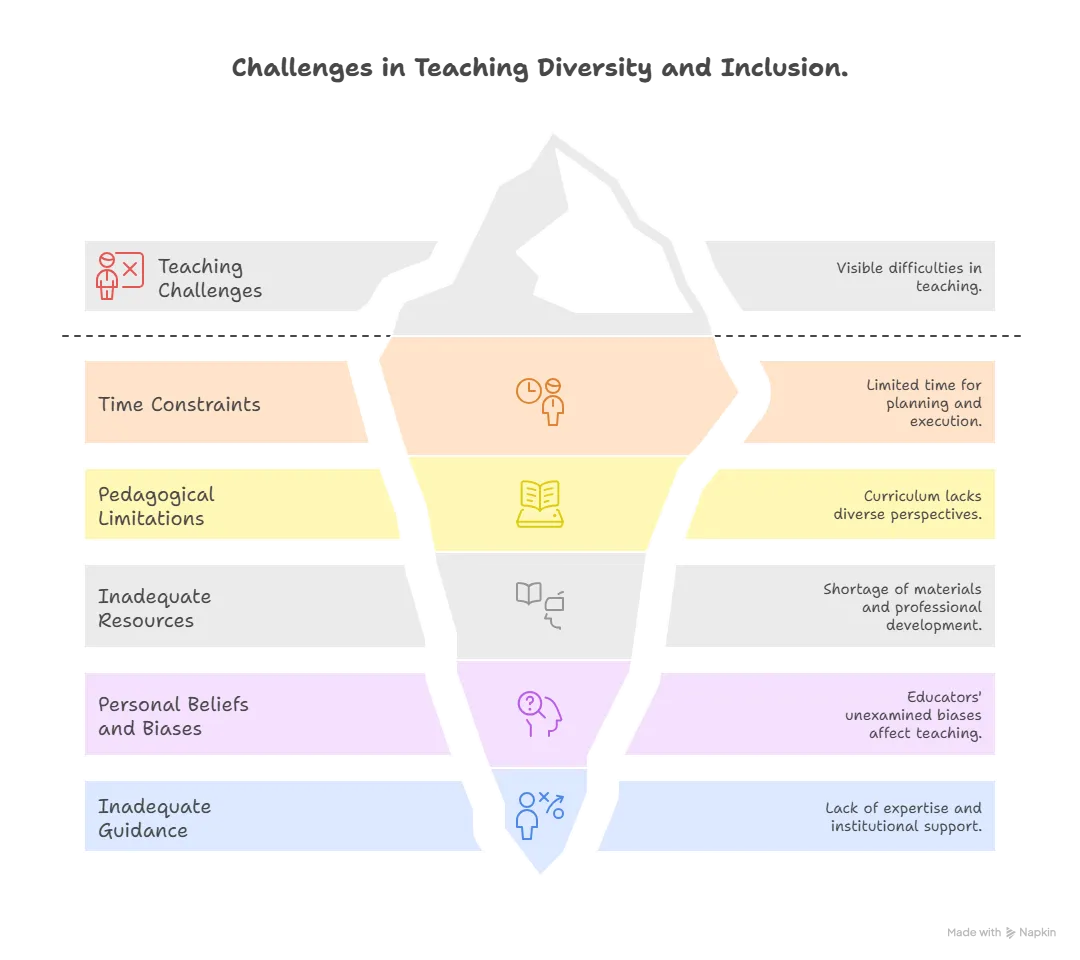
5 Major Challenges Teachers Face When Teaching Diversity and Inclusion in Elementary Schools
Student-focused learning pathways in online and offline modes have gained popularity and are crucial in 2023. This demonstrates how dynamic the educational landscape has become, continually evolving to meet the ever-changing needs of the world.
One of the primary challenges educators face is finding the right approach to teach the lessons on diversity and inclusion in education. Educators must deliver the material in a relatable and engaging manner, rather than in a way that feels way too scholarly or distant.
Below are some of the major challenges educators face when teaching classroom inclusion and diversity to students:
1. Time Constraints
Ensuring all students feel included and treated equally is an important part of inclusion, which goes beyond simply including kids with disabilities in your class. This involves allowing kids to take part in group projects, appreciating their minds, and letting them make mistakes. This calls for patience and assistance from other educators who might be hesitant to alter their methods.
Planning classes, producing materials, evaluating student learning, and making necessary revisions require time. For instance, if instructors only have 20 minutes per week to work with students on social justice issues, it becomes difficult for them to improve in this important area of teaching.
To truly address such issues, a systemic approach is required, so it becomes easier for both teachers and students to navigate the complexities of diversity and inclusion in education within tight schedules.
2. Pedagogical Limitations
If an educator’s curriculum simply includes one perspective on history, culture, or identity, it may be challenging to teach about diversity.
Although many teachers express a wish to teach multiple points of view, this isn’t always possible due to time constraints and other factors, including inadequate funds for professional development and resources.
Within the constraints of a fairly constrained curriculum, primary school teachers are frequently compelled to offer lessons on diversity and inclusion.
This is especially true for teachers in underfunded public schools, where the emphasis is frequently on getting kids ready for standardized testing and raising test scores. The need for a multicultural curriculum is crucial in the current educational scenario.
3. Inadequate Resources
Elementary schools often lack adequate materials for teaching diversity and inclusion.
The majority of public schools also have a shortage of teachers, which prevents them from taking advantage of professional development opportunities that may teach them new inclusive teaching tactics.
When instructing on this subject, instructors must rely on their own life experiences, expertise, and originality. They might not have time to conduct research into effective approaches to teaching diversity and inclusion, let alone access resources like books or lesson plans. This is another challenge that educators face when teaching inclusion and elementary school diversity.
4. Personal Beliefs and Biases
Due to their developing social skills, children may struggle to grasp why others think or act differently. They may have trouble comprehending why someone would dislike something or why someone else would say or do something nasty or spiteful since they have trouble understanding other people’s views.
Educators need to understand the origins of students’ biases or misconceptions about different racial or ethnic groups.
While teaching subjects like race or gender, educators might not directly address their own racial or gender identities, leading to a perception of neutrality and objectivity.
However, without critically examining their own beliefs, how can they discern their influence on students’ responses or actions? This may lead to unintentional reinforcement of stereotypes and prejudices, which must be avoided at all costs.
5. Inadequate Guidance
Educators may not always possess the adequate expertise or tools to address topics of diversity and inclusion effectively.
Given that students might hesitate to discuss racial or ethnic matters due to discomfort or uncertainty, teachers, too, can feel ill-equipped to initiate such conversations. This challenge is amplified without proper institutional guidance and training for the staff.
This is the reason they need to have a solid understanding of the cultural, historical, and social contexts surrounding these topics. An in-depth foundation allows teachers to facilitate discussions confidently, providing a safe space for students to express their thoughts and feelings.
To solve this, educators need to be well-versed in the nuances of diversity and understand the complexities of inclusion. While taking a specialized course is an optimal approach, such opportunities are not always accessible.
Comparing Traditional Education vs. Inclusive Education
| Aspect | Traditional Education | Inclusive Education |
| Student Diversity | Focused mainly on the majority student groups, often overlooking marginalized learners. | Actively promotes diversity, ensuring equal participation for all learners, including those with disabilities or diverse needs. |
| Teaching Approach | One-size-fits-all teaching methods with limited personalization. | Differentiated instruction, personalized learning plans, and adaptive teaching strategies. |
| Learning Environment | May lack resources to support special needs students, leading to segregation. | Provides supportive infrastructure, accessibility tools, and collaborative classrooms for all learners. |
| Teacher Training | Limited exposure to diversity and inclusive pedagogy. | Teachers trained in inclusive practices, cultural sensitivity, and adaptive methods. |
| Student Outcomes | Achievement gaps persist, especially for students with disabilities or minority backgrounds. | Promotes equity, improved learning outcomes, and stronger social integration. |
| Challenges | Easier to manage logistically, but fails to meet diverse needs. | Requires investment in training, resources, and policy support to be effective. |
7 Proven DEI in Higher Education Strategies
Today, higher education institutions face the significant task of keeping pace with progressing standards. One vital focus is the integration of DEI into the very heart of institutional practices and academic course structures.
Here, we delve into the top seven strategies aimed at perfecting the implementation of DEI in higher education:
1. Embrace a Cultural Shift at the Structural Level
Any effective DEI strategy begins with a cultural shift at the institution’s structural level. Initiatives must be focused on cultivating an atmosphere that applauds diversity.
Here are a few ways educational institutes can show a significant movement toward a more inclusive environment:
- Introduce diversity and inclusion programs to train all faculty and staff members.
- Examine and modify institutional policies to accurately portray the pillars of DEI in higher education.
- Adapt an inclusive and flexible academic framework that respects and highlights differing viewpoints and backgrounds.
2. Develop Comprehensive DEI Learning Programs
To truly infuse DEI in higher education, learning programs must be developed to enrich knowledge and promote inclusivity. These programs go beyond a one-time seminar or workshop, making DEI learning an integral part of students’ and staff’s educational journey.
Here are a few ways that can help:
- Make DEI courses a mandatory requirement for all students, regardless of their chosen field of study.
- Provide frequent DEI training for staff and faculty that goes beyond the initial orientation.
3. Foster an Environment of Inclusivity
Promoting an inclusive environment is a crucial DEI strategy for enhancing a sense of belonging in higher education settings. It involves creating protocols that not only acknowledge diversity but also actively nurture an atmosphere where every individual feels valued and respected.
Here are a few ways to create an inclusive educational environment:
- Strategic policies should be devised that cater to individuals with diverse cultural backgrounds, genders, abilities, etc.
- Reports showcase that colleges that promote inclusivity have seen an increase in student satisfaction levels.
- Encourage collaborations across diverse groups to foster empathy and mutual respect among students.
4. Use Technology to Promote DEI in Higher Education
Leveraging technology can play a pivotal role in implementing DEI in schools.
Advanced technology tools, such as Artificial Intelligence and Machine Learning, can be effectively harnessed to detect, confront, and eliminate inherent bias within the academic syllabus. This will ensure the optimization of DEI learning, ultimately leading to a more equal and equitable learning environment.
Additionally, analytical tools can also help monitor and track DEI progress, revealing trends and patterns that may otherwise go unnoticed. Also, technology can assist in facilitating accessibility for disabled students, thereby contributing to overall DEI in Education.
5. Drive Engagement and Collaboration
For impactful DEI in higher education, fostering active engagement and collaboration among faculty, students, and administrative staff is fundamental. This proactive approach essentially creates a harmonious environment where all voices are heard and acknowledged, facilitating effective DEI Learning and development.
By encouraging and facilitating open dialogues, collaborations, and initiatives, institutions can work toward removing barriers and cultivating a truly inclusive environment. Colleges should provide platforms for students and staff to voice their thoughts and ideas, fostering ownership and commitment to the DEI Strategy.
This will also allow institutions to uncover unconscious biases and take necessary actions to mitigate them, further solidifying DEI in education.
6. Integrate DEI into Curriculum and Academic Frameworks
Integrating DEI in higher education into curriculum and academic frameworks helps to promote a deeper understanding and acceptance of diversity. This strategy ensures that DEI isn’t just a classroom topic but complements all aspects of learning.
It’s becoming increasingly important to meet the diverse learning needs and preferences of a multicultural student body, affirming DEI in Schools as essential. According to a Hamline study, institutions that weave DEI elements into their academic course increased student retention and hiring rates.
Allowing students to see themselves in the curriculum can significantly enhance engagement and academic accomplishments, fortifying the effectiveness of Diversity and Inclusion in Higher Education.
7. Amplify Student Voices for Greater DEI Impact
In DEI in higher education, incorporating student insight and experiences plays a crucial role. This strategy fosters an environment where students’ voices are heard, and their unique experiences can contribute to the school’s DEI initiatives.
It ensures the DEI in education strategy remains relevant, contextual, and effective in addressing real-life experiences of the diversified student body. Institutions that actively involve students in DEI planning and implementation see an improvement in the overall campus climate toward diversity and inclusivity.
Read the Latest Press Release: Hurix Digital Builds 100 Interactive Learning Programs for Leading US Education Institution in One Year
Summing Up
Incorporating an inclusive DEI strategy in higher education is essential in today’s diverse world. Putting DEI in schools or higher education successfully is challenging but possible with the insight and support of experienced professionals.
At Hurix Digital, we assist institutions in creating a meaningful DEI learning environment that fosters inclusion and respects diversity. So what are you waiting for? Contact us today and transform your academic community!
Summarize with:

Senior Vice President – Business Development
at Hurix Digital, with over 25 years of experience in EdTech and workforce learning. He excels in business development, customer relationship management, and scaling digital learning solutions, driving global growth through innovative content, simulations, and AI‑driven training offerings