 A Space for Thoughtful
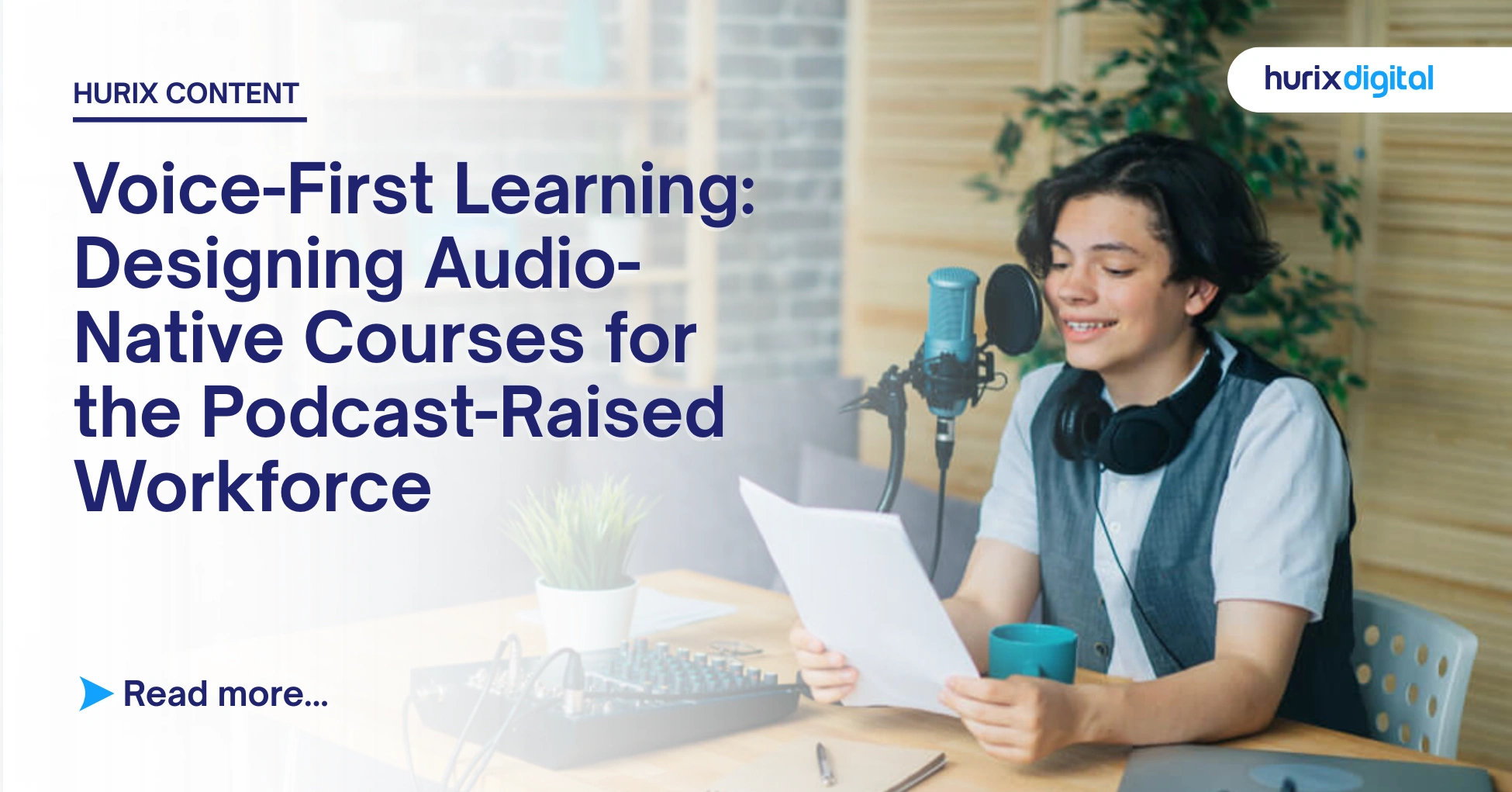
Voice-First Learning: Designing Audio-Native Courses for the Podcast-Raised Workforce
Summarize with:
Pop in your earbuds, fire up a playlist, and walk the dog. Switch to a true-crime episode while folding laundry. Listen to an industry expert break down market trends during your morning commute.
Our daily routines are soundtracked. A massive segment of the modern workforce grew up with a phone in their hand and a podcast in their ears. They consume information through sound as they move through the physical world. Yet when these same individuals log in for mandatory training, they face static slide decks, heavy text, and click-next modules that keep them at a desk. It is a massive disconnect.
Outdated training frameworks are failing to land with modern employees. In fact, industry data shows that 74% of employees feel they aren’t reaching their full potential at work simply because of a distinct lack of modern development opportunities. Corporate training needs a serious sonic upgrade. Dropping everything to adopt an audio learning approach sounds like a massive leap. But forward-thinking organizations recognize that meeting modern professionals where they already spend their time isn’t optional anymore. Building an audio-native blueprint changes the entire corporate training strategy from an obligation into something employees actually look forward to hearing.
Let’s explore how creating audio-native content can revolutionize your corporate training strategy.
Table of Contents:
- What is Audio Learning and Why is it Trending in Workplace Training?
- 5 Reasons Why Audio Courses Are the Future of Workforce Training
- How Can Organizations Effectively Implement Voice Learning Solutions?
- In Conclusion
- Frequently Asked Questions
What is Audio Learning and Why is it Trending in Workplace Training?
Let’s clear up a common misconception right out of the gate. True audio learning isn’t just about taking a boring, hour-long webinar recording, stripping out the video, and dumping the MP3 file onto your employees. That is just lazy formatting. Authentic, voice-first education means building content specifically for the ears from day one. It relies on tight storytelling, natural narration, immersive soundscapes, and conversational scripts that feel like a casual chat rather than a stiff lecture.
The sudden explosion in this trend boils down to one simple word: freedom. Traditional desktop training forces your people to make an annoying compromise—they have to choose between doing their actual job or pausing everything to learn. Sound completely obliterates that barrier. It turns dead time into productive growth. Your team can absorb critical business updates while walking to a meeting, making coffee, or handling routine administrative tasks.
Modern professionals are already deeply conditioned to listen. They consume their news through daily morning briefings and listen to industry experts during long drives. Bringing this exact format into your strategy for learning and development in workplace environments isn’t just a trendy experiment. It is a logical evolution. It respects your learners’ packed schedules, stops screen fatigue in its tracks, and feels like a premium media experience instead of a corporate chore.
5 Reasons Why Audio Courses Are the Future of Workforce Training
If you are skeptical about whether a voice-first approach can actually shift business metrics, look at how our brains handle spoken communication. Here are five practical reasons to pivot your strategy toward sound:
1. Higher Engagement and Completion Rates
Most traditional e-learning modules suffer from abysmal completion rates because they demand 100% of an employee’s visual attention. Audio Courses slip effortlessly into the gaps of a busy workday. Because the friction to start listening is virtually zero, your team actually finishes what they start.
2. Reduced Digital Fatigue
Staring blankly at glowing monitors all day completely zaps raw human energy. Slipping a screen-free option into the mix gives your staff a genuine mental break. The best part? They still absorb the precise workforce training needed to scale up your day-to-day operations without burning out.
3. Better Knowledge Retention Through Storytelling
Great audio relies entirely on a killer narrative. Our brains are hardwired to remember a tense, dramatic story way better than random text bullets slapped onto a flat slide. When an audio scenario is scripted beautifully, the core lesson continues looping in an employee’s head hours after they hit pause.
4. Unmatched Accessibility
Sound acts as an instant equalizer. It provides a seamless, stress-free path for team members who navigate visual impairments or simply struggle to digest massive blocks of text. By putting audio first, you make critical institutional knowledge open and available to every single person on your payroll.
5. Cost-Effective and Rapid Production
Updating an old text-and-image course means opening heavy authoring tools, re-exporting massive files, and re-uploading them to your platform. Tweaking an audio segment is incredibly fast and highly cost-effective, keeping your employee training and development initiatives incredibly agile.
How Can Organizations Effectively Implement Voice Learning Solutions?
Shifting to a voice-first strategy means throwing out your old writing habits. You cannot write for the eyes the same way you write for the ears. Your scripts need to sound like human speech—full of short, punchy sentences and casual phrasings. You have to paint a picture with your words, using descriptive setups and clever sound design instead of relying on a colorful chart or a messy pie graph.
The tech side of things is changing fast too. Instead of booking expensive studio time every single time a policy changes, many forward-thinking companies now train AI voice profiles to handle their content generation. This gives you a consistent, highly polished narrator across thousands of micro-learning segments, allowing you to make quick text edits that translate to perfect voiceovers instantly.
Of course, spinning up a Hollywood-level audio production pipeline out of nowhere isn’t easy for a busy internal HR team. That is exactly why so many companies lean heavily on expert partners for custom elearning development. Bringing in outside pros helps you structure your curriculum properly, polish your scripts for maximum auditory impact, and pick the exact delivery platforms needed to make the launch a success.
In Conclusion
Not every internal HR team has a background in audio engineering, scriptwriting, or podcast production. If your organization wants to launch a large-scale audio initiative, managing the moving parts internally can quickly stall your progress.
Choosing managed learning solutions allows you to scale production without sacrificing quality. Experts handle everything from the initial instructional design to the final audio mix, ensuring your training sounds as polished as a top-charting podcast. This level of production quality is essential for keeping the podcast-raised workforce engaged. If the audio sounds robotic, muffled, or poorly edited, younger workers will tune out immediately. Partnering with a dedicated team ensures your content commands respect and attention.
Ready to transform your traditional, static training materials into high-impact, audio-native experiences? At Hurix Digital, we specialize in comprehensive Workforce Learning Solutions designed specifically for the habits of the modern professional. Whether you need to leverage Custom Content Solutions to build voice-first courses from scratch, implement Micro Learning pathways for on-the-go retention, or deploy localized training via our global Translation & Localization Services, we build the experiences that your people want to listen to. Book a discovery call to know more.
Connect with Hurix Digital today to kickstart your audio learning journey.
Frequently Asked Questions(FAQs)
Q1: Can complex compliance topics really be taught effectively through audio learning?
Yes. Complex topics succeed in this format when broken into micro-learning episodes focused on real-world scenarios. Instead of reading dry legal text, employees listen to a dramatized case study or a conversational interview detailing the compliance issue, making the information far more memorable.
Q2:How do you measure learner assessment and completion in an audio-first course?
Measurement is handled through modern Learning Management Systems (LMS) using xAPI. This tracks playback progress, pauses, and completions. Short, interactive audio prompts or quick mobile quizzes at the end of an episode can effectively validate knowledge retention.
Q3:What is the ideal length for a corporate audio learning episode?
The sweet spot is usually between 5 to 12 minutes. This mimics the bite-sized consumption habits of modern media consumers. It is long enough to cover a specific concept deeply but short enough to finish during a short break or a quick chore.
Q4:Is it expensive to update audio content when company policies change?
No, it is often more affordable than updating traditional video or complex interactive slides. If you utilize synthetic speech technology, you can update the script text and regenerate the specific audio file in minutes, keeping your library accurate with minimal effort.
Q5: How do you handle visual aids like charts or diagrams in an audio course?
Audio-native courses use descriptive language to paint a picture for the listener. For highly technical data that requires visuals, courses include a downloadable PDF companion guide or a link to a simple infographic that learners can reference later.
Summarize with:

Vice President – Delivery at Hurix Digital,
With over 20 years of experience in the digital learning and interactive systems industry. She specializes in operational excellence and end-to-end project delivery, overseeing complex learning solutions from conception to execution. With a strong background in practice leadership and delivery strategy, Reena focuses on driving efficiency and high-quality outcomes for global clients in the corporate and digital education space.