 A Space for Thoughtful
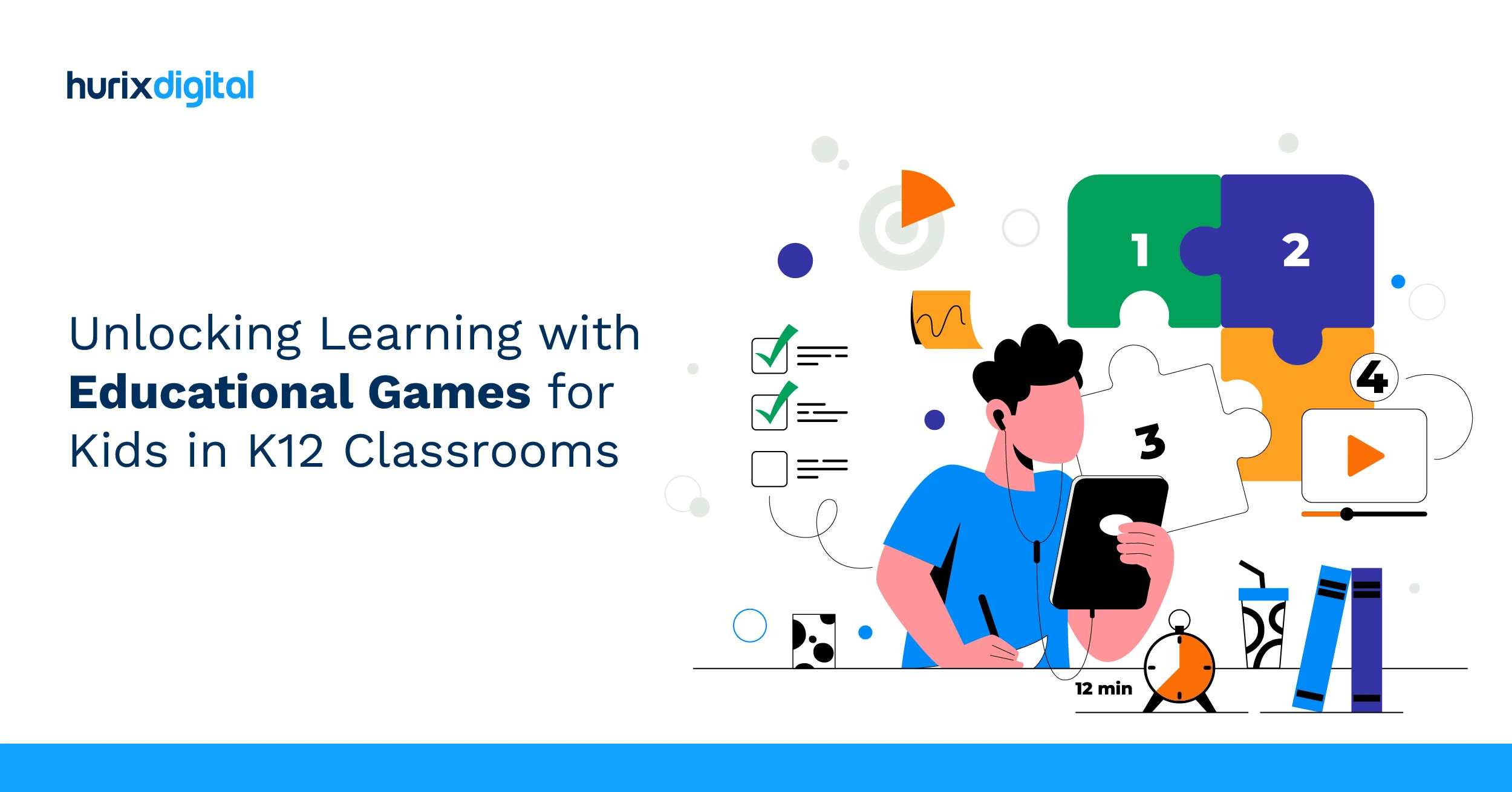
Unlocking Learning with Educational Games for Kids in K12 Classrooms
Summarize with:
Educational games for students have a very long history, even before the pandemic. Research shows that using games to teach has been a widespread practice for thousands of years. Over the past few decades, the adoption of gamification in education has accelerated at an unprecedented rate.
K12 students must develop critical thinking skills to thrive in today’s digital world. Educators rightly recognize this and are leveraging all tools at their disposal, including K12 learning games. Game-based learning is one of the most promising tools, as it combines educational instruction with playful entertainment.
Critical thinking has become one of the most essential skills for K12 students. The most recent survey on employment indicates that employers nowadays consider critical thinking abilities and other qualities when hiring an employee. Educators have begun to discover creative ways to teach skills for the future. Some of the educators have introduced game-based learning in their classrooms.
K-12 online learning games are the perfect interface for creatively blending educational content with interactive gameplay, which can help nurture critical thinking, problem-solving skills, and decision-making capacities in an enjoyable and rich way.
Read on for the best practices for integrating game-based learning in education!
Table of Contents:
- Brief History of Game-Based Learning in the Classroom
- Examples of an Online Game-Based Learning Platform
- The Intersection of Video Games and Critical Thinking
- Top 8 Benefits of Educational Video Games in K12 Learning
- Games Make K12 Learning Fun
- Educational Video Games Supplement Existing K12 Solutions
- Game-Based eLearning Enhances Problem-Solving & Strategic Thinking Skills
- Educational Games for Students Online
- Game-Based Learning in Education Bolsters Computer Literacy
- Game-Based Learning Solutions Help Students Learn from Failure
- Top K12 Education Companies Offer Video Games That Help Students Learn to Multitask
- Games as a Component of K12 Learning Can Cultivate a Love of Learning
- 10 Tips for Choosing the Right Games to Support the K12 Curriculum
- Review K12 Curriculum Before Selecting Digital Learning Games
- Identify Learning Objectives for Curriculum Integration
- Research Educational Content to Ensure Student-Centered Learning
- Evaluate Monitoring and Assessment Tools Within Digital Learning Games
- Look for Games with Real-World Relevance and Curriculum Integration
- Assess Suitability
- Confirm Digital Learning Games Provide Accessibility and Availability
- Take Advantage of Free Demos from Digital Learning Providers
- Ask for Peer Recommendations
- Select Games from Leading Digital Curriculum Providers
- How Game-Based Assessments Help Educators Adapt to Student Needs?
- Key Takeaways
Brief History of Game-Based Learning in the Classroom
It is necessary to reiterate that game-based learning in education is not a new concept. Research suggests that games have been used to teach students in Africa for thousands of years. Likewise, games and play-based learning were used in ancient Greece and during the Roman Empire. From puzzle and shape games to spelling contests, matching games, and memorization games, educators have long embraced the game-based learning method. Today, thanks to technology, online game-based learning is used by more than half of educators worldwide.
Examples of an Online Game-Based Learning Platform
Game-based learning can be applied in various educational settings, including K12 education, higher education, and corporate training. This is one of the key reasons why the global K-12 game-based learning market is experiencing accelerated growth, with a CAGR of 20% projected for the forecast period of 2021-2025.
Let’s see why game-based learning software is such a raging success. There are so many examples of games that can be employed and successfully implemented by educators:
1. Video Games
There are multiple reasons why video games are so popular among children. There are approximately 3.09 billion video gamers globally.
Now, that’s massive in terms of an avenue for online game-based learning and a world of opportunities for the educational community. Depending upon the students’ interest levels, you can choose between role-playing games, action games, simulations, adventures, and so forth.
A common thread in such environments is the ability to develop critical thinking skills and decision-making among students. All you need to do is align your curriculum to the game environment and teach the courses or subjects through the game.
2. Puzzle Games
A brilliant example of such a game is Sudoku, where you keep your brain stimulated and use your logic to complete the puzzle as soon as possible.
Solving puzzles helps students develop a deeper understanding of different scenarios. It emphasizes spatial and cognitive methods for recognizing patterns and aligning them for a successful outcome.
Researchers have established the connection between puzzle-based learning approaches and outcomes like problem-solving, cognitive thinking, and decision-making.
3. Board Games
The most popular board games include Ludo, Scrabble, Monopoly, Chess, and others. Each has the unique quality of keeping children highly engaged and catering to their competitive streaks.
Children can learn important educational skills, such as vocabulary, problem-solving, critical thinking, and intellectual application, through online game-based learning, which can take many forms.
It could be as simple as playing a game that helps students practice math skills, such as Monopoly, or adding a game component to an existing lesson plan to make it more engaging and enriching. For instance, if you’re teaching about ancient civilizations, you could design a game where players must go back in time to gather all the information required to solve a mystery.
The Intersection of Video Games and Critical Thinking
The educational game is not a video game per se. Instead, it helps further impart knowledge to students by transforming the tedious practice or repetition required in the learning process into a full-blown problem-solving exercise.
They are games to improve logical thinking, which involve puzzle-solving mechanisms and challenges that help students think on the move and use the information they learn. This kind of exercise will challenge the student to:
- Analyzing Information: They must sift through data, identify patterns, and draw conclusions.
- Evaluate Arguments: The students learn to judge which perspective is the most realistic.
- Problem-Solving: Games most often present dramatic situations that require students to devise unorthodox solutions and think creatively.
- Choice-Making: Students have numerous choices and must weigh the effects to choose the most strategic alternative.
Top 8 Benefits of Educational Video Games in K12 Learning
The value of games in K12 learning cannot be underscored. Fortunately, educators, parents, and guardians have more options available to them today than ever before. Indeed, the top K12 education companies are providing K12 learning solutions that enhance and supplement in-class instruction on subjects ranging from Math to History. But how exactly does game-based learning help students?
1. Games Make K12 Learning Fun
Multiple studies have shown that students learn complex information most effectively when they are engaged and enjoying themselves. In other words, when learning is fun, students are more likely to engage with the material. This may be partly traced to the fact that for many students, playing a game improves mood. The brain becomes more flexible when in a good mood, allowing students to grasp more complex concepts.
2. Educational Video Games Supplement Existing K12 Solutions
If the COVID-19 pandemic has taught us anything about education, it is that students need classroom instruction; otherwise, they risk falling behind. However, educational video games are not designed to replace traditional classroom instruction. Rather, educational games for students online are intended to supplement traditional, proven K12 solutions.
Consider game-based learning solutions as a perfect supplement to textbooks, especially for young learners. After solving math problems, students can reinforce learning by playing engaging math video games. This helps educators confirm knowledge retention and transfer from book to game, and beyond K12 settings.
3. Game-Based eLearning Enhances Problem-Solving & Strategic Thinking Skills
Game-based e-learning affords experiential learning, helping students to develop problem-solving and strategic thinking skills. These creative problem-solving skills not only help students thrive in academia but also prepare them for life beyond the classroom. This unique feature is not by accident. The top K12 education companies recognize that the value of games in education should not be limited to K12 learning. The games should have long-term, practical applications in the real world.
Consider, for example, a history game designed by one of the leading K12 EdTech companies. In the game, student players are tasked with settling a new colony. What will they need to survive? Will they partner with others, or attempt to build a colony alone? What tasks will they need to prioritize? Should they plant crops, or is it more beneficial to hunt or to fish? Learning to think strategically and critically is a key benefit of game-based e-learning.
4. Educational Games for Students Online
Educational games for kids online require students to memorize a wide range of information, including facts, figures, locations, events, equations, formulas, shapes, categories, and more. The top K-12 education companies offer game-based learning solutions tailored to each age group. Young students may begin strengthening their memory by matching shapes, sizes, and colors. Older students may be required to recall instructions or information presented earlier in a game to advance to the next level.
Indeed, memory is bolstered through games. One study published in the journal Behavioral Brain Research found that “In a learning test, people who play video games performed better than those who don’t, and their brains appeared to be more active in regions linked to learning and memory.”
5. Game-Based Learning in Education Bolsters Computer Literacy
Students who are not computer literate will struggle not only in school but in life after school. For this reason, well-rounded K12 learning curricula prioritize computer literacy. Game-based e-learning unequivocally helps bolster computer literacy, as students must learn how to type, utilize keyboard skills and shortcuts, start a new game, progress to the next level, or replay a game.
6. Game-Based Learning Solutions Help Students Learn from Failure
The lessons learned by failing are often underreported. However, learning to try again, instead of giving up after a failure, is a key value of games in education. After all, learning to accept their own mistakes and learn from them is an invaluable tool that will benefit students long after they complete their formal K-12 learning experience.
Prominent video game theorists have also postulated that losing in a game is one of the reasons that students stay so engaged with game-based e-learning. The perceived “threat” of failing in a game may keep students riveted, while the opportunity to immediately “redeem” themselves by succeeding in their second or third attempt allows them to learn from mistakes.
7. Top K12 Education Companies Offer Video Games That Help Students Learn to Multitask
Whether a student is trying to solve various math problems in a timed session or trying to organize objects by color and shape, game-based learning requires students to multitask. Learning to process more than one project at a time will benefit students by training the brain to work more efficiently. In other words, the act of multitasking paves the way for increased productivity and creativity in both K12 learning and life after formal education.
According to a report, “the encouragement of multitasking and quick decision-making has helped students think creatively and better address unexpected events. Video games have also been shown to boost multitasking and learning ability by stimulating the brain’s frontal lobe.”
8. Games as a Component of K12 Learning Can Cultivate a Love of Learning
Numerous studies have found that game-based learning in education exhibits numerous positive correlations between playing games and enjoying the learning process. The reason? Students find games both stimulating and motivating.
Developing a love of learning early in life offers long-term benefits, including a desire to acquire new skills and knowledge, as well as an eagerness to build upon existing knowledge. Moreover, research suggests that those who love learning also benefit from feeling a sense of autonomy, excitement about possibilities, and positive feelings about learning new things.
10 Tips for Choosing the Right Games to Support the K12 Curriculum
Here are some industry-tested ways to find the perfect game for your curriculum:
1. Review K12 Curriculum Before Selecting Digital Learning Games
Before beginning your search for educational games for students that provide robust student-centered learning opportunities, it’s smart to review the appropriate K12 curriculum. That way, you won’t waste time researching digital learning games that are not suited for your classroom curriculum integration.
2. Identify Learning Objectives for Curriculum Integration
Before integrating educational games into the classroom, it is necessary to identify the learning objectives that align with the K12 curriculum. Once you’ve compiled the learning objectives students must achieve, you’ll be able to begin your search for educational video games that will reinforce these learning objectives.
For example, you may decide that a class would benefit from engaging in video games in the classroom that align with the Maths curriculum. Or, you may have students who are struggling to engage with History in a textbook, and interactive gameplay might help to pique interest.
Some students may require assistance in developing their critical thinking skills. Regardless of your unique goals, clarifying the learning objectives before you begin pursuing offerings from digital curriculum providers can save time and make choosing the right games easier.
3. Research Educational Content to Ensure Student-Centered Learning
When selecting video games that align with the K12 curriculum, prioritize the educational content provided by a game-based learning tool. Reading summaries of various game-based learning games should inform you about what students will do in the game and what they will learn.
4. Evaluate Monitoring and Assessment Tools Within Digital Learning Games
When researching educational games for curriculum integration, be sure you’re also looking for in-game assessments. With so many digital learning games available, you needn’t settle for games that don’t provide immediate feedback on student progress.
Effective monitoring and assessment tools are vital when integrating video games into the classroom. Look for games that offer features including built-in progress tracking. This will allow educators to monitor students’ performance and illuminate areas needing improvement.
Other educational games may provide detailed reports or analytics that enable educators to make data-driven decisions. Educators should select the games that provide the best assessment for their needs.
5. Look for Games with Real-World Relevance and Curriculum Integration
Educational games, just like all educational instruction provided to students, should help them in their academic careers. But, they should also provide skills or knowledge that is transferable to the real world. After all, it is this feature that distinguishes educational video games from other video games.
Consider, for example, that a science-based game, which teaches students about the immune system and how bacteria and viruses spread, provides students with a basic understanding of health as they age. Playing Super Mario Kart, on the other hand, isn’t likely to help any student score well on a medical school entrance exam. If you struggle to find the connection between the game and relevant skills, it’s probably best to skip that game and find another that offers authenticity and relevance before proceeding with curriculum integration.
6. Assess Suitability
Before selecting digital learning games for your classroom, consider the age appropriateness and suitability of the video games for your students. Conduct an educational game evaluation by examining the game’s complexity, language, violence level, and cultural relevance.
Equally important is ensuring that any educational games you integrate into the classroom align with your students’ cognitive and emotional development.
7. Confirm Digital Learning Games Provide Accessibility and Availability
It’s necessary to include a variety of educational games that cater to different abilities. Therefore, ensuring accessibility is a crucial factor in the success of gamification in education. Confirm that the educational games are available on platforms that your students can access and that your classroom is equipped to offer them. Some digital learning games are best suited to desktops, while others may be played on tablets and laptops.
Additionally, it is advisable to review the technical requirements of any game-based learning tools to ensure your classroom is adequately equipped for seamless gameplay. Finally, you may wish to select games that offer a variety of play styles to best suit children with various learning style preferences.
8. Take Advantage of Free Demos from Digital Learning Providers
Leading digital curriculum providers will be happy to provide educators with free demos of educational games before purchase. Educators should take advantage of these opportunities to conduct their educational game evaluation. Reading summaries about games is no substitute for playing the games yourself.
Free demos from digital curriculum providers will also allow you to confirm that the games are engaging, usable for students, compatible with your classroom devices and technology, and, most importantly, add value to the K12 curriculum when integrated into the classroom.
9. Ask for Peer Recommendations
Fellow educators can be a wealth of knowledge when it comes to selecting educational games that align with the K12 curriculum. Consult with other experts by asking for recommendations, or conversely, games to avoid.
10. Select Games from Leading Digital Curriculum Providers
Leading digital curriculum providers will be selective in choosing the game-based learning tools that they offer. So, for added security in choosing the right games for your classroom, look to the offerings available from leading digital curriculum providers.
How Game-Based Assessments Help Educators Adapt to Student Needs?
Game-based learning solutions support both educators and students. Using game-based assessments enables the swift adjustment of instruction, starting with lesson plans, continuing through lectures, in-class instruction, and homework assignments.
Game-based assessments work by collecting data on responses, actions, and scores and providing them to the educator. Unlike written tests, which can provoke stress in students, game-based assessments are widely viewed as less intimidating.
In fact, game-based assessments are so unthreatening that they are even used in hiring practices to measure various qualities in potential candidates. There’s little doubt that students who engage with K12 online learning and game-based assessments will be familiar with the practice as they enter the workforce.
Key Takeaways
In a remote learning scenario, engaging students in fun online learning games can enhance the learning experience and help students better engage with the content.
Besides knowledge acquisition, online learning games help develop soft skills like critical thinking, communication, problem-solving, and decision-making. Therefore, educational institutions must consider incorporating learning games into the K12 curriculum to make learning more engaging for students.
At Hurix Digital, we offer advanced K12 solutions that enhance student engagement and support personalized learning experiences.
Our solutions are designed to boost creativity, collaboration, and critical thinking, ensuring that students retain knowledge and develop essential life skills. Let’s work together to make learning fun and effective!
Summarize with:

Senior Vice President – Business Development
at Hurix Digital, with over 25 years of experience in EdTech and workforce learning. He excels in business development, customer relationship management, and scaling digital learning solutions, driving global growth through innovative content, simulations, and AI‑driven training offerings