 A Space for Thoughtful
5 Latest K12 Education Trends for 2025
Summarize with:
Technology plays a significant role in transforming the entire K-12 education system and delivering the benefits of schooling to children. The influence of technology in this sector can be understood by looking at three figures: 93%, 81%, and 58%.
Here’s the information you need to clear up any confusion:
- In a survey, 93% of participants confessed that they had conducted online teaching in some form before the summer of 2020.
- % of US school teachers admitted that their familiarity with educational technology and online tools skyrocketed due to the pandemic.
- In another survey, 58% of participants reported feeling more confident about educational technology and online tools than ever.
At this point, it might seem natural to conclude that the modern K-12 Education system is solely a consequence of the pandemic. However, technology had begun to penetrate K-12 education long before the global health crisis. The COVID-19 disaster was undeniably the catalyst that accelerated the role of technology in the K-12 education system, making it more sustainable and convenient for both students and teachers. As we look ahead, it’s clear that these changes are not temporary; they are fundamentally reshaping how we prepare students for the future careers that await them.
So, now that the K-12 education system has become more technology-driven, what are the significant trends we expect to see in 2026 and beyond? This article explores how K-12 education is evolving to equip students for tomorrow’s jobs.
Table of Contents:
- The Foundation: Why K-12 Education Dominates Learning Trends
- Top 5 K-12 Education Trends for 2026 & Beyond
- The Role of EdTech in Preparing Students for the Future Workforce
- Exploring Modern Learning Methodologies
- How Digital Platforms Contribute to K-12 Education Market Trends
- Navigating the Challenges in Modern K-12 Education
- Conclusion
The Foundation: Why K-12 Education Dominates Learning Trends
K-12 learning has been the cornerstone of education for decades, and its importance continues to grow. This model provides students with a solid foundation in various academic areas while developing essential life skills. A high school diploma is a necessary prerequisite for most entry-level jobs and for pursuing higher education, making the K-12 model a critical component of the overall education system.
Furthermore, its global accessibility is a key factor. Most countries follow the K-12 model, with public schools making it a practical and convenient option worldwide. This accessibility is a game-changer for students from diverse socioeconomic backgrounds. Deeply ingrained in many cultures, completing K-12 education is often seen as a rite of passage, a significant milestone that prepares young people for their future careers. While alternative education forms exist, they have yet to be as widely accepted by employers and higher education institutions, cementing K-12’s dominance.
The standardized curriculum ensures that students receive a consistent education, creating a level playing field regardless of their location. This system also promotes parental involvement, which studies show leads to higher academic achievement and better social skills. The traditional classroom setting allows for face-to-face interaction, fostering a sense of community and encouraging socialization, which is critical for preparing students for life beyond school.
Top 5 K-12 Education Trends for 2026 & Beyond
The K-12 landscape is changing rapidly, with 2026 being hailed as a year of transformational change. Let’s explore the top future trends in K-12 education that are transforming classrooms and improving learning outcomes, ultimately preparing students for their future careers.
1. A Productive Blend of REAL, AR, AI, and VR
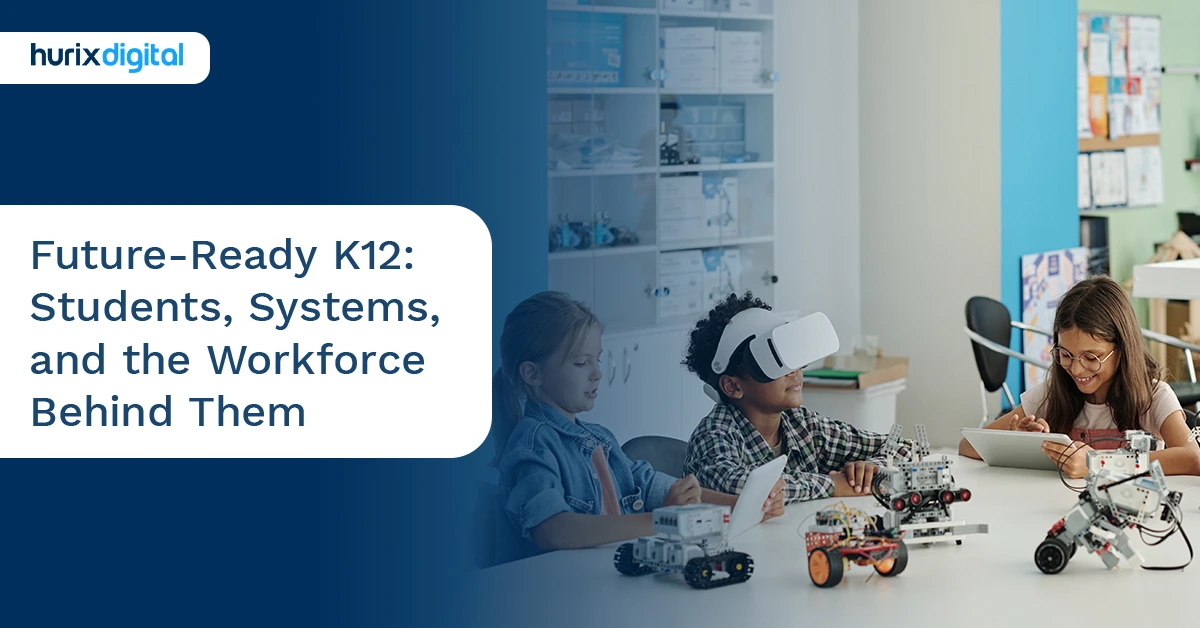
Humankind is gradually becoming acclimated to receiving attractive content at the blink of an eye. Learning is no exception, and technologies like Augmented Reality (AR), Artificial Intelligence (AI), and Virtual Reality (VR) will profoundly influence all individual activities. As these technologies make their way into every aspect of human life, the socio-educational infrastructure will follow suit, integrating them into all facets of K-12 education.
As AI, AR, and VR tools become more human-centric and technologically advanced, K-12 education stakeholders can use such advancements to simplify personalized or remote learning for every student. For example, VR and AR can create immersive learning experiences that bring subjects to life, helping students grasp knowledge in ways traditional textbooks cannot match. Meanwhile, AI can be used to personalize learning and adapt to the needs of each student.
2. Individualized Learning Leads to Better Outcomes
There was an era when parents seemed to have no issues with one teacher assigned to a class of 40-70 students. Those practices are long gone. Personalized learning is gradually transforming into individualized learning, and it is increasingly taking hold as the latest trend in education.
The difference is that while personalized learning focuses on making education more interesting, individualized learning analyzes each student’s unique traits and designs content that appeals to their senses. K-12 education stakeholders can leverage technologies like AI and Machine Learning (ML) to aid this transition. This approach helps teachers understand individual weaknesses, strengths, and areas for improvement, creating a truly personalized path within their curriculum development process.
3. Perpetual Education through Subscriptions and Memberships
The schooling system was very different just a few generations ago. With the speed at which technology is developing, educators and students are embracing subscription-style models of online classes. For students seeking adaptable methods of instruction, the rise of online learning providers that feature inclusive classroom sessions alongside conventional training is a game-changer.
This particular style will continue to be popular in 2026 because it was designed to meet the evolving requirements of organizations and learners. In short, educational content delivery platforms will become more common in K-12 institutions. Hurix Digital provides an all-in-one Learning Management System (LMS) to simplify classroom and online teaching, allowing for a perpetual, on-demand educational experience.
4. Game-Based Learning Will Become the Norm
Kids today are very familiar with edutainment. It has been circulating in the K-12 education segment for a while and has successfully announced its existence. The year 2026 and beyond will explore the positive benefits of gamified learning even more. Playing educational games provides an immersive method of information literacy by involving students in their studies and promoting greater multimodal involvement.
Gamification improves attention spans and students’ ability to retain information. This is because the game-like approach to learning engages them far more than simply reading a concept, motivating them to solve a problem rather than giving up.
5. The Use of Nano-Learning in Schooling
Nano-learning in EdTech is a fresh concept. Although corporate organizations have been using it for some time, the K-12 education industry is now beginning to introduce it. You can understand nano-learning better if you know the basic premise of Instagram Reels or YouTube Shorts. Just as these platforms deliver bite-sized content, teachers can use the same technique to deliver educational content to students, making learning more digestible and accessible.
The Role of EdTech in Preparing Students for the Future Workforce
The ultimate goal of integrating technology in K-12 schools is to ensure students are fit for the jobs that await them. Here’s how you can cultivate a generation ready to adapt to the evolving demands of the workforce.
1. Upgrading Digital Literacy in Education
In today’s technology-driven world, digital literacy is a necessity. K-12 EdTech is about more than just gadgets; it’s about cultivating digital fluency from an early age. It introduces coding and programming basics to instill technological mastery, promotes critical thinking through tech-based projects, and bridges the digital divide to ensure equal access to resources.
2. Nurturing Online Safety Skills
Along with solid tech mastery, digital literacy must include ethical and responsible technology use. K-12 EdTech offers opportunities to educate students about online safety, introducing them to online threats, safe browsing practices, and safeguarding personal data. This also includes teaching students about the impact of their online presence and promoting proper digital etiquette.
3. Promoting STEM Education for Future Careers
Science, Technology, Engineering, and Mathematics (STEM) education is the cornerstone of preparing students for the jobs of tomorrow. EdTech ensures workforce preparedness by engaging students through hands-on STEM activities and connecting classroom learning to real-world use cases through immersive projects like virtual labs. It also helps bridge diversity gaps by empowering underrepresented groups in STEM fields.
4. Enabling Innovation in Teaching and Learning
The future demands innovators, and educators are at the forefront of this transformation. Technology in K-12 schools nurtures the next generation of trailblazers by embracing project-based learning to cultivate creativity, encouraging interdisciplinary learning for a holistic approach, and integrating design thinking to foster an entrepreneurial mindset.
Exploring Modern Learning Methodologies
The evolution of EdTech has paved the way for more dynamic and effective teaching methods that are crucial for preparing students for their future careers.
1. Understanding Immersive Learning
Immersive learning refers to an educational system where students are completely immersed in a fabricated environment. This approach uses VR and AR in the classroom to enhance learning solutions. These technologies allow students to simulate environments and scenarios, providing practical ways to explain complex concepts. Benefits include enhanced engagement, improved retention (up to 75%, and the development of 21st-century skills like critical thinking and problem-solving.
2. The Power of Digital Project-Based Learning
Project-based learning is a student-oriented approach that focuses on exploring real-world problems to trigger critical thinking. It encourages students to think outside the box and gain hands-on experience. This method fosters a student-centric approach, allows for easy classroom integration with digital tools, promotes learning autonomy, and helps develop crucial teamwork skills. By tackling real-life challenges, students not only gain knowledge but also build confidence and readiness for their future careers.
3. Role of Career and Technical Education (CTE)?
Career and Technical Education (CTE) programs provide students with the knowledge and skills necessary to succeed in specific industries. These programs integrate academic curriculum with hands-on, real-world experiences like internships and project-based assignments. CTE helps in career exploration, allowing students to explore interests in fields like information technology, health science, and business management. It offers multiple pathways to success, whether students plan to enter the workforce directly, pursue technical school, or attend a four-year university, thereby addressing workforce shortages and preparing students for in-demand jobs.
How Digital Platforms Contribute to K-12 Education Market Trends
Digital content platforms are a vital part of the evolution of K-12 education. They pave innovative ways for learning, simplify administrative tasks, and bridge gaps in education delivery.
1. Personalized and Adaptive Learning
Digital tools use AI and data analytics to show students content based on their needs and learning habits. This personalization aligns with the future of K-12 education and leads to more effective learning outcomes. Lessons can automatically adjust based on a child’s progress, and assessments can be tailored to their strengths and weaknesses.
2. Centralized Access to Resources
Digital platforms combine textbooks, multimedia, and interactive lessons into one central place. Students can view materials anytime, anywhere, reinforcing hybrid and remote learning. This also promotes a reduction in physical books and printing costs, aligning with cost-consciousness needs.
3. Enhanced Collaboration and Engagement
Online platforms with interactive capabilities make collaboration among peers and between teachers and students possible. This encourages real-time interaction through video, chats, and shared documents. Game-based learning modules further increase interest and participation.
4. Data-Driven Insights for Teachers
These solutions offer analytics and reporting for data-driven decisions. Such platforms help educators detect students who are lagging and implement intervention strategies on time. They also allow educators to track content effectiveness and adapt lessons accordingly, improving the overall quality of education.
Navigating the Challenges in Modern K-12 Education
While technological advancements are exciting, challenges come hand-in-hand. K-12 education companies and institutions need to be prepared to meet them head-on.
1. Training Teachers for the Latest EdTech Solutions
Many teachers worldwide may not be digitally adept. Therefore, a primary challenge is providing adequate training on how to use new tools effectively. This professional development must be ongoing, not a one-time event, as technology constantly evolves. Training needs to be tailored to the specific needs of teachers based on their digital proficiency, subject areas, and grade levels.
2. Addressing the Digital Divide
The digital divide—the gap between students with access to technology and those without—remains a crucial challenge. Socioeconomic status and geographic location play a significant role. One way to address this is by ensuring solutions work flawlessly across multiple platforms, so students from weaker socioeconomic backgrounds are not left behind. Schools can also invest in providing devices and free internet access, as well as training for students and parents.
Conclusion
In conclusion, technology is undeniably shaping the future of K-12 education and how we prepare students for their future careers. Its influence will continue to grow through 2026 and beyond. From immersive tools like AR, VR, and AI to the rise of individualized, game-based education, these advancements promise to enhance student engagement and educational outcomes.
The continued integration of technology in K-12 schools is setting the stage for a more dynamic, personalized, and efficient learning environment. This evolution is crucial for equipping the next generation with the skills, knowledge, and adaptability needed to thrive in the workforce of tomorrow. Platforms like Hurix Digital are helping institutions achieve this seamless learning experience.
Now that you know the top K-12 education market trends shaping future careers for students, reach out to our experts for hi-tech K-12 learning content solutions!
Summarize with:

Senior Vice President – Business Development
at Hurix Digital, with over 25 years of experience in EdTech and workforce learning. He excels in business development, customer relationship management, and scaling digital learning solutions, driving global growth through innovative content, simulations, and AI‑driven training offerings