 A Space for Thoughtful

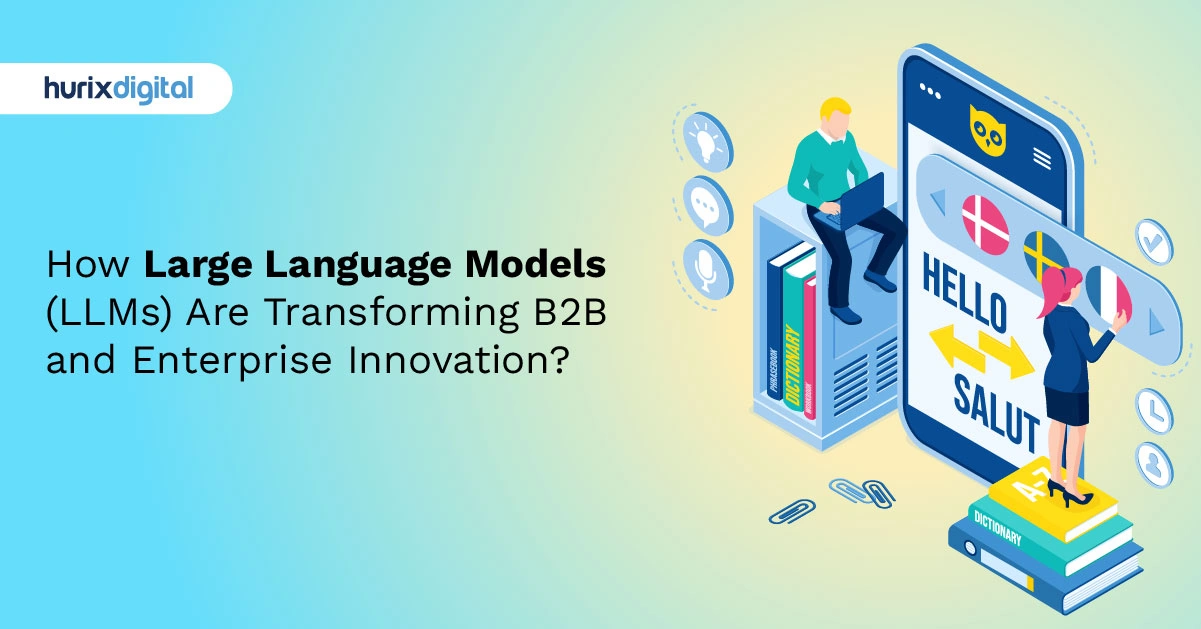
How Large Language Models Are Transforming B2B and Enterprise Innovation?
Summarize with:
Large language models (LLMs) are advanced tools that help businesses in many ways. They improve products, simplify day-to-day tasks, and significantly increase productivity. As we look towards 2026 and beyond, the role of LLMs in communication enhancement and B2B integration within enterprise applications has become undeniably crucial. These models provide sophisticated AI-driven solutions that streamline business communication, optimize procedures, and improve universal efficiency.
The impact is already measurable. A study by Verta, Inc. indicated that companies plan to continue or increase their investments in the broad adoption of AI. Moreover, according to a report by Juniper Research, machine learning spending saw a dramatic increase in recent years, a trend that continues to accelerate. This underscores the growing reliance on technologies like LLMs to maintain a competitive edge. Some noteworthy examples of large language models that have shaped the industry include Llama, GPT-4, PaLM2, BloombergGPT, Codex, and BERT.
In this comprehensive guide, we will explore the different types of LLMs, their applications in B2B settings, and how they are revolutionizing enterprise innovation for a smarter, more efficient future.
Table of Contents:
- What is a Large Language Model (LLM)?
- The Relationship Between Generative AI and LLMs
- Different Types of Large Language Models (LLMs)
- The Rise and In-Depth Understanding of LLMs
- Why Do You Need Large Language Models for Business Innovations?
- Combining the Power of LLMs and Advanced AI
- LLMs Are Multi-Talented Systems
- Leveraging the Power of AI to Engage Customers
- Customizing LLMs for Maximum Efficiency
- LLMs Are More Interactive than Traditional Search Engines
- LLMs Are User-Friendly Installations
- LLMs Empower Decision-Making
- A Survival Kit for a Competitive Market
- 6 Ways Large Language Models Drive Business Workflows
- Benefits of Private LLMs for Enterprises
- The Synergy of Gen AI and Private LLMs
- Open-Source Large Language Models to Spark Creativity
- How LLMs Enhance B2B Content Marketing
- The Role of LLMs in Sales Automation
- Conclusion
What is a Large Language Model (LLM)?
A Large Language Model, or LLM, is a specialized form of artificial intelligence trained on vast amounts of text-based data. This training enables LLMs to understand, generate, and manipulate human language with remarkable sophistication. At its core, an LLM runs on a deep learning algorithm that processes text, allowing it to perform a wide range of natural language processing (NLP) tasks. Think of it as a highly advanced system that can comprehend context, produce relevant responses, and execute complex language-based instructions.
These models, powered by advanced algorithms, are at the forefront of the current AI revolution, offering capabilities that range from automating customer service to generating insightful reports. Their versatility makes them invaluable assets for business automation, enabling companies to streamline operations and enhance productivity.
The Relationship Between Generative AI and LLMs
It is important to clarify the connection between LLMs and another popular term: Generative AI. Generative AI refers to any machine learning model capable of producing fresh and unique output. Its algorithms allow it to create unique content such as text, images, music, and code. While earlier AI models were limited to specific, predefined tasks, Generative AI can problem-solve, create artistic pieces, and generate novel content by learning patterns from massive datasets.
So, are they the same? Not exactly. All LLMs are a type of Generative AI, but not all Generative AI are LLMs. Large language models are a specialized subset of Generative AI that focuses exclusively on text-based content. While a Generative AI system might create a photorealistic image from a description, an LLM is the part of the system that understands the description and generates text-based outputs like articles, emails, or code. In essence, LLMs are the linguistic engine that powers many text-focused Generative AI applications.
Different Types of Large Language Models (LLMs)
In the field of natural language processing (NLP), LLMs are classified based on their architecture and functionality. Understanding these types helps in selecting the right model for a specific business need.
1. Transformer-Based Models
Most modern large language models rely on transformers, a fundamental architecture in deep learning. Introduced in 2017, transformers quickly became a cornerstone for many LLMs. What makes transformers so powerful is their ability to process text by understanding distant relationships and contextual information efficiently. This architecture, specifically its “self-attention” mechanism, enables LLMs to excel in tasks such as text creation with remarkable accuracy and coherence.
2. Autoregressive Language Models
These models predict the next word in a sequence based on the preceding words. Models like the GPT series are prime examples of autoregressive language models. They excel at producing consistent and contextually relevant text, making them ideal for content creation, but they can sometimes be slower in processing.
3. Encoder-Decoder Models
Encoder-decoder models are popular for tasks such as machine translation, summarization, and answering questions. These models consist of two main parts: an encoder that processes the input sequence and a decoder that generates the output sequence. The encoder creates a fixed-length representation of the input, which the decoder then uses to produce the final output. Models like Google’s PaLM 2 often utilize this structure for their powerful capabilities.
4. Pre-trained and Fine-Tuned Models
A common approach for tasks like sentiment analysis or named entity recognition is to use LLMs that are pre-trained on vast amounts of general text data. This pre-training allows the model to recognize common language structures and meanings. Subsequently, these models can be fine-tuned on smaller, task-specific datasets for a particular domain. This optimization process leads to better performance for a given task and is more efficient than building a new model from scratch.
5. Multilingual Models
Trained in multiple languages, these models can understand and produce text in various linguistic contexts. They can share knowledge across languages, which is highly beneficial for tasks like cross-lingual translation and multilingual chatbots. Examples include models developed by major AI research labs that serve global audiences.
6. Hybrid Models
These models combine different architectures, such as transformers and recurrent neural networks (RNNs), to achieve better performance. RNNs traditionally process sequential data, which can support the transformers’ self-attention features to create a more robust model.
The Rise and In-Depth Understanding of LLMs
The advent of LLMs has revolutionized how businesses interact with information and users. Before implementing LLMs, it’s essential to grasp their underlying mechanics. As mentioned, an LLM is trained on immense text datasets, enabling it to acquire skills like drafting presentations, writing code, or analyzing customer feedback.
Evaluating the performance of LLMs is crucial for ensuring their effectiveness in business applications. Metrics such as BLEU (Bilingual Evaluation Understudy) for translation and ROUGE (Recall-Oriented Understudy for Gisting Evaluation) for summarization are used to assess model performance. However, for business use, real-world testing and continuous feedback loops are essential for fine-tuning models to specific organizational needs.
Why Do You Need Large Language Models for Business Innovations?
The integration of LLMs into the business sector has transformed industry functions. Previously, AI primarily handled routine task automation. With LLMs, AI can now construct human-like texts, interact with customers, and personalize e-commerce experiences without constant human supervision.
Here are the top reasons why LLMs are a necessity for modern business innovation:
1. Combining the Power of LLMs and Advanced AI
LLMs enable AI to automate complex processes, provide problem-solving insights, and deliver personalized customer interactions. This combination moves beyond simple automation to create intelligent, adaptive business systems.
2. LLMs Are Multi-Talented Systems
Over the years, LLM technology has evolved beyond basic chatbots. Today, LLMs assist with coding by generating snippets, debugging, and translating programming languages. They are also integrated into hardware like smart speakers and robotics and are used in recruitment and finance for data analysis and process automation.
3. Leveraging the Power of AI to Engage Customers
Reports reveal that a significant percentage of customers enjoy the interactive process of AI-assisted shopping. The human-like conversational skills of LLMs provide customers with immediate assistance and solutions, leading to increased satisfaction and a better overall customer experience.
4. Customizing LLMs for Maximum Efficiency
With tailored and customized LLM models, businesses can generate innovative solutions that handle specific requirements. Customization allows for streamlined workflows aligned with business goals, improving accuracy and uplifting customer experiences in retail, marketing, and telecommunications.
5. LLMs Are More Interactive than Traditional Search Engines
LLMs are skilled at understanding the context of queries, delivering more accurate and personalized information than traditional search engines. In business, this ability facilitates efficient knowledge management systems, enhances information retrieval, and empowers better decision-making.
6. LLMs Are User-Friendly Installations
Modern LLMs are designed for easier integration. Businesses can incorporate them into existing CRM models, workflow tools, and other systems. This access facilitates high-quality data processing, enhanced customer care, and efficient generation of statistics for understanding business trends.
7. LLMs Empower Decision-Making
LLMs can analyze massive datasets, trends, and customer journeys to form deeper insights. With such tailored insights, businesses can set confident, actionable goals based on high-quality data, conduct risk assessments, and cater more efficiently to diverse customer requirements.
8. A Survival Kit for a Competitive Market
By delivering customization, high-quality data reports, and innovative personalization, LLMs give businesses a competitive edge. Leveraging this technology helps optimize workflows, global operations, and end-user experiences.
6 Ways Large Language Models Drive Business Workflows
LLMs offer practical, tangible benefits that can be applied to daily tasks to make workflows smarter and faster. Here’s how language model integration helps you work more efficiently.
1. Easy Content Creation
If your role involves creating content, LLMs can be a powerful assistant. You can provide a specific prompt, and the model will generate content based on your defined layout, type, and length. This is incredibly useful for creating product pages, blog posts, and marketing copy at scale.
2. Improved Writing Assistance
Language models use predictive techniques to offer content suggestions in real-time. By integrating these models into writing tools, you receive tips and incremental changes that help you complete your work faster and make the final content more impactful.
3. Code Generation
For developers, LLMs have become a game-changer. By providing clear instructions and explaining the desired outcome, you can have functional code generated in seconds. This accelerates development cycles and helps with debugging.
4. Translation Services
With businesses operating globally, the need for real-time translation is paramount. LLMs can translate scripts, documents, and communications instantly, reducing the time and cost associated with manual translation services.
5. Research Assistance
Companies invest significant resources in research. LLMs can expedite this process by conducting secondary research and collating relevant information from vast sources, presenting it in a digestible format.
6. Conversational AI
With LLMs, you can build sophisticated chatbots and conversational AI tools. These provide customers with 24/7 support, interpreting complex queries and providing suitable solutions, thus reducing the burden on human customer service teams.
Benefits of Private LLMs for Enterprises
While public LLMs are powerful, private LLMs offer distinct advantages for businesses. A private LLM is trained on a company’s own proprietary data, which remains within a secure environment. This approach offers several key benefits:
1. Enhanced Data Security
Since training happens exclusively on the company’s internal data, there is no risk of sensitive information leaking or being exposed. This ensures compliance with data privacy regulations like GDPR and protects valuable intellectual property.
2. Improved Model Performance
By training on domain-specific data, private LLMs become highly specialized in understanding the company’s unique terminology, processes, and customer needs. This leads to a significant improvement in model performance, generating outputs that are more relevant and accurate for the enterprise context.
3. Greater Customization
The ability to train on private data allows for extensive customization. Companies can tailor the model to recognize specific jargon, understand internal workflows, and generate content that aligns perfectly with their brand voice and tone.
The Synergy of Gen AI and Private LLMs
When enterprises combine the creative power of Generative AI with the security and specificity of private LLMs, they unlock a treasure trove of possibilities. This synergy allows organizations to innovate freely while maintaining complete control over their data.
1. Use It to Train Gen AI Models
A private LLM, trained on a company’s data, sets the stage for Gen AI to operate within a secure and relevant context. The LLM provides the foundational understanding of the enterprise’s specific language and identity.
2. Unleash Creative Potential
Leveraging insights from the private LLM, Gen AI can generate tailored and innovative content. This could involve creating personalized marketing campaigns, developing chatbots that deeply understand customer queries, or accelerating product development by generating novel ideas based on internal data.
3. Optimize Internal Processes
The combination of Gen AI and private LLMs can automate repetitive tasks, analyze data to identify hidden inefficiencies, and even predict potential problems. This frees up valuable human resources to focus on more strategic initiatives while reducing operational costs.
4. Create New Innovations
By coupling Gen AI’s ability to generate novel concepts with the domain-specific understanding of private LLMs, companies can explore uncharted territory. This can lead to the creation of groundbreaking products and services that address unmet customer needs or disrupt existing markets.
Open-Source Large Language Models to Spark Creativity
The emergence of open-source LLMs is democratizing AI, making powerful tools more accessible to developers of all skill levels. Here are a few notable open-source models:
1. GPT-J
Developed by EleutherAI, GPT-J is a 6-billion-parameter LLM that serves as an accessible alternative to larger, closed-source models. Its open-source nature allows developers to integrate its capabilities for tasks like text generation, translation, and code generation.
2. BLOOM
A 176-billion-parameter model created through a global collaboration, BLOOM excels with its multilingual prowess. It can understand and generate text in 46 human languages and 13 programming languages, making it ideal for international projects.
3. LaMDA
Tailored for conversational AI, Google AI’s LaMDA is designed to generate open-ended and engaging dialogues. It empowers developers to create chatbots and virtual assistants that interact with human-like fluidity.
4. Jurassic-1 Jumbo
Developed by AI21 Labs, this 178-billion-parameter model offers a compelling balance between high performance and resource efficiency, making it a scalable option for various applications.
5. Gemini
Google AI’s Gemini family of models, offered in various sizes, represents a significant step in open-source AI. It promises to provide broad access to powerful LLM capabilities, empowering developers to explore text generation, translation, and more.
How LLMs Enhance B2B Content Marketing
Fueled by vast data, LLMs are transforming B2B content marketing by bridging the gap between machine intelligence and human communication.
1. Streamlining Content Briefs with AI
LLMs can generate comprehensive and strategic content briefs by analyzing past successful content and current market trends. This saves time on brainstorming and ensures alignment with audience expectations and brand goals.
2. Tailoring Headlines for Maximum Impact
LLMs go beyond simple keyword suggestions to understand the structure and context of successful headlines. They can generate impactful variations that resonate with specific B2B demographics, maximizing click-through rates.
3. Data-Driven Insights for SEO Success
LLMs have become game-changers in keyword research, helping marketers develop content that ranks high in search results while connecting with their target audience. They guide strategic keyword placement and can even predict search trends.
4. Unifying Content Repurposing
LLMs facilitate efficient content repurposing by transcribing audio/video, generating video scripts from blog posts, and rewriting content into bite-sized social media posts, all while maintaining a unified campaign message.
5. Mastering Social Media Engagement
AI-powered content creation helps amplify brand voice on social media. LLMs can craft engaging, contextually relevant captions, inject personality into your brand voice, and turn passive scrollers into active brand advocates.
The Role of LLMs in Sales Automation
LLMs can also automate marketing processes and boost lead generation and nurturing, streamlining the entire sales funnel.
Why are LLMs Important for Sales and Marketing Automation?
- High-Quality Content Generation: LLMs can generate diverse and engaging content for your website, blog, social media, and email channels at scale.
- Understanding Your Customers: By analyzing customer data like demographics and purchase history, LLMs provide insights for segmenting, targeting, and personalizing campaigns.
- Customer Interactions: LLMs can power chatbots and voice assistants that interact with customers in real-time, answer questions, and generate leads.
How can LLMs Help You with Lead Generation?
Lead generation is crucial for building your sales pipeline. LLMs assist by:
- Creating Engaging Content: LLMs can write blog posts, ebooks, and case studies that showcase your value proposition and address audience pain points.
- Powering Conversational Agents: Chatbots can interact with website visitors to qualify leads by asking relevant questions and collecting contact information.
- Automating Campaigns: LLMs help automate email and social media marketing by creating and sending personalized messages based on audience behavior.
How can LLMs Help You with Lead Nurturing?
Lead nurturing is about building relationships until a lead is ready to buy. LLMs aid this process by:
- Creating Educational Content: LLMs can write newsletters and emails that provide leads with valuable information and tips, tailored to their stage in the buyer’s journey.
- Interacting and Following Up: Chatbots can answer leads’ questions, address objections, and guide them toward the next steps in the buying process.
- Optimizing Nurturing Campaigns: LLMs can test and analyze your campaigns, providing insights to improve performance and ROI.
Conclusion
A potent blend of creativity, security, and efficiency powers the future of enterprise innovation. Generative AI offers the boundless potential to generate groundbreaking ideas, while Large Language Models provide the engine to bring those ideas to life in a secure, data-driven, and highly optimized environment. By embracing these technologies, particularly private LLMs, businesses can unlock a world of possibilities, from personalized customer experiences to accelerated product development and smarter business workflows.
At Hurix Digital, we’re passionate about empowering enterprises to harness this transformative power. With Hurix AI, you can leverage private LLMs to build custom, AI-enabled solutions tailored to your unique requirements. This will help you break through innovation barriers, enhance customer engagement, optimize internal processes, and gain a lasting competitive edge.
Want to unleash the combined power of Private LLMs and Gen AI? Get in touch with our experts and schedule a demo with us today!
Summarize with:

Senior Vice President
Julia brings over 20 years of global experience in digital learning and business strategy. She specializes in client success, enterprise learning solutions, and driving growth through innovation, with a focus on AI, VR, and emerging technologies across diverse industry verticals.