 A Space for Thoughtful
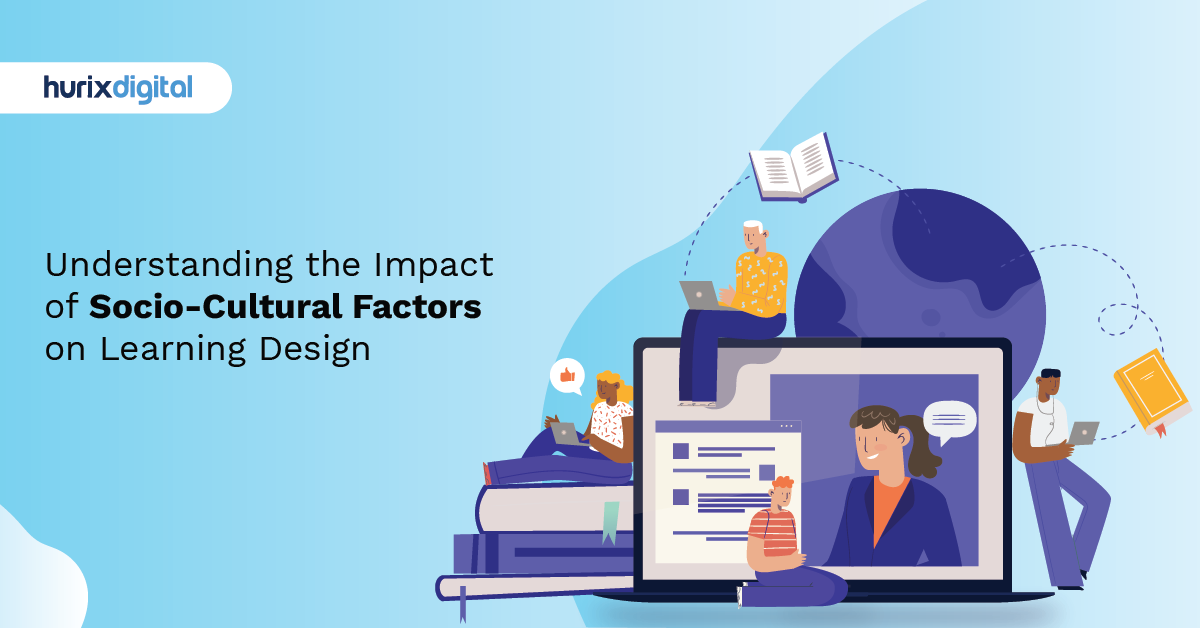
Understanding the Impact of Socio-Cultural Factors on Learning Design
Summarize with:
In the rapidly evolving landscape of eLearning, the boundaries of education and corporate training have dissolved. We no longer design for a local classroom; we design for a global, digitally connected ecosystem. In this environment, instructional design is about far more than just transferring knowledge; it is about creating an experience that resonates deeply with diverse audiences. Crucial to this success is acknowledging the profound impact of socio-cultural factors on the effectiveness of learning programs.
Socio-cultural factors encompass various elements such as cultural norms, social interactions, beliefs, values, and historical contexts that shape individuals’ learning experiences. If we fail to address these factors in learning design, we risk creating suboptimal outcomes that hinder the achievement of program objectives.
This comprehensive guide explores the significance of socio-cultural factors in modern learning design, integrating insights from Learning Experience Design (LXD), experiential learning methodologies, and industry-aligned strategies to help you build inclusive, effective educational solutions for the future.
Table of Contents:
- The Evolution of Learning Experience Design (LXD)
- The Socio-Cultural Perspective in Instructional Design
- Integrating Experiential Learning with Socio-Cultural Context
- Finding Your Learning Style: To Dive In or Live Through?
- Bridging the Gap: Industry-Aligned Programs and Global Readiness
- Best Practices for Socio-Culturally Aware Design
- Summing Up
The Evolution of Learning Experience Design (LXD)
To understand where socio-cultural factors fit in, we must first look at the vessel that carries them: Learning Experience Design (LXD).
In the past, instructional design focused heavily on content delivery. However, as we moved through the mid-2020s, the focus shifted. LXD Org defines LXD as a process to create experiences that help learners achieve their learning outcomes using a user-centered, goal-oriented approach. LXD is a holistic approach to education and is built around principles and practices that ensure that learning is multidimensional, entertaining, engaging, immersive, contextual, and informative.
An LXD strategy to be effective requires multidisciplinary expertise, including knowledge of interactive design, neuroscience, cognitive psychology, and teaching. All these elements come together to create a design discipline that improves usability and increases learner satisfaction.
Crucially, you cannot have a truly “user-centered” approach without understanding the socio-cultural factors that define the user. An inconsistent design that ignores cultural nuance will not serve its purpose. Rather, it will lead to a cognitive overload, thereby defeating the very purpose of the LXD.
The Socio-Cultural Perspective in Instructional Design
The socio-cultural perspective recognizes that learning is a social and cultural process, heavily influenced by the surrounding environment and social interactions. This perspective emphasizes the importance of considering learners’ cultural backgrounds, prior knowledge, and social interactions when designing effective learning experiences.
By incorporating socio-cultural factors, instructional designers can create more engaging and meaningful e-learning programs. This goes beyond simple translation; it involves deep localization and cultural adaptation.
Below, we explore the key socio-cultural factors, examples, and aspects that instructional designers must prioritize.
1. Language and Cultural Relevance
A learning program that embraces the diversity of languages and cultures within the target audience establishes stronger connections and fosters inclusivity. This avoids any potential sense of alienation among learners.
By incorporating culturally relevant examples, inclusive language, and diverse perspectives, instructional designers can create an environment that fosters a sense of value and engagement among learners. This leads to a deeper understanding and application of the content.
For instance, if an e-learning module on business ethics for learners in East Asia primarily uses Western cultural examples and references—such as individualism over collectivism—learners might struggle to relate to the content. With AI-driven localization tools, we have the capacity to tailor these nuances dynamically, ensuring that metaphors, humor, and idioms are conveyed accurately across borders.
2. Stereotypes & Biases
Instructional designers must carefully craft the examples and scenarios in a learning program to avoid the perpetuation of stereotypes or biases, which could lead to learner disengagement or even offense.
For example, using images, scenarios, or language that unintentionally marginalize or stereotype certain cultural groups can create a negative learning environment. To avoid such pitfalls, instructional designers must undertake cultural research, engage in diverse perspectives, and ensure their content is respectful, inclusive, and promotes cultural understanding.
Furthermore, we must be vigilant about the “hidden curriculum”—the unspoken values and norms transmitted through educational materials. Are we subtly reinforcing gender roles? Are we prioritizing one communication style over another? Addressing these socio-cultural factors in education is non-negotiable for ethical design.
3. Technology Accessibility and Equity
Socio cultural factors extend beyond cultural aspects to include factors such as accessibility and equity. An inclusive e-learning program recognizes the importance of technology accessibility and strives to provide equitable learning opportunities for all.
By offering multiple delivery methods, such as offline materials or mobile-compatible resources, instructional designers can accommodate learners with limited access to technology or internet connectivity. This ensures that learners from diverse socio-economic backgrounds can fully participate in the program and achieve the desired learning outcomes.
For instance, a program heavily reliant on high-speed internet connections and high-fidelity VR headsets may exclude learners from regions with limited infrastructure. In a world where the digital divide still exists, equity is a primary socio-cultural consideration.
4. Collaborative Learning Opportunities
An effective e-learning program embraces socio-cultural learning theory by providing ample opportunities for social interactions and collaboration. By integrating discussion forums, group projects, and peer-to-peer feedback, instructional designers can promote a sense of community, facilitate knowledge sharing, and enhance the overall learning experience.
Collaborative learning not only increases engagement but also encourages critical thinking and problem-solving skills. An e-learning program that lacks such opportunities may result in isolated and disengaged learners, ultimately impeding the achievement of program objectives.
Consequently, fostering collaborative learning is great for building teamwork, promoting critical thinking, and developing social skills. For instance, you could make students work together to fix a real-world challenge, exchanging ideas and gaining knowledge from each other.
Integrating Experiential Learning with Socio-Cultural Context
To truly leverage the power of socio-cultural factors, we must look at how people learn, not just what they learn. This brings us to experiential learning.
Experiential learning is based on the concept that our continual interaction and engagement with our surroundings generate experiences from which learning naturally emerges. It distinguishes itself from cognitive and behavioral theories by adopting a more comprehensive viewpoint. It acknowledges that learning is influenced by various factors encompassing our emotions, cognitive processes, and the environment in which we find ourselves.
When implementing experiential strategies, we must view the 8 Key Characteristics of Experiential Learning through a socio-cultural lens:
- Learner-Centered: Experiential learning places the learner at the center. However, “learner-centered” looks different across cultures. In some cultures, high autonomy is expected; in others, students may expect more directive guidance from an instructor.
- Active Participation: Unlike passive learning environments, experiential learning requires active involvement. Designers must ensure that activities (like role-playing or debate) are culturally appropriate and do not violate social taboos regarding hierarchy or public speaking.
- Reflection: Reflection is a critical component. Learners are encouraged to reflect on their experiences. We must provide frameworks for reflection that accommodate different communication styles. Some may prefer written journals, while others may prefer oral storytelling.
- Real-World Application: Connecting theoretical knowledge to practical applications is vital. However, the “real world” varies significantly depending on the learner’s socio-cultural geography. Case studies must be diverse.
- Collaborative Learning: As mentioned previously, this social aspect helps develop interpersonal skills.
- Personalized Learning: This can be tailored to meet unique needs.
- Holistic Growth: Fosters critical thinking and emotional intelligence.
- Feedback and Assessment: Continuous feedback is integral. The delivery of feedback, whether direct or indirect, must align with the cultural norms of the learner to be effective.
By aligning experiences with business goals and promoting cross-functional teamwork, we can create a learning culture that values growth while respecting the diverse socio-cultural factors of the workforce.
Finding Your Learning Style: To Dive In or Live Through?
As we customize learning based on socio-cultural backgrounds, we often encounter different learning preferences. The education industry is propelling forward amidst an explosive surge in technological advancements. Be it immersive learning or experiential, finding the right method often depends on the cultural context of the learner.
Immersive Learning vs. Experiential Learning
Immersive Learning utilizes realistic and interactive simulations in real-world scenarios to improve the understanding of core concepts. It blends cutting-edge technologies like Virtual Reality (VR), Augmented Reality, and Simulation Training.
- Benefit: It overcomes geographical limitations, enabling quality remote education through virtual immersion. This is a massive boon for cross-cultural training, allowing a student in New York to virtually walk through a factory in Mumbai.
Experiential Learning engages learners in hands-on activities, emphasizing direct experience and practical application.
- Benefit: It addresses cognitive, emotional, and social aspects of learning, ultimately delivering a holistic understanding in diverse settings.
Do they blend? Absolutely. Blending experiential and immersive learning methods has the potential to captivate learners. For example, blending immersive learning, like Virtual Reality simulations, into experiential learning techniques, such as surgeries, can drastically improve learning curves.
However, from a socio-cultural perspective, we must ask: Is the technology accessible? Is the immersive content culturally representative? Socio-cultural factors, psychology suggests that immersion is broken if the user feels culturally dissonant within the virtual environment.
Bridging the Gap: Industry-Aligned Programs and Global Readiness
Ultimately, the goal of understanding socio-cultural factors is to prepare learners for the workforce. Integrating industry-aligned programs ensures that students’ skills are relevant and in demand. By aligning curriculum with industry input and incorporating industry-standard tools, we equip students to hit the ground running.
However, “Industry Alignment” also means “Cultural Alignment.” A modern-day graduate must possess not just technical skills, but also cultural intelligence (CQ).
Fostering Student Agency and Cultural Confidence
Industry-aligned programs empower students to take ownership of their learning journey. Here is how this approach fosters student agency in a culturally diverse classroom:
- Increased Relevance and Choice: When students understand the real-world applications of their studies, they become more invested. Offering electives that cater to specific cultural or regional industry interests empowers students.
- Developing a Growth Mindset: Experiential learning activities encourage students to embrace challenges. This mindset is crucial for navigating the complexities of a multi-cultural workplace.
- Enhancing Communication and Collaboration: Many industry-aligned programs involve teamwork. This collaborative approach hones communication skills essential for navigating the professional world. Students learn to articulate ideas effectively and work productively with diverse teams, respecting the socio-cultural factors of their peers.
Best Practices for Socio-Culturally Aware Design
To consolidate these insights, here are actionable best practices for implementing a socio-culturally aware Learning Experience Design:
- Create an LXD Plan with Cultural Nuance: As with everything else, LXD requires extensive planning. While creating an LXD plan, give due attention to visual design strategy and user-friendliness across different cultures.
- Understand Your Learners: LXD is all about designing an experience that is meaningful. You must understand your audience, their unique needs, and the socio-cultural factors of the environment in which they are learning.
- Intuitive Storytelling: Stories are universal, but storytelling structures vary. Ensure your narrative arcs resonate with the cultural expectations of your audience.
- Weaving in Psychological Insights: An LXD is effective when it is based on human psychology. An LX designer should have a deep understanding of how human cognition works and how socio-cultural factors influence perception and memory.
- Utilize Adaptive Learning Technologies: Integrating adaptive learning can help you craft a more individualized experience. If a student faces challenges due to language barriers or cultural context, adaptive tools can redirect resources to provide additional support.
- Use Microlearning Techniques: Break down complex information into bite-sized lessons. This is particularly helpful for learners consuming content in a second language, as it prevents cognitive overload.
- Consider Adding Gamification Features: When you blend gamification, you can encourage students to reach goals. However, be mindful that competition logic (leaderboards) motivates some cultures more than others; some may prefer cooperative gamification.
Summing Up
Modern-day educational landscape demands a shift from linear, one-size-fits-all instruction to multidimensional, culturally responsive experiences. Understanding and integrating socio-cultural factors into learning design is not just an option; it is essential for developing effective e-learning programs.
By acknowledging language and cultural relevance, promoting collaborative learning opportunities, fostering cultural sensitivity, and addressing technology accessibility, instructional designers can enhance learner engagement. We must move beyond simple translation and strive for deep cultural integration.
Embracing the socio-cultural perspective in e-learning design leads to more meaningful and impactful learning experiences for all learners. It prepares them not just for exams, but for a diverse, interconnected world.
If you need help evaluating your existing workforce learning programs from a socio-cultural perspective or wish to design inclusive learning programs from scratch, Hurix Digital can assist your organization. We specialize in creating smarter, seamless learning solutions that bridge the gap between technology, culture, and education.
Talk with our experts to know more.
Summarize with:

Chief Learning & Innovation Officer –
Learning Strategy & Design at Hurix Digital, with 20+ years in instructional design and digital learning. She leads AI‑driven, evidence-based learning solutions across K‑12, higher ed, and corporate sectors. A thought leader and speaker at events like Learning Dev Camp and SXSW EDU