 A Space for Thoughtful
What is an eLearning Service? 5 Types of eLearning
Summarize with:
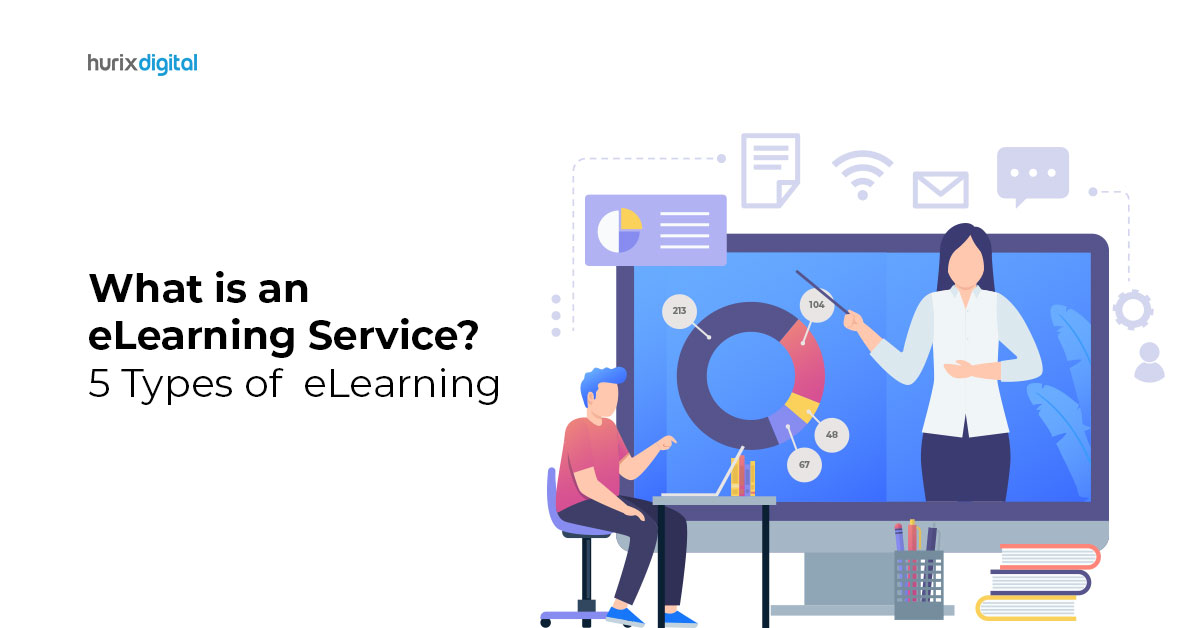
Education has taken on a new dimension, allowing people from all walks of life to access knowledge and enhance their skills conveniently and flexibly. eLearning, short for electronic learning, has emerged as a game-changer, revolutionizing how we learn and acquire information.
So, what exactly is an eLearning service? Put simply, it refers to the delivery of educational content and training through electronic devices such as computers, tablets, or smartphones, using the power of the internet.
In today’s blog, we discuss the concept of eLearning services and the five different types of eLearning services that have changed how we learn.
Table of Contents:
- Understanding Enterprise Training Solutions
- How has the eLearning Services Industry Evolved Over the Years?
- How to Choose the Right Enterprise Training Solutions for Your Company?
- What are the 5 Types of eLearning?
- What are the Benefits of eLearning Services?
- Top 20 Learning Experience Platforms (LXP) Of 2025
- Final Thoughts
Understanding Enterprise Training Solutions
Enterprise training solutions encompass a wide array of training and development programs and software tools provided to the employees of an organization. These solutions are designed to streamline and enhance the way training is traditionally provided to employees.
It includes various training programs, seminars, workshops, and eLearning initiatives that aim to boost performance, improve employee engagement, and support the firm’s objectives and goals.
Investing in effective enterprise training solutions empowers businesses to efficiently engage learners, manage online courses, and encourage growth. It not only facilitates skill development and knowledge expansion among employees but also aligns their competencies with the strategic goals of the organization.
How has the eLearning Services Industry Evolved Over the Years?
The eLearning market has witnessed substantial growth globally, driven by technological advancements and increasing demand for flexible and accessible education. The COVID-19 pandemic has further accelerated the adoption of eLearning, with many educational institutions and organizations shifting to online platforms to ensure continuity of learning.
According to a report by Global Market Insights, the global eLearning services market size was valued at over $399 billion in 2022 and is projected to surpass $1 trillion by 2032, growing at a compound annual growth rate (CAGR) of over 14% during the forecast period.
Similarly, the eLearning industry has become a go-to solution for corporate training and professional development programs. A study by Technavio predicts that the corporate eLearning market will grow by $44,908 billion during 2022-2027 at a CAGR of over 12%.
Organizations are finally recognizing the cost-effectiveness, scalability, and convenience of eLearning platforms. Thus, these statistics highlight the remarkable growth and evolution of the eLearning industry.
The field of eLearning offers a diverse range of services that cater to different learning needs and preferences. This section will explore five types of eLearning services that have transformed the way we acquire knowledge and skills.
How to Choose the Right Enterprise Training Solutions for Your Company?
Employee training is mandatory for companies to maintain a competitive advantage in the cut-throat business domain. With numerous enterprise training solutions providers in the marketplace, it can be confusing for organizations to choose the best training solution for their workforce.
Below are a few tips to help you select the optimal enterprise training solutions:
1. Define Your Goals
The first step is to figure out what the top management expects from the training program. Outline the objectives to be achieved through this training and focus on the options that can meet these specific needs.
Conduct a needs analysis to understand what problems or challenges the training program needs to overcome and what outcomes you expect from the learning modules.
2. Understand Your Audience
Different enterprise training solutions cater to different categories of audiences. It is essential to consider the target audience’s existing knowledge and skills, their technical capabilities, and how they will apply their training in real-time.
By understanding the audience, companies can choose training software solutions that cater to their specific needs. It not only enhances the effectiveness of the training but also ensures better engagement and retention among employees.
3. Have a Budget
Enterprise training solutions can entail considerable financial investment, and it is good to have a budget in place before exploring options.
While it’s important to be cost-effective, remember that high-quality training solutions can yield long-term benefits, making them a worthwhile investment. Therefore, be open to adjusting your budget slightly if it means acquiring more effective training programs that promise better engagement and learning outcomes.
4. Ensure Training across the Complete Lifecycle
Selecting an enterprise training solution that encompasses support throughout the entire employee lifecycle, before, during, and after the training, is crucial.
Ideally, the pre-training stage should introduce the trainees to the skills and information needed for the training, while the training cycle itself should include all the tools, techniques, and processes required to be provided as part of the training program. After-training support includes feedback and assessment.
5. Ensure Collaboration between Employees
Besides having a user-friendly interface, the right online training solutions should focus on encouraging collaboration between the employees participating in a training program.
A good enterprise training solution provider will offer seamless integration between different modules, allowing different employees undergoing the training program to collaborate effectively amongst themselves.
Make sure you choose a training solution that fosters a collaborative learning environment.
6. Transcend Geographical Boundaries
An effective enterprise training solution should be designed to transcend geographical boundaries when it comes to catering to the training needs of global employees of an organization.
The training software should enable training across geographical boundaries by taking into consideration differences in language, culture, and symbolism across regions.
7. Technological Infrastructure
Make sure the training solution you choose is compatible with the technological infrastructural support in your organization. Answering these questions will help you figure out the technological requirements for specific training programs.
- How many learners will access the training program at a time?
- Does the company have the hardware and software required to host the course?
- Are there adequate security measures in place?
- Is there a need to install any additional applications to run the course?
- Is there an in-house team present to help implement the course alongside the training solutions provider?
- On which devices will the learners access the course?
Additionally, ensure that your chosen training solution aligns with your organization’s technological infrastructure, considering factors such as user capacity, compatibility with existing systems, security protocols, and technical support.
What are the 5 Types of eLearning?
From access to resources to flexibility and scalability, modern organizations must use these unique methods effectively. Here’s a breakdown of the top types of eLearning solutions you can use:
1. Online Courses
Online courses are at the forefront of eLearning services, providing learners with access to a wide array of subjects and topics. These courses are typically delivered through learning management systems (LMS) and feature structured content, multimedia resources, quizzes, and assessments.
As per GlobeNewswire, the global LMS market is projected to reach $29.35 billion by 2026, with a CAGR of 16.8% from 2021 to 2026. This underscores the increasing demand for online courses and the technology that supports them.
2. Virtual Classroom and Webinars
Virtual classrooms and webinars bring the live learning experience into the digital realm. Through web conferencing tools, learners can participate in real-time lectures, discussions, and interactive sessions.
These platforms often feature chat functionalities, breakout rooms for group activities, and the ability to share presentations and documents. Virtual classrooms and webinars enable remote learning and foster participant engagement and collaboration.
3. Mobile Learning (m-Learning)
With the proliferation of smartphones and tablets, mobile learning has gained immense popularity. M-Learning services deliver educational content optimized for mobile devices, allowing learners to access materials on the go. The on-the-go nature of learning drives this shift, as learners can access educational content anytime, anywhere.
Mobile apps and responsive websites also offer bite-sized lessons, videos, interactive quizzes, and gamified learning experiences. mLearning provides flexibility and convenience, enabling learners to fit learning into their busy schedules.
4. Microlearning
Microlearning breaks down complex topics into bite-sized, focused learning units. These short modules are designed to deliver specific learning objectives or address particular skills.
Microlearning typically utilizes multimedia formats such as videos, infographics, or interactive simulations to provide concise and engaging content. This approach is ideal for just-in-time learning, knowledge reinforcement, and quick skill acquisition.
5. Gamified Learning
Gamified learning services incorporate game elements and mechanics into the learning process. By introducing gamification attributes such as challenges, rewards, competition, and progress tracking, gamification enhances learner engagement and motivation.
Gamified platforms often feature leaderboards, badges, and levels to stimulate learner participation and create an immersive learning experience. This approach is particularly effective for skills development, knowledge retention, and creating a fun and interactive learning environment.
What are the Benefits of eLearning Services?
eLearning services have transformed the educational landscape, offering numerous benefits for learners and organizations alike. In this section, we will explore the benefits of eLearning and highlight the key reasons to choose eLearning solutions:
1. Flexibility and Accessibility
eLearning provides unparalleled flexibility and accessibility to learners. With eLearning, individuals can access educational content anytime, anywhere, eliminating time and location constraints.
Learners have the freedom to set their own pace, allowing them to balance their education with other commitments. This accessibility is particularly valuable for professionals seeking to upskill or students juggling multiple responsibilities.
2. Customization and Personalization
One of the standout benefits of eLearning services is custom eLearning solutions, which can tailor the learning experience to individual needs. eLearning companies offer custom eLearning services that allow organizations to develop training programs aligned with their specific goals and requirements. Learners can engage with content relevant to their roles, ensuring maximum relevance and engagement.
3. Cost-Effectiveness
eLearning is often a cost-effective alternative to traditional classroom-based learning. With eLearning, there are no expenses associated with physical facilities, travel, or printed materials. eLearning solutions enable organizations to save costs on training programs, while individuals can access affordable courses without the overheads typically associated with in-person education.
4. Scalability and Consistency
eLearning services offer scalability, allowing organizations to train many learners simultaneously across a range of topics. eLearning companies specialize in creating scalable solutions that can accommodate diverse learner populations. Moreover, eLearning ensures consistency in content delivery, ensuring that every learner receives the same high-quality information and learning experience.
5. Localization and Translation
For global organizations or those operating in multilingual environments, eLearning localization and translation services are crucial. eLearning localization services adapt courses to specific cultural contexts, ensuring that content is culturally appropriate and resonates with learners worldwide. eLearning translation services facilitate the translation of courses into multiple languages, enabling learners to access content in their native languages.
These eLearning services enhance learner engagement and improve learning outcomes by removing language barriers. By partnering with eLearning companies offering these services, organizations can effectively reach and educate a diverse global audience.
Top 20 Learning Experience Platforms (LXP) Of 2025
According to market research by Facts & Factors, the global learning experience platform (LXP) market was worth 508.5 million USD in 2020. And it’s predicted that it will skyrocket to a whopping 2.18 billion dollars by 2026, with a growth rate of 25.3% CAGR.
Thus, as an organization, you might not want to miss out on this latest digital resource that has been transforming employee learning and training. The following are the top 20 LXP platforms:
1. Lessonly
Founded in 2012, Lessonly is a learning experience training platform by Seismic Software Inc. It is designed to streamline sales coaching and learning. Lessonly offers a huge array of tools to facilitate effective employee training and development.
Furthermore, its user-friendly interface allows organizations to create, manage, and deliver various types of learning content, such as interactive courses, quizzes, videos, and assessments.
2. Udemy Business
Udemy Business has all the tools and resources that are needed from a learning experience platform. According to Business Insider, there was a massive growth in course consumption on the platform between 2020 and 2021.
Talking about its features, the best part about Udemy Business is its customized learning paths. Thus, organizations can create personalized learning paths to cater to the unique needs and goals of individual learners.
This personalized approach ensures that employees receive targeted training that addresses their specific skill gaps.
3. 360Learning
Being a Learning Experience Platform, 360Learning helps organizations create collaborative learning experiences. This is achieved through group discussions, sharing content, and providing relevant feedback through in-app forums.
In addition, 360Learning integrates with other learning platforms such as Coursera, content creation tools like Canva, and HR Management Systems to provide a complete solution for all business needs.
4. Docebo
Docebo is an exceptional AI-powered learning experience platform that is changing the way organizations train their employees.
What truly sets Docebo apart is its ability to harness the power of AI to provide valuable insights and recommendations. It utilizes AI and human-centered design to create assessment exercises and customized learning paths.
5. Cornerstone Learning
In Santa Monica, Cornerstone Learning was founded in 1999 by Adam Miller, Perry Wallack, and Steven Seymour. As one of the top LXP platforms, Cornerstone Learning provides robust analytics and performance-tracking capabilities.
This enables organizations to measure the impact and effectiveness of their training programs. The platform also offers data and insights into learners’ progress, completion rates, and performance metrics.
6. EdApp
EdApp is an all-in-one employee training platform integrated with features such as Canva integration and cloud-based translation. One of the biggest advantages of using the EdApp Learning Experience platform is that it is a mobile-first learning platform.
Thus, enabling learners to learn anywhere and at any time. Other in-built features include a template library, PowerPoint converter, course review and reporting, and analytics for performance measurement.
7. Axonify
With its intelligent learning and personalized education plans, Axonify is an excellent employee training and education platform. Its employee analytics tools help employees know their shortcomings.
Furthermore, with Axonify’s personalized learning pathways, employees can narrow these skill gaps and enhance performance.
8. Skills Caravan LXP
Skills Caravan is an all-in-one learning experience platform that utilizes generative artificial intelligence.
Furthermore, this platform integrates top-notch content libraries and gamification tools to enhance the learning experience. The user interface is interactive and easy to navigate. At the same time, the real-time analytics tool helps learners track their course progress.
9. Tovuti LMS
Founded by Troy McClain, Tovuti LMS enables organizations to create personalized courses and train teams easily and efficiently. It is a cloud-based LXP platform that offers organizations all the tools to train their employees and track the effectiveness of the course.
The integration of virtual classrooms enables employers to connect and train employees virtually.
10. Learn Amp
With Learn AMP’s learning management and learning experience platforms, organizations can drive engagement and improve their overall performance.
Just like Tovuti LMS, it is also a cloud-based platform that integrates learning, employment, and talent development tools all in one place.
11. Auzmor
Auzmor LXP platform is the one-stop solution for creating highly interactive training courses and modules for your employees. The platform utilizes social-media-like communications features to keep the learners engaged.
Organizations can create, launch, modify, and track courses very easily. Furthermore, the courses can be accessed through any device due to the availability of the Auzmor mobile app.
12. Whatfix
Whether you want to create training courses or highly interactive how-to guides, Whatfix LXP allows users to create and launch their courses easily.
The highly interactive activity dashboard, activity tracking, and asynchronous learning mode make Whatfix a top learning experience platform choice globally.
13. Wormhole
Like its counterparts, Whatfix and Auzmor, Wormhole is also integrated with course authoring, performance tracking tools, and asynchronous learning mode.
With Wormhole, organizations can curate personalized learning paths for their employees to reduce their skills gap and enhance their overall performance.
14. Rallyware
Rallyware LXP is a cutting-edge Learning Experience Platform that revolutionizes employee training and development. With its intuitive interface and robust features, it offers personalized learning paths, interactive content creation, gamification elements, and data-driven analytics.
Organizations can utilize Rallyware to create performance-driven courses and enhance the teams’ performance.
15. OpenSesame
OpenSesame is widely used for employees’ professional development through eLearning and online courses. OpenSesame has a huge library of online courses covering multiple industries and topics.
These courses can be directly accessed through OpenSesame. The platform also provides users with a dashboard, performance-tracking tools, and certificates to enhance the overall learning experience.
16. NovoEd
NovoEd is a Cohort-based Learning Experience Platform founded at Stanford’s Social Algorithms Lab in 2012.
NovoEd is transforming employee eLearning with its social and collaborative features, which improve learners’ engagement.
17. Bridge
Based in Quezon City, Philippines, Bridge is an easy-to-use learning and employee development platform founded in 2011.
This LXP platform combines learning management, performance management, career development, and engagement measurement under one roof.
18. CoreAchieve LMS
CoreAchiever LMS is also a cloud-based learning experience platform. The primary goal of this platform is to support virtual self-paced learning.
It utilizes several tools and resources for its users to support this goal, such as leaderboards, interactive assessments, and gamification etc.
19. Intellum
Intellum is also one of the widely used corporate learning management systems. This LXP platform supports several features, such as course customization, reporting, performance tracking, and mobility.
In addition to these features, Intellum also offers dual functionalities of both an LMS and an LXP.
20. Constructor
Last but not least, we have Constructor LXP. Like all the other LXPs Constructor LXP platform also integrates features like interactive dashboards, dynamic reporting tools, video assessments, and gamification objects to enhance learner engagement.
Organizations can utilize this platform to enhance employee performance and streamline their workflow.
Final Thoughts
The five types of eLearning services offer a glimpse into the diverse approaches to digital education. Each type caters to different learning preferences, objectives, and contexts. Whether you prefer self-paced online courses, interactive virtual classrooms, on-the-go mobile learning, focused microlearning modules, or gamified experiences, eLearning services provide a wealth of opportunities to acquire knowledge and skills.
With our expertise in custom eLearning services, eLearning localization services, and eLearning translation services, Hurix Digital is your go-to partner for all your digital education needs. If you’re an organization seeking to provide effective training programs, Hurix Digital offers innovative and tailored eLearning solutions that deliver results.
Contact us today to know more!
Summarize with:

Performance, Results, Growth, and Life-Long Learning define my professional life. I am passionate about making workplace learning planful, purposeful, and impactful. I take pride in partnering with clients and bringing them the best in learning design and creating solutions that address business challenges.