A Space for Thoughtful Leaders is Now LIVE.

Newsletter

The Living Edge: How Liquid Architectures and SLMs Are Giving AI a Pulse

The era of “brute-force” AI is hitting a ceiling. As we move into 2026, the strategic advantage has shifted from massive, cloud-dependent giants to the “Living Edge.” In this edition, we break down the two architectural breakthroughs redefining the enterprise landscape: Liquid Neural Networks (LNNs)—the adaptive “brains” slashing industrial energy costs—and Small Language Models (SLMs)—the compact powerhouses reclaiming data sovereignty.
From the factory floor to the private server, the message is clear: the future of AI isn’t just about how much it knows, but how fast it adapts.

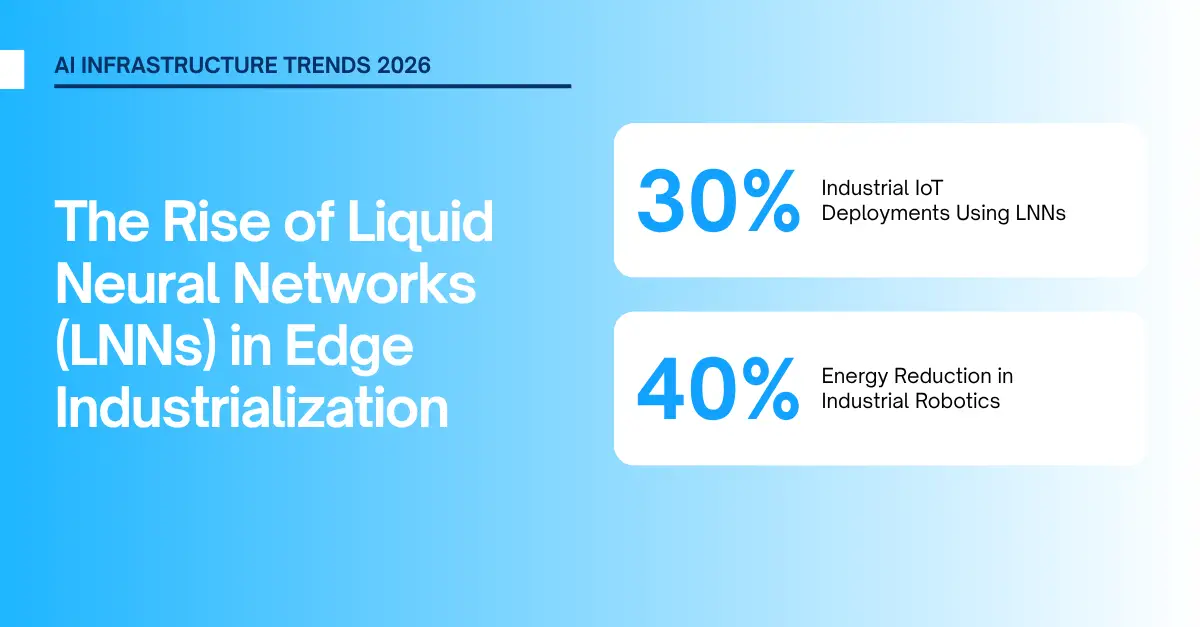
The Rise of Liquid Neural Networks (LNNs) in Edge Industrialization

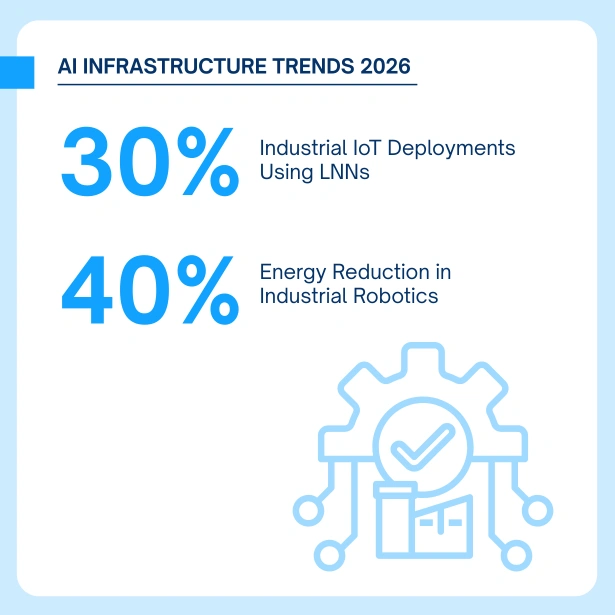
According to the MIT Technology Review 2026 Computing Outlook, Liquid Neural Networks (LNNs) have officially transitioned from experimental research into scalable enterprise production. Unlike traditional static machine learning models, these continuous-time architectures adapt to incoming real-time data analytics without the costly overhead of constant retraining. This shift is a cornerstone of modern Edge AI strategy; Gartner’s 2026 Infrastructure Survey indicates that 30% of industrial IoT deployments now utilize these fluid frameworks to manage the extreme volatility of time-series data within complex, high-demand edge environments.
What’s the relevance for Enterprise Leaders?
For the CTO, this shift represents a fundamental leap in compute efficiency and model longevity. Liquid Neural Networks significantly reduce the “retraining tax” typically associated with resource-heavy transformer-based models. By enabling models to adapt dynamically to changing environmental parameters, enterprises can drastically lower long-term cloud egress costs while boosting the reliability of autonomous systems. This enables mission-critical operations in disconnected or low-bandwidth edge computing environments without sacrificing high-fidelity decision-making or overall operational ROI.
What’s the relevance for industries?

The most profound impact of this shift is no longer theoretical; it’s hitting the floor in autonomous logistics and precision manufacturing. According to Accenture’s 2026 Industry X Report, liquid architectures have already slashed energy consumption in industrial robotics by a staggering 40%. In the energy sector, these models are the “brain” behind smart grids, allowing them to self-optimize against volatile demand patterns with sub-millisecond latency. We are witnessing a definitive move away from “brute-force” AI. In its place, we see the rise of context-aware systems that don’t just solve problems—they prioritize environmental sustainability and operational ROI in the world’s most mission-critical environments.
The “Shrinking” AI Trend: Why SLMs are Reclaiming the Edge

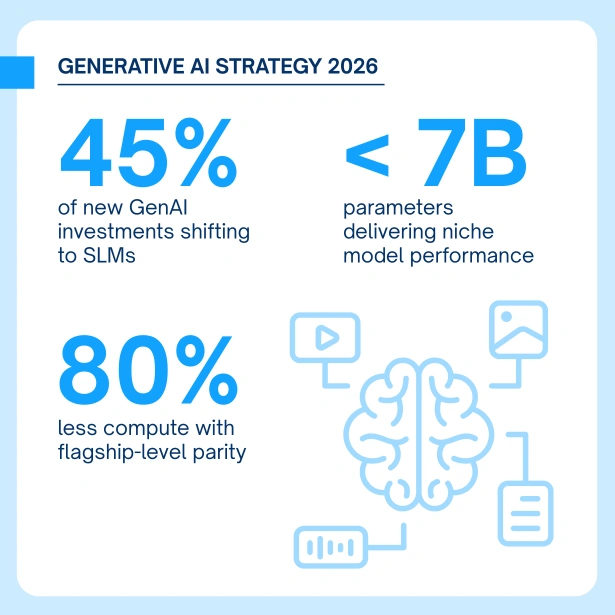
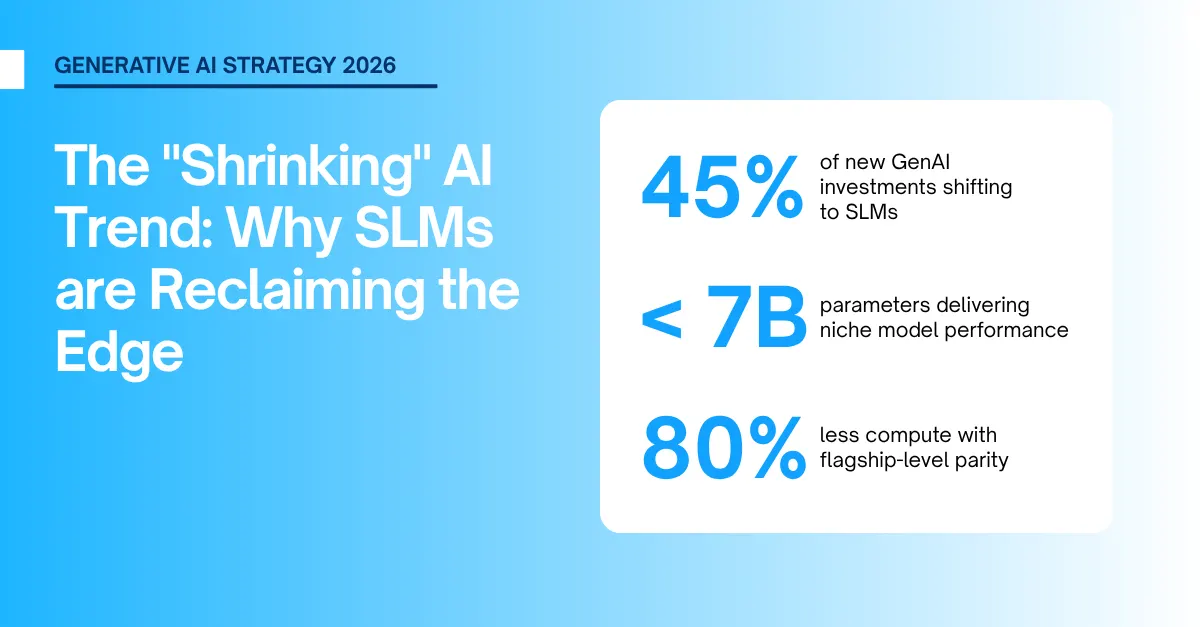
We are witnessing a massive budgetary pivot in the AI landscape. According to the IDC 2026 Global AI Spending Guide, 45% of new GenAI investments are now flowing toward Small Language Models (SLMs) rather than sprawling, frontier LLMs. These highly compressed, task-specific models—typically under 7 billion parameters—are no longer just “lite” versions; they are now outperforming generalist giants in specialized niche domains. The data from Stanford HAI’s 2026 Index confirm the breakthrough: SLMs have achieved performance parity with 2024-era flagship models while requiring 80% less computational overhead. For the modern enterprise, this isn’t just about saving on cloud costs—it’s about decentralizing intelligence and enabling high-performance, on-device AI.

What’s the relevance for Enterprise Leaders?

Today’s CIOs are leveraging Small Language Models (SLMs) to tackle the dual headaches of data privacy and skyrocketing inference costs. By shifting deployments on-premises or to private VPCs, firms effectively neutralize the security risks inherent in sending proprietary data to third-party APIs. This isn’t just a technical tweak; it’s a strategic pivot toward “Privacy-by-Design” AI. This architecture empowers departments to run specialized, localized AI agents with full control over data residency. The end result? A far more predictable cost structure and a drastic reduction in the Total Cost of Ownership (TCO), proving that in 2026, the most secure AI is the one you own.

What’s the relevance for industries?
In highly regulated sectors like Clinical Research and Legal Services, Small Language Models (SLMs) are rapidly becoming the gold standard for sensitive document synthesis. According to PwC’s 2026 AI Business Survey, mid-market firms are no longer being sidelined by high entry costs; instead, they are using these compact models to automate complex compliance workflows without the massive infrastructure previously required. This isn’t just a technical update—it’s the democratization of high-performance AI. By removing the “compute barrier,” SLMs are effectively leveling the competitive landscape, allowing mid-scale manufacturers and boutique professional services to outpace global enterprises in agility and operational efficiency.